July 6, 2026 • Marcus Delray • 8 min reading time • Prices verified June 4, 2026
Adidas Copa Mundial at $79 in 2025: Timeless Leather Classic or Beaten by Modern Mid-Tier Boots
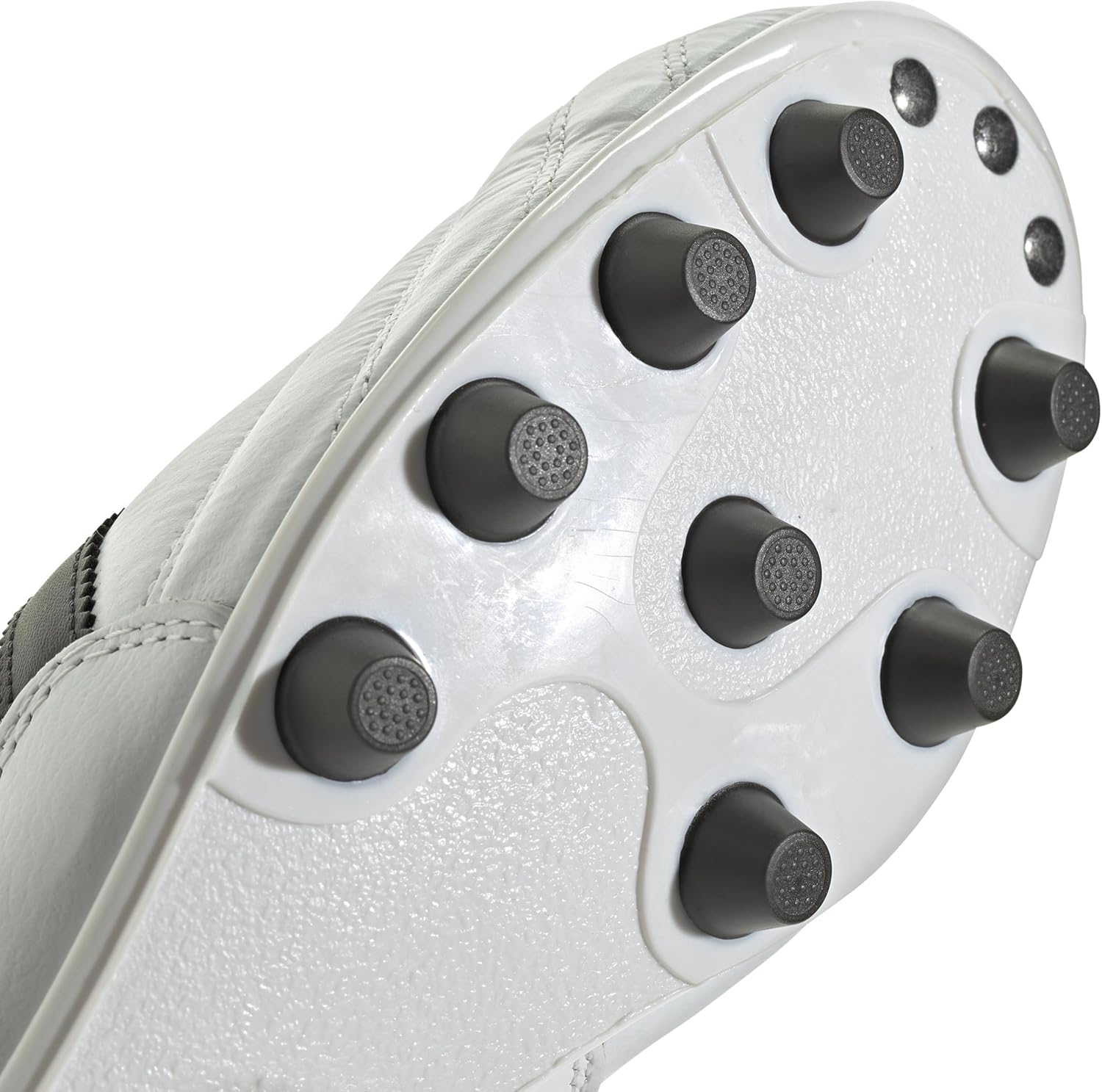
The Adidas Copa Mundial is a football boot — a cleat designed for grass or firm natural surfaces — that Adidas introduced in 1979 and has never stopped making. That alone is remarkable. Most footwear products have a lifespan of two or three years before they’re redesigned or retired. The Copa Mundial has outlasted dozens of product generations, dozens of competitors, and arguably the entire concept of “retro” footwear, because it never left shelves long enough to become retro. In 2025, it retails for roughly $79 at most major US soccer retailers. That price puts it squarely in competition with a wave of modern mid-tier boots from Adidas, Nike, Puma, and New Balance — boots built with synthetic uppers, modern foams, and performance features that didn’t exist when the Copa Mundial was designed. So the question this article answers is a practical one: at $79, does the Copa Mundial still earn its place in your bag, or have the modern options at that price point made it a nostalgia purchase?
| EDITOR'S PICKPUMA Mens Future 8 Match Firm G… | Mid-tieradidas Men's Copa Mundial Socce… | Budget pickAdidas Unisex-Adult F50 League… | |
|---|---|---|---|
| Ground type | Firm Ground | — | Firm Ground/Multi Ground |
| Gender | Men | Men | Unisex-Adult |
| Color | White/Black/Light-green | White | Black/Lucid Red/Black |
| Price | $87.85 | $79.20 | $63.00 |
| See on Amazon → | See on Amazon → | See on Amazon → |
What You’re Actually Buying When You Buy a Copa Mundial
Let’s be specific about the product, because “leather boot” is doing a lot of work in most Copa Mundial discussions.
The Copa Mundial uses a kangaroo leather upper — K-leather, in boot shorthand. Kangaroo hide is lighter and thinner than cowhide while being more durable and conforming. It has a reputation among longtime players for stretching and molding to the foot over the first few wears, producing what owners frequently describe as a “second skin” sensation that synthetic materials still struggle to replicate. SoccerBible’s retrospective on the Copa Mundial notes that the boot’s enduring sales are driven in part by players who tried synthetic alternatives, missed that broken-in feeling, and came back.
The outsole is a firm-ground (FG) configuration — meaning it’s designed for natural grass that is neither completely dry nor waterlogged. It uses a classic bladed/conical stud mix that has changed minimally since the 1980s. The boot runs narrow to medium in the forefoot with a snug heel, and it is built on one of the most well-documented lasts in football footwear. If you’ve worn it before, you know exactly what to expect. If you haven’t, that last — the internal foot-shaped mold the boot is built around — is one of the things you need to test before committing.
The insole is basic. The cushioning is minimal by modern standards. There is no knit collar, no dynamic fit cage, no articulated heel counter branding. What the Copa Mundial offers is leather feel, a proven stud pattern, and a price point that has barely moved in years even as elite-tier boots have climbed past $350.
The Modern Mid-Tier Competition at the Same Price
At $79–$100 in 2025, you are shopping in a tier that includes:
- Adidas Copa Pure.3 FG (~$75–$85): The current-generation Copa line entry point. Uses a synthetic leather-like upper (“Vernaskin” in Adidas’ terminology) rather than real K-leather.
- Nike Phantom GX Club FG (~$80–$95): Part of Nike’s Phantom line, featuring a textured synthetic upper with some grip-zone detailing, aimed at technical midfield and forward players.
- Puma King Match FG (~$70–$85): Puma’s leather-heritage entry, also using synthetic materials at this price, with a wider toe box than the Copa Mundial.
- New Balance Furon Dispatch FG (~$80): NB’s entry-tier speed cleat, lightweight synthetic build.
By the numbers — Copa Mundial vs. the tier:
| Boot | Upper Material | Weight (approx.) | Last Character | Street Price |
|---|---|---|---|---|
| Copa Mundial | K-Leather | ~355g (sz 9) | Narrow-medium | ~$79 |
| Copa Pure.3 | Synthetic | ~285g (sz 9) | Medium | ~$80 |
| Phantom GX Club | Synthetic | ~265g (sz 9) | Medium-snug | ~$85 |
| Puma King Match | Synthetic | ~295g (sz 9) | Medium-wide | ~$75 |
Weight figures are drawn from published manufacturer spec sheets and aggregated owner reporting on FootballBoots.co.uk; individual pairs vary by size and production run.
The Copa Mundial is the heaviest boot in this comparison, particularly when wet. This is a real and documented tradeoff. Leather absorbs moisture; modern synthetics shed it. Goal.com’s 2025 boot roundup explicitly flags this, noting that the Copa Mundial’s weight penalty in wet conditions is the single most common complaint among long-term owners who otherwise love the fit.
The Honest Tradeoff Analysis
Here’s where we stop hedging and name the actual decision frames.
Where the Copa Mundial Still Wins
Fit feel over time. Across aggregated owner reviews, the pattern is consistent: players with narrower feet who give the Copa Mundial four to six wears report a glove-like conformity that no synthetic in this price range matches. FootballBoots.co.uk’s long-term owner archive includes repeated accounts of players returning to the Copa Mundial after trying newer options specifically because the broken-in feel is irreplaceable for them. If you play primarily as a central midfielder or forward who values touch and feel over pace, and your foot is on the narrower side of medium, this matters.
Durability relative to price. Synthetic uppers at the $75–$85 price tier are not the same synthetic uppers you find on a $300 Mercurial Elite. They wear faster, crease harder, and the surface texture that provides grip tends to degrade. Leather uppers, when maintained with basic conditioning, have a longer functional lifespan. The cost-per-match math can favor the Copa Mundial for recreational and club players who train two or three times a week but aren’t replacing boots every season.
Psychological comfort. This is real and worth naming. Players who grew up wearing leather boots, or who have played in Copa Mundials before, report lower adjustment periods and fewer blister incidents because they know how this boot fits and behaves. Footwear News’ 2024–2025 coverage of Adidas heritage line performance noted that the Copa Mundial’s sales have remained stable precisely because it retains a loyalty base of players over 30 who aren’t persuaded by synthetic upper technology.
Where Modern Mid-Tier Boots Win
Lightweight performance. If you are a speed-reliant player — a winger, a pressing forward, a defensive midfielder with high mileage — the ~80–90g weight difference between the Copa Mundial and a modern synthetic boot is not trivial over 90 minutes. Owners consistently report that the Copa Mundial’s weight becomes perceptible in the second half of high-intensity matches, especially in wet conditions.
Modern stud configurations. The Copa Mundial’s stud pattern was designed for natural grass of its era. It is not optimized for the hybrid and hardened natural surfaces that dominate modern club and recreational facilities. Players on harder FG surfaces or transitional pitches frequently report inadequate bite with the Copa Mundial’s studs. The Phantom GX Club and Copa Pure.3 both use stud geometries developed for current pitch conditions.
Width options. The Copa Mundial runs one width. If you have a medium-wide or wide forefoot, it is not your boot. The Puma King Match FG runs notably wider in the toe box. Nike’s Phantom GX Club is available in a wider last variant in select sizes. The Copa Mundial has never offered width variants, which is one of the most consequential gaps in its modern market position.
Synthetic care burden. Leather requires conditioning. It requires drying away from direct heat. It is not a “throw in the bag wet and forget it” product. For younger players and parents managing junior kits, this maintenance gap is real. Modern synthetics are genuinely more forgiving.
Who Should Buy the Copa Mundial in 2025
This is the “if X, then Y” section. Let’s be direct.
Buy the Copa Mundial if:
- You have a narrow to medium foot and have worn leather boots before without fit issues
- You prioritize ball feel and touch over sprint acceleration
- You play primarily on natural or well-maintained FG surfaces in dry-to-moderate conditions
- You keep boots for 2+ seasons and are willing to condition the leather
- You are a central midfielder, attacking midfielder, or winger who values control over raw pace
- The nostalgia factor is real for you and that’s a legitimate reason — own it
Do not buy the Copa Mundial if:
- You have a wide or high-volume foot — this boot will fight you
- You play primarily on hard, dry, or artificial FG surfaces
- You play regularly in wet or muddy conditions
- You are a youth player on a growth cycle where boots won’t be kept long enough to break in
- You want a modern collar, a snug heel lock, or any of the synthetic comfort features that have become standard at this tier
Buy the modern mid-tier alternative if:
- Your foot is medium to wide and you need a boot that accommodates volume
- Surface conditions vary across your training and match schedule
- You are a pace-reliant player where the weight delta matters
- You want a boot that performs predictably from the first wear without a break-in period
The Verdict: Timeless, But for a Specific Buyer
SoccerBible put it well in their Copa Mundial retrospective: the boot has survived not because it keeps up with modern design, but because it serves a specific player profile better than modern design does. That profile is real. It is not a small market. But it is a defined market, and the Copa Mundial does not pretend to be something it isn’t.
At $79 in 2025, the Copa Mundial is not a budget alternative to better boots. It is a specialist product that competes on feel, fit conformity, and durability — and concedes weight, modern stud technology, and width accommodation. If those concessions align with your position, your surface, and your foot shape, it is still one of the best $79 boots on the market. If they don’t, the Copa Pure.3, Phantom GX Club, or Puma King Match at the same price will serve you better in ways you’ll notice every time you run.
The boot is not beating modern mid-tier across the board. But it is still beating them where it matters — for the player it was always built for.