July 22, 2026 • Marcus Delray • 9 min reading time • Prices verified June 4, 2026
Adidas F50 Club vs F50 League: The Silo Tier Gap That Determines Whether You're Overpaying
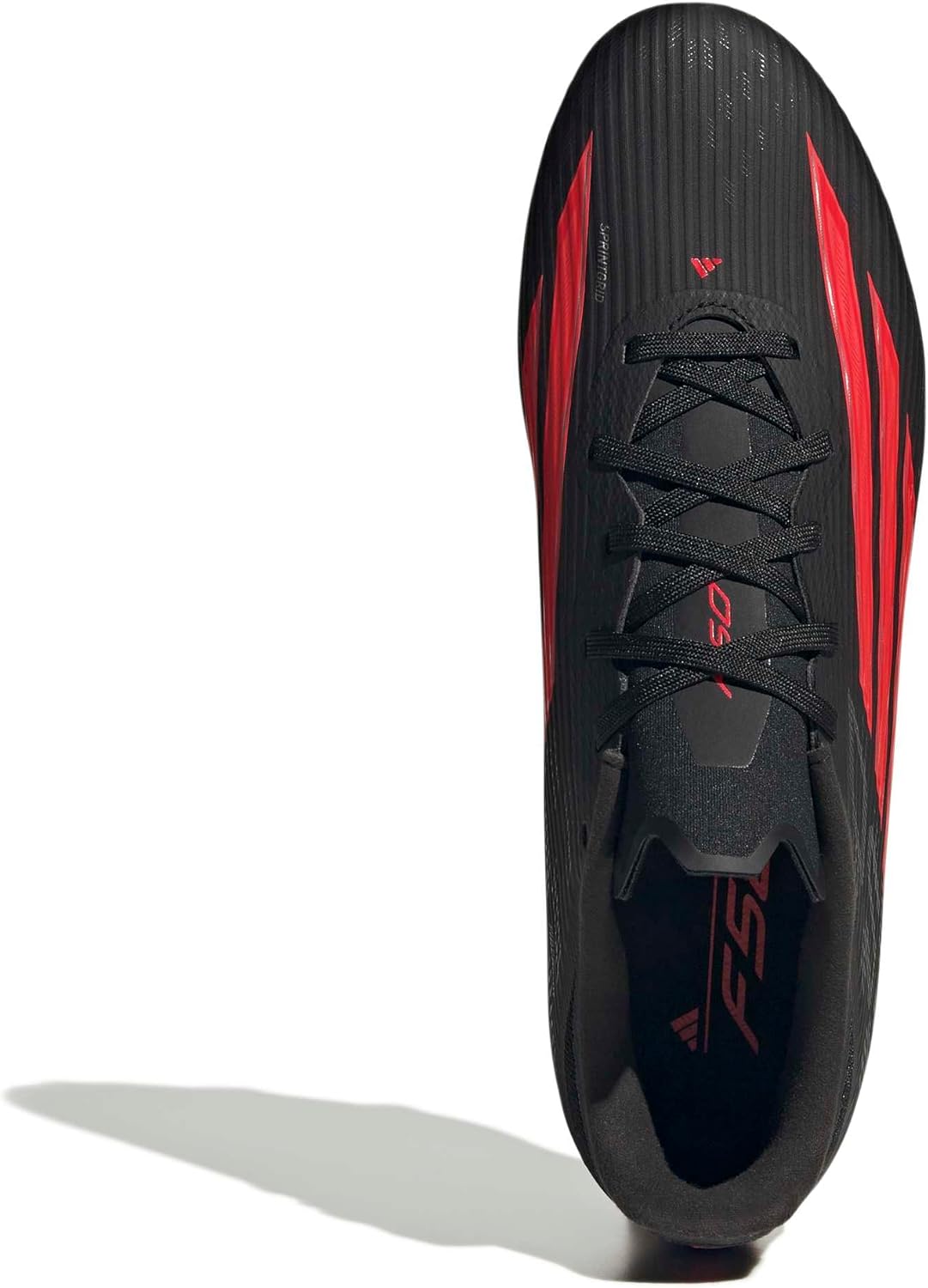
If you’ve ever looked at the Adidas F50 and wondered why there are so many versions with similar names but very different prices, you’re not alone — and that confusion is costing some players real money. A “silo” in football boot language just means a product family: the F50 is Adidas’s speed-focused boot line, designed for players who prioritize lightweight touch and quick acceleration over maximum power or control. Within that family, Adidas runs several versions at different price points — the Club, the League, and higher tiers above them — each built with progressively better materials and construction. The question this article answers is simple: what actually changes between the two entry-to-mid tiers, the F50 Club (roughly $65–$80) and the F50 League (roughly $100–$120), and is the gap worth crossing for your level of play?
If you’re an occasional recreational player or a parent buying for a youth player still growing into their feet, the answer might genuinely be the Club. If you’re a dedicated club-team or high-school athlete training three or more days a week, the math probably shifts. Let’s build the decision frame properly.
| EDITOR'S PICKadidas Mens F50 League Turf Soc… | Mid-tieradidas Mens F50 Messi Club Turf… | Budget pickadidas Unisex-Adult F50 League… | |
|---|---|---|---|
| Tier | League | Club | League |
| Gender | Men | Men | Unisex-Adult |
| Colorway | Team Solar Yellow/Black/Lucid Red | White/Lucid Pink/Flash Aqua | Team Solar Yellow/Black/Lucid Red |
| Size | 11 Women/10 Men | 10 Women/9 Men | 6 Women/5 Men |
| Player Name | — | Messi | — |
| Price | $75.06 | $70.00 | $54.00 |
| See on Amazon → | See on Amazon → | See on Amazon → |
What the Two Tiers Actually Are — And What Adidas Is Doing Here
Adidas uses a consistent naming ladder across all its major boot silos (Copa, Predator, X Speedportal, and F50): Elite → Pro → League → Club → and then training options below that. Each step down the ladder represents a cost reduction somewhere — usually in upper material, outsole stiffness, chassis engineering, or insole quality. The branding stays consistent so the halo effect of the elite-tier boot bleeds into buyer perception at every price point. That’s intentional. It’s also why the tier gap conversation matters: you’re not always getting a meaningful performance downgrade; sometimes you’re just getting a different manufacturing approach that suits a different use case.
According to SoccerBible’s editorial coverage of the F50 silo (published in their boot guide section), the F50 line represents Adidas’s answer to the lightweight speed-boot segment — a direct response to Nike’s Mercurial family — with upper construction and chassis geometry centered on a low-profile, close-to-the-ball touch profile. The Elite and Pro sit in the $220–$280 range. The League and Club are where most real-world buyers actually shop.
By the numbers (2026 MSRP, firm-ground editions):
| Version | MSRP | Upper | Outsole | Tier |
|---|---|---|---|---|
| F50 Club FG | ~$70 | Synthetic mesh upper | Basic TPU flat chassis | adidas — $54.00 |
| F50 League FG | ~$110 | Engineered mesh with reinforced zones | Articulated TPU sprint chassis | adidas — $70.00 |
| F50 Pro FG (prior-cycle clearance) | ~$110–$130 | Pro-grade upper construction | Full sprint chassis | adidas — $75.06 |
Prices represent standard retail in USD as of May 2026. Street pricing varies by colorway and retailer.
The Three Real Differences — Not the Marketing Ones
When the editorial team at footballboots.co.uk aggregated reader impressions of the Club and League across their review roundup coverage, three performance-relevant differences emerged consistently enough to treat as reliable signal rather than noise.
Outsole Chassis: Where the Tier Gap Is Most Tangible
adidas
$54.00
In stock on Amazon
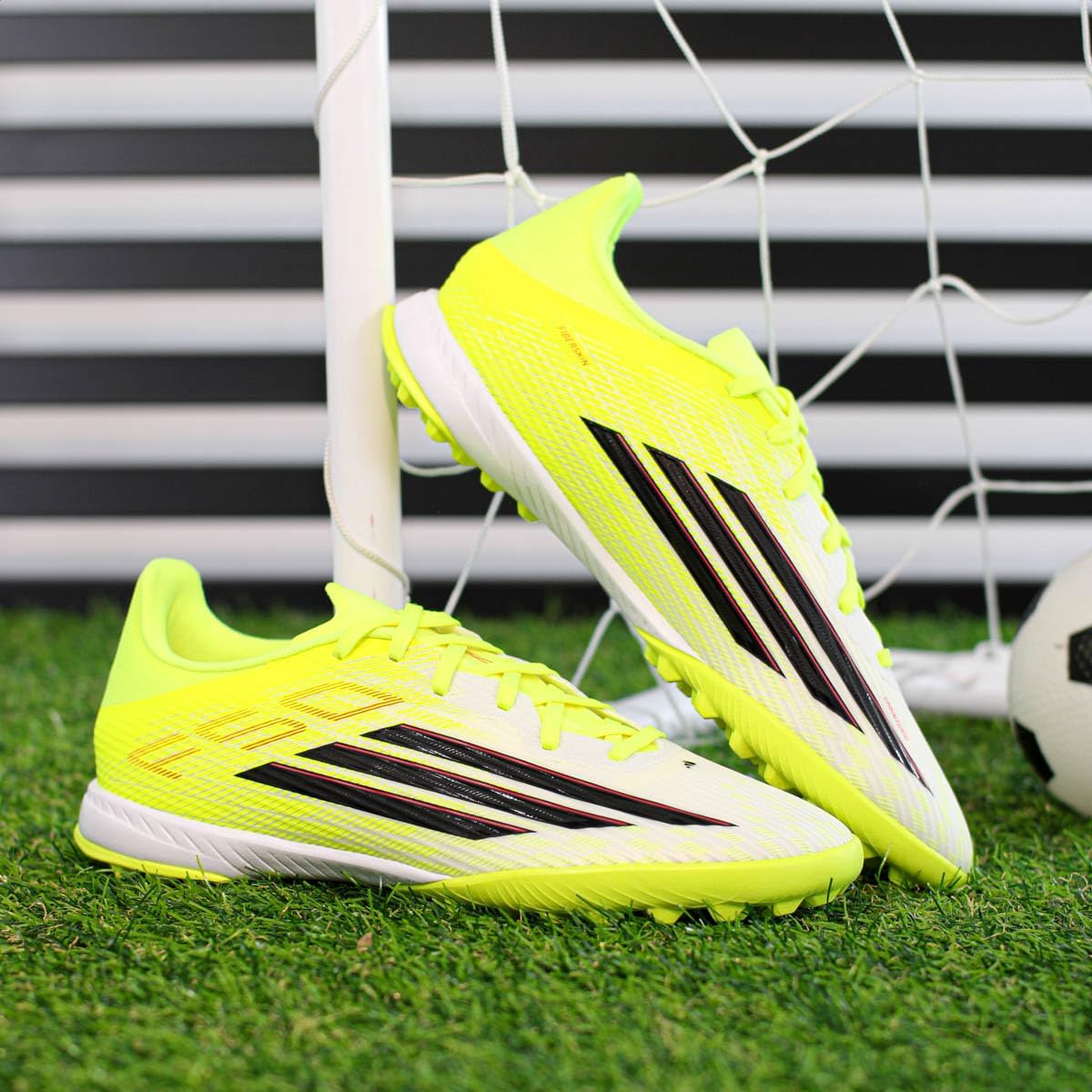
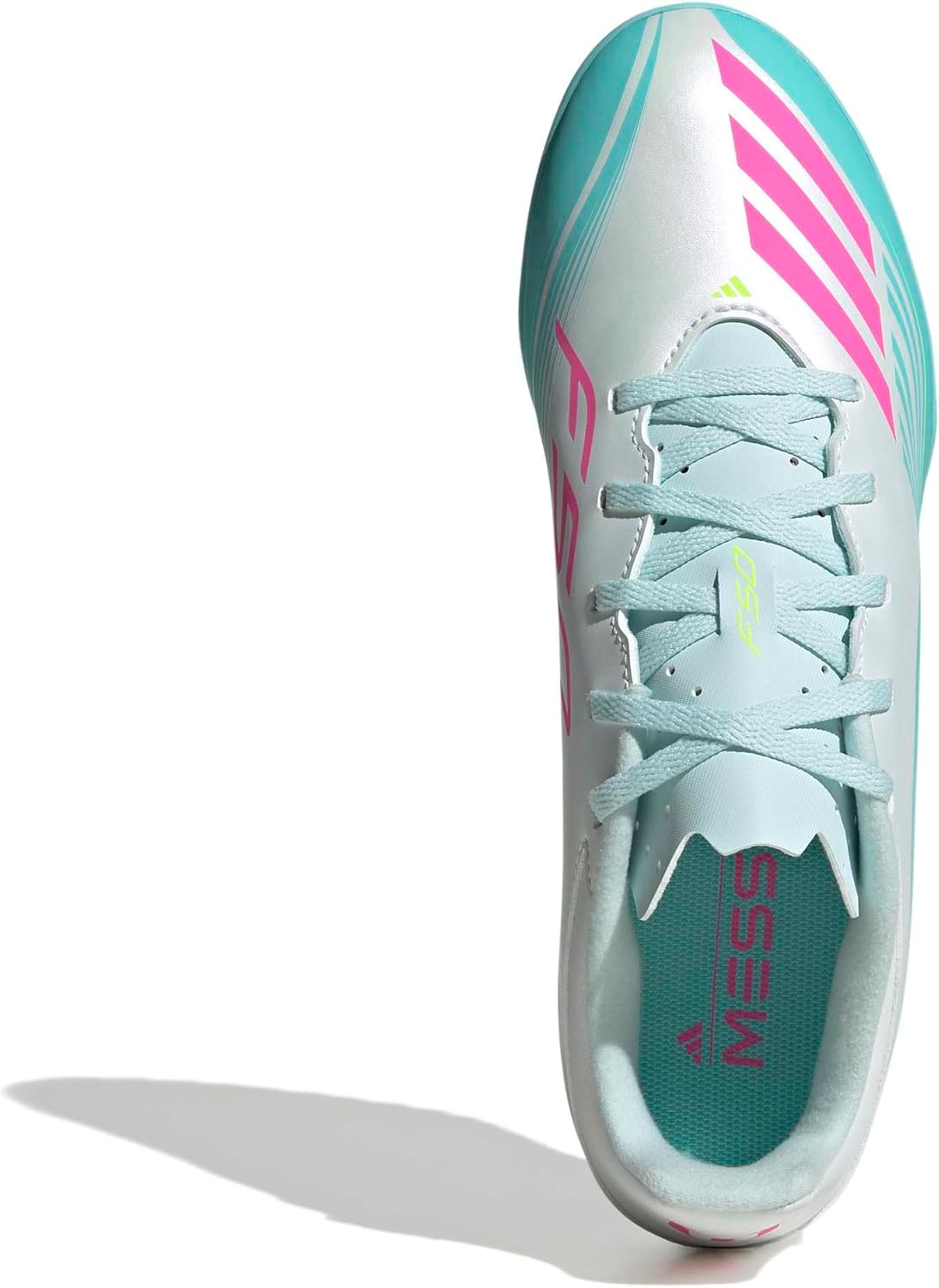
Check price on AmazonThe F50 Club uses what Adidas describes as a standard TPU (thermoplastic polyurethane — a firm, durable plastic common across budget football boots) flat-ground chassis. It is functional and durable for recreational use. The F50 League steps up to a sprint-frame chassis with stud geometry that is closer to — though not identical to — the upper-tier boots in the silo.
Owners in footballboots.co.uk’s aggregated reader coverage consistently note that the League chassis feels meaningfully more locked-in during lateral cuts and acceleration, which is exactly the movement pattern the F50 family is engineered around. If your game involves a lot of straight-line speed and sharp change-of-direction, the outsole difference is tangible. If you’re a deeper-lying midfielder or a goalkeeper doing boot shopping, it matters considerably less.
adidas
$70.00
In stock on Amazon
Check price on AmazonUpper Construction and Touch Zones: Real, but Context-Dependent
adidas
$54.00
In stock on Amazon
Check price on AmazonThe F50 Club’s upper is a standard synthetic mesh — serviceable, holds its shape reasonably well, and durable enough for two-to-three sessions per week. The League introduces what Adidas calls “engineered mesh” in its product specification documentation. As Footwear News’s overview of Adidas performance upper construction methods explains, engineered mesh refers to zone-differentiated weave densities: firmer where the boot needs to resist stretch under striking load, softer around the forefoot where touch matters most.
Owners report the League upper produces noticeably less “slap” when receiving the ball at pace — a detail that sounds minor until you’re playing at a level where ball-feel affects decision speed. The Club upper is not bad. It just does not have that zone-differentiated engineering.
adidas
$70.00
In stock on Amazon
Check price on AmazonHeel Counter and Collar: The Fit Stability Gap
adidas
$54.00
In stock on Amazon
Check price on AmazonThe F50 League includes a more structured internal heel counter — the rigid cup at the back of the boot that controls foot slip — and a collar design closer to the Elite’s ankle lock-in geometry. Footballboots.co.uk flags this in their F50 reader review coverage as a pain point across the silo generally: players between sizes or with lower-volume feet experience more heel lift in the Club than in the League. The Club’s heel counter is softer and less structured, which can translate to subtle slippage during explosive lateral movements.
If you’ve ever had to size down half a step or tape your heel in a budget boot to stop slippage, the League’s heel counter engineering is specifically addressing that problem.
adidas
$70.00
In stock on Amazon
Check price on AmazonThe Fit Problem Nobody Talks About Enough
Let’s stay on fit for a moment, because it shapes this decision more than the specs do for most buyers.
The F50 last — the internal foot shape around which the boot is constructed — runs narrow to medium across both tiers. Adidas’s published sizing guidance does not acknowledge this in plain terms, but owner reports aggregated at footballboots.co.uk consistently flag that the F50 fits closer to the Nike Mercurial on the narrow-to-medium end than it does to the Adidas Copa, which runs notably wider. If you are a wide-foot buyer or carry volume in the forefoot, the F50 is fighting your foot shape at both the Club and League tier — and spending the extra $40 will not fix a fit problem that is structural to the last.
The honest advice here: if the F50 last does not work for your foot, the Club saves you $40 to redirect toward a silo that does fit you. The League being technically better does not matter if the boot is cutting off forefoot circulation by minute thirty.
For narrow and medium-width players, the League’s more structured collar and heel counter makes the fit advantage real — particularly for players coming from junior sizes into adult lasts for the first time and noticing subtle slip at the heel during explosive lateral movements.
The Cost-Per-Match Frame
Here is the decision math that actually matters for the dedicated club player.
Assume a club-season athlete plays 30 competitive matches per season and trains three days per week for eight months — roughly 96 training sessions plus 30 matches, or about 126 uses in a season. At that volume, boots in this price range typically show meaningful upper wear and outsole compression starting at the 80–100 use mark, based on patterns consistently reported in long-run owner reviews at footballboots.co.uk.
- F50 Club at $70 → approximately $0.56 per use over 125 uses
- F50 League at $110 → approximately $0.87 per use over 125 uses
That is a $0.31 per-use difference, or roughly $39 across a full season of use. The question is not whether $39 is a lot — it is whether the League’s outsole geometry, upper construction, and heel counter are worth $39 per season to your specific game. For a player who is acceleration-dependent (winger, striker, attacking midfielder), the chassis and upper differences touch the highest-leverage moments of their performance. For that player, the answer leans League. For a recreational center-back playing once a week on a forgiving grass pitch, $39 is real money and the Club is not a compromise — it is the right-sized tool.
The Prior-Cycle Pro Angle
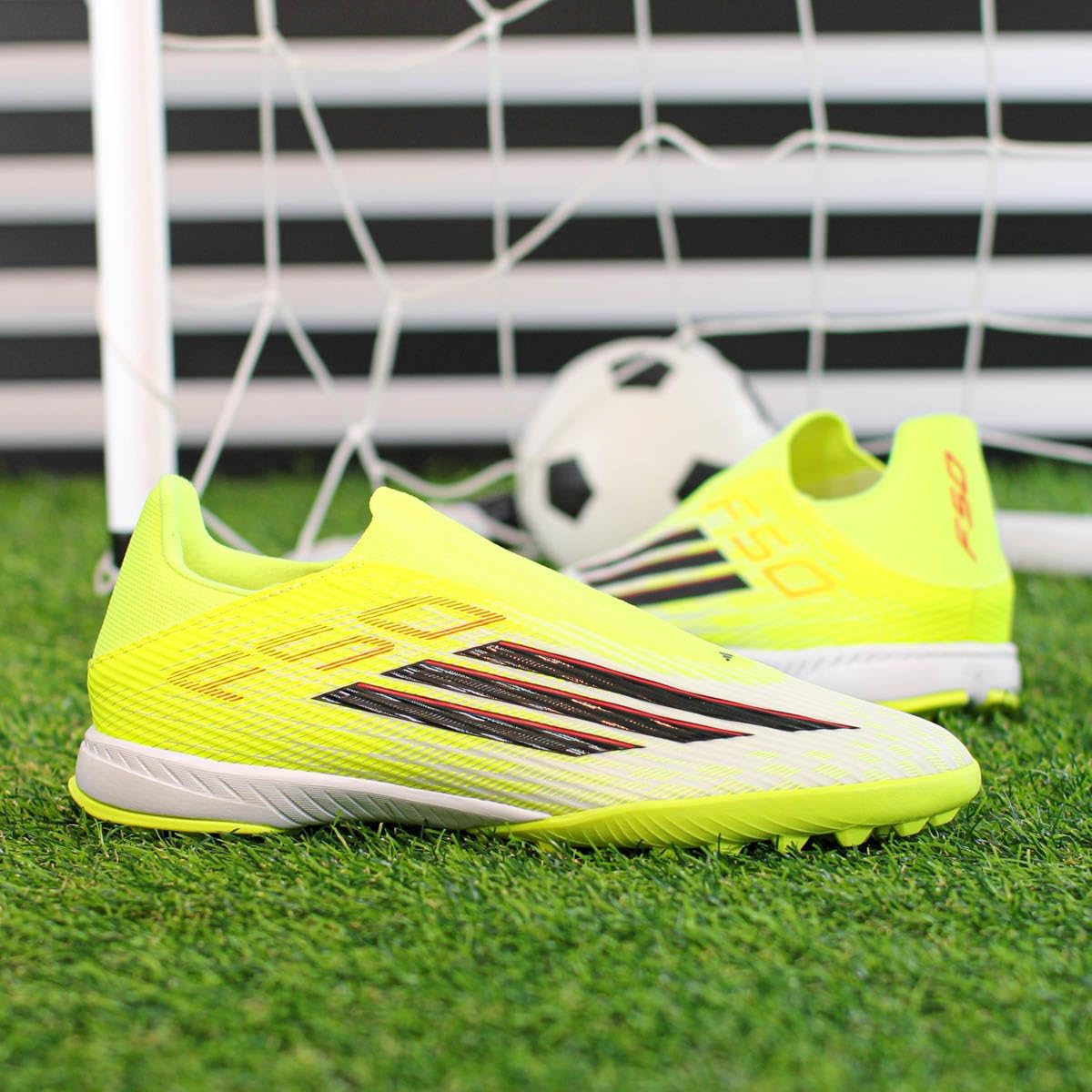
The real trap in this comparison is not buying the Club when you should buy the League. It is buying either one when a same-price end-of-cycle F50 Pro gives you Pro-tier construction at League money.
Adidas typically discounts prior-cycle Pro-tier boots to $100–$130 when a new silo generation drops. SoccerBible’s editorial coverage of Adidas silo release patterns notes that Adidas rotates new F50 colorways roughly every 9–12 months, which creates predictable discount windows. Footy Headlines’ ongoing coverage of F50 colorway announcements and construction changes tracks these cycles in real time and is worth monitoring if you are timing a purchase.
If you are shopping within three to four months of a new colorway announcement, the prior-cycle Pro at clearance price almost always beats the current-cycle League at full price. The structural bones of the boot — last shape, chassis geometry, upper engineering — do not change with the colorway. Only the visual palette does.
adidas
$75.06
In stock on Amazon
Check price on AmazonThe Decision Frame
If your game is acceleration-dependent and you train 3+ days per week: Buy the League, or hunt a prior-cycle Pro at clearance. The outsole sprint chassis and structured heel counter are earning their price delta.
If you’re recreational, playing 1–2 times per week, or buying for a youth player still growing: The Club is the honest call. Save the $40 toward a proper boot fitting or a dedicated AG option if your surfaces vary.
If the F50 last does not fit your foot width: Neither tier fixes a structural last mismatch. Redirect to the Copa Pure.2 Club or League equivalent for wide feet, or evaluate a Puma Future with its adaptive upper, before spending anything on the F50 line.
If you’re within a colorway-cycle window: Wait two to four weeks for prior-cycle League and Pro discounting before you buy. Per SoccerBible’s silo release editorial coverage, discount depth in the first month post-launch on outgoing colorways routinely reaches 25–40% at major retailers, which entirely changes which tier you can access at your budget.
The F50 Club is not a bad boot. The F50 League is not a dramatic upgrade. But the gap between them is real, it lives in specific technical areas, and it maps clearly onto specific player profiles. Match the boot to the profile — not the brand halo — and you have answered the overpaying question before you reach the checkout page.