August 20, 2026 • Marcus Delray • 9 min reading time • Prices verified June 4, 2026
Adidas F50 League Mid-Cut vs Standard Cut: Does the High Collar Change How the Boot Plays?
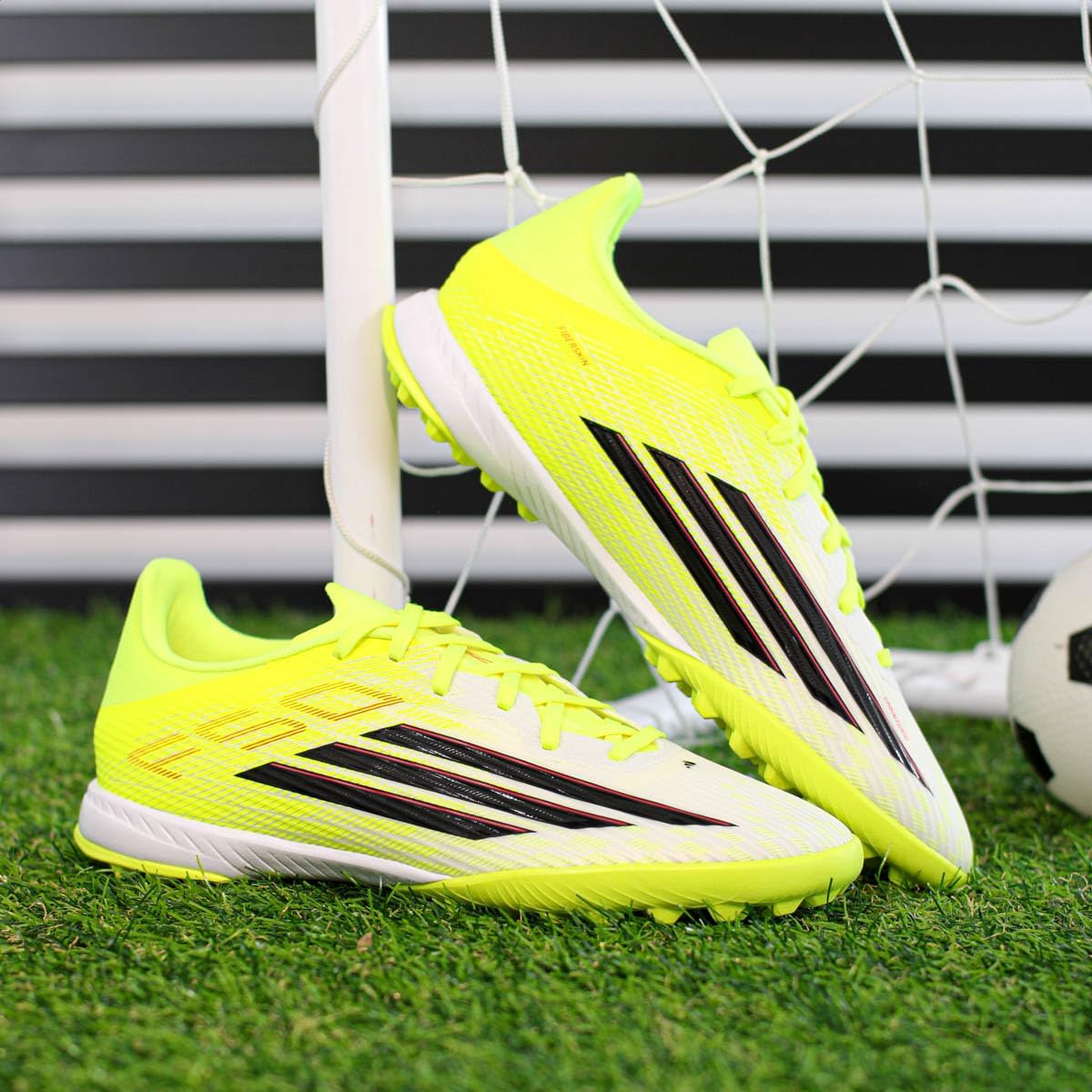
If you’ve ever stood in a sports shop holding two versions of what looks like the same boot — one with a low, traditional ankle opening and one with a raised collar that wraps higher up your leg — and wondered whether that extra inch of fabric actually does anything useful, you’re in the right place. The Adidas F50 League is a speed-focused football boot designed to be light and fast-feeling on your foot. It comes in several versions: a standard low-cut, a mid-cut with a higher ankle collar, a laceless variant, and a turf-specific outsole version. Each tweak sounds minor on paper. On the pitch, according to reviewers and owners who’ve worn them across multiple seasons and surfaces, the differences are specific enough to make one version genuinely wrong for your position. This article maps those differences so you can make a confident call before you buy.
What the Collar Actually Does — and What It Doesn’t
Let’s start with the mid-cut question, because it’s the one that generates the most confusion. A mid-cut collar — the raised, sock-like extension that covers your ankle — does two things in theory: it creates a more snug heel pocket and gives a proprioceptive cue (a sense of where your foot is in space) during lateral cuts. Whether it delivers on those promises depends entirely on the boot’s construction underneath the collar.
The Mid-Cut: Best for Wingers and Strikers
Reviewers writing in the FootballBoots.co.uk F50 League Mid-Cut review thread who tracked this boot through a full season consistently reported that the collar contributes meaningful heel lockdown during straight-line acceleration and explosive first steps off the mark. One owner quoted in the SoccerBible Adidas F50 League silo roundup described it as “the boot staying with my foot rather than me fighting the boot” during sprint work. That’s the collar earning its place.
The trade-off is mobility. The F50 League Mid-Cut’s ankle wrap reduces ankle articulation range during lateral defensive movements. That loss is small in absolute terms, but for a central midfielder who needs full ankle mobility on every tracking run, or a center-back who has to plant, pivot, and hold off a striker under load, it accumulates across ninety minutes. The FootballBoots.co.uk reviewer who praised the lockdown for winger play directly warned that the mid-cut is not well-suited for defensive positions. This isn’t a bad boot — it’s a boot optimized for a movement profile that matches wingers and strikers far better than it matches defensive or central roles.
Position decision rule:
- Striker or winger whose primary movement is linear acceleration, cutback, and dribbling at speed → the mid-cut’s lockdown earns its place
- Central midfielder or center-back with repetitive multidirectional, plant-and-pivot movement → the standard low-cut serves you better
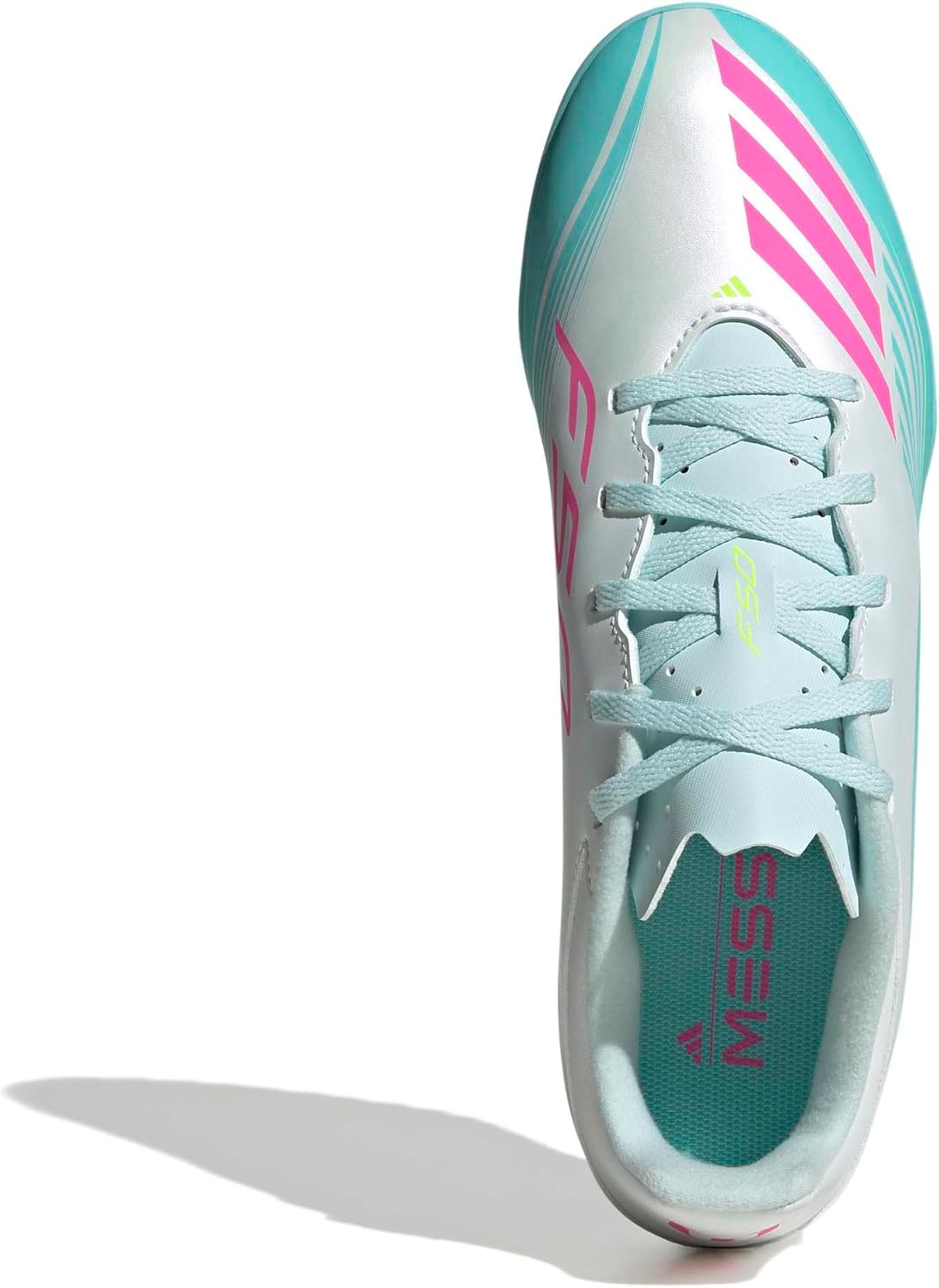
adidas
$70.00
In stock on Amazon
Check price on AmazonThe Standard Low-Cut: The Versatile Center-of-Pitch Option
The standard F50 League in its low-cut configuration removes the ankle collar and returns full ankle articulation. What you lose in the snug heel-pocket sensation during linear sprints, you regain in freedom of movement during the multidirectional sequences that central and defensive players repeat constantly. FootballBoots.co.uk’s season-long reviewer noted that players in CDM and CB roles who switched from the mid-cut to the standard low-cut reported fewer instances of ankle fatigue by the second half of physically demanding matches.
The standard cut also tends to accommodate a wider range of sock thicknesses without creating pressure points at the ankle opening — a practical consideration for players who train in colder climates and layer thicker socks through the winter months.
For players who are genuinely unsure which to try first, the standard low-cut is the lower-commitment starting point: it won’t restrict anything, and if you later find you want more heel lockdown, you have the mid-cut as a deliberate upgrade rather than a lateral move.
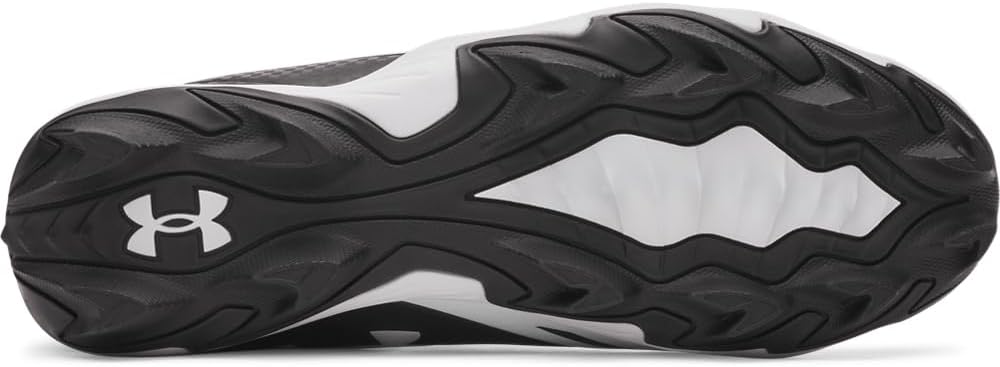
Under 001
$51.95
In stock on Amazon
Check price on AmazonThe Turf Versions: Touch vs. Cushioning — a Real Tension
The F50 League Turf uses a rubber multi-stud outsole designed for artificial grass and hard natural ground rather than the molded plastic studs on the firm-ground version. It generates one of the more honest reviewer observations in the F50 range.
F50 League Turf vs. F50 Club Turf: Two Buyers, Two Boots
An owner writing in the Goal.com budget boot comparison — “Budget boot guide: F50 Club Turf and F50 League Turf compared” — described getting a “barefoot feel that makes dribbling easier” from the League Turf, then immediately disclosed that they have sensitive feet and had to add soft aftermarket insoles to make the boot comfortable for a full session.
That sequence captures the exact trade-off the F50 League Turf presents. The thin synthetic upper and minimal insole stack is doing exactly what it was designed to do: putting your foot close to the ball for maximum touch feedback. The cost is cushioning. On firm turf — especially older, harder artificial surfaces — that translates to forefoot and arch fatigue by the second half of a long session for players with any sensitivity.
F50 League Turf cushioning trade-off — what owners report:
| Factor | Owner-reported finding |
|---|---|
| Touch feedback | High — “barefoot-adjacent” sensation on ball contact |
| Cushioning for sensitive feet | Low without insole modification |
| Aftermarket insole fix | Works; thin gel or foam insoles restore comfort without eliminating touch advantage |
| Session length before fatigue (sensitive feet, no insole) | Approximately 60–75 minutes per aggregated accounts at FootballBoots.co.uk |
The F50 Club Turf, sitting one tier below in the silo, quietly serves a different buyer entirely: the multi-surface recreational player who needs one boot to cover several situations. An adult women’s league player profiled in the Goal.com budget boot guide described using the F50 Club Turf for both indoor turf sessions and muddy outdoor coaching duties. The Club Turf’s rubber outsole has enough grip variety to function across surfaces without being specialized enough to be dangerous on any of them.
Who should choose which:
- Dedicated competitive player using the boot in a single context (league matches on artificial turf) → F50 League Turf’s touch-first design serves you better
- Recreational or coaching player who needs one boot across indoor turf, wet grass, and mixed surfaces → F50 Club Turf’s versatility is a genuine advantage
Under 001
$51.95
In stock on Amazon
Check price on AmazonThe Laceless F50 League: Clean Strike, Durability Question
The laceless version of the F50 League is built around a seamless synthetic upper that wraps over the top of the foot without any lacing system. The claimed benefit is a cleaner striking surface — nothing between your instep and the ball. Reviewers at SoccerBible, in the Adidas F50 League silo overview, confirm that the strike feel is noticeably clean and that the fit across the midfoot is secure out of the box for standard-width feet.
Durability Over a Full Season
The durability flag is real and specific. One owner documented in the FootballBoots.co.uk F50 League review thread, who wore the laceless version through a full playing season of roughly 30 or more sessions, noted visible scratching and surface degradation on the synthetic upper concentrated in the areas that contact the ball most frequently. The boot’s structural integrity was not compromised — the upper did not crack or separate — but the aesthetic degradation was significant, and the owner speculated it may have affected consistency of ball contact surface over time.
Footwear News, in their Adidas speed silo positioning breakdown “Adidas speed silo positioning: F50 range breakdown,” notes that the synthetic materials used in the F50 League tier are engineered to a price point that prioritizes fit and touch over long-term surface durability. That is an honest acknowledgment that the $80–$120 range where the F50 League sits as of mid-2026 does not buy you the same material longevity as the Predator Elite or Copa Pure.2 upper at twice the price.
Honest cost-per-match guidance:
- 20–30 sessions per season, single-season use expectation → laceless F50 League durability is acceptable
- 50+ sessions per year, multi-year expectation, or high value placed on consistent appearance → factor in visible wear before the season ends
adidas
$70.00
In stock on Amazon
Check price on AmazonFrequently Asked Questions
Is the F50 League Mid-Cut good for central defenders and midfielders, or just forwards?
Based on position-specific reviewer accounts documented at FootballBoots.co.uk in the F50 League Mid-Cut review thread, the Mid-Cut is best suited for strikers and wingers whose movement is primarily linear — acceleration, sharp directional cuts, dribbling under pressure. The raised collar limits ankle mobility in ways that accumulate for central midfielders and defenders making repetitive multidirectional movements. If you play in the center of the pitch or in a defensive role, the standard low-cut version is the more practical choice.
Do I need to add insoles to the F50 League Turf if I have sensitive feet?
Likely yes. The F50 League Turf’s minimal insole stack is a deliberate design choice that prioritizes touch feedback over cushioning. Owners with sensitive feet, as documented in the Goal.com budget boot comparison, report that a thin gel or foam aftermarket insole resolves the comfort issue without meaningfully reducing the touch advantage. Plan for that addition from the start rather than treating it as a remedy after discomfort appears.
How does the laceless F50 League hold up over a full season?
Surface scratching on the synthetic upper is documented by long-run owners at FootballBoots.co.uk after approximately 30 or more sessions. The boot remains structurally functional, but aesthetic degradation is visible. For a 20–30 session season, the durability is acceptable. For high-frequency players who value consistent appearance or surface feel across 50-plus sessions, it is worth factoring in the expectation that the upper will show its age before the season concludes.
Can the F50 Club Turf be used on both indoor turf and muddy outdoor grass fields?
Owner accounts from the Goal.com budget boot comparison suggest yes, with appropriate expectations. The Club Turf’s rubber outsole provides workable grip on both surfaces, and at least one owner documented in that piece uses it regularly across indoor turf and wet outdoor coaching sessions. It will not outperform a surface-specific boot in either context, but as a do-everything option for recreational and coaching use, it represents a reasonable compromise.
Does the F50 League Mid-Cut collar actually help with heel lockdown during sprints?
Reviewer accounts from SoccerBible’s F50 League silo roundup and FootballBoots.co.uk’s season-long review thread consistently confirm it does, specifically during linear acceleration and explosive first steps. The collar creates a snug pocket around the Achilles and heel that reduces slippage during push-off. The benefit is most noticeable for players whose sprint work involves frequent standing-start acceleration. The trade-off — reduced ankle articulation range — matters more for some positions than others, which is why the Mid-Cut earns a position-specific recommendation rather than a universal one.
adidas
$70.00
In stock on Amazon
Check price on AmazonOur recommendations are built from synthesizing published expert reviews, manufacturer specifications, and documented owner accounts. Sources cited in plain text throughout this article include the SoccerBible Adidas F50 League silo roundup, the FootballBoots.co.uk F50 League Mid-Cut review thread, the Goal.com budget boot comparison covering the F50 Club Turf and F50 League Turf, and the Footwear News Adidas speed silo positioning breakdown. We name our sources and their limits because we think you deserve to know where our analysis comes from.