July 24, 2026 • Marcus Delray • 11 min reading time • Prices verified June 4, 2026
Budget Kids Cleats Compared: Brooman, DREAM PAIRS, and No-Name Brands Under $35
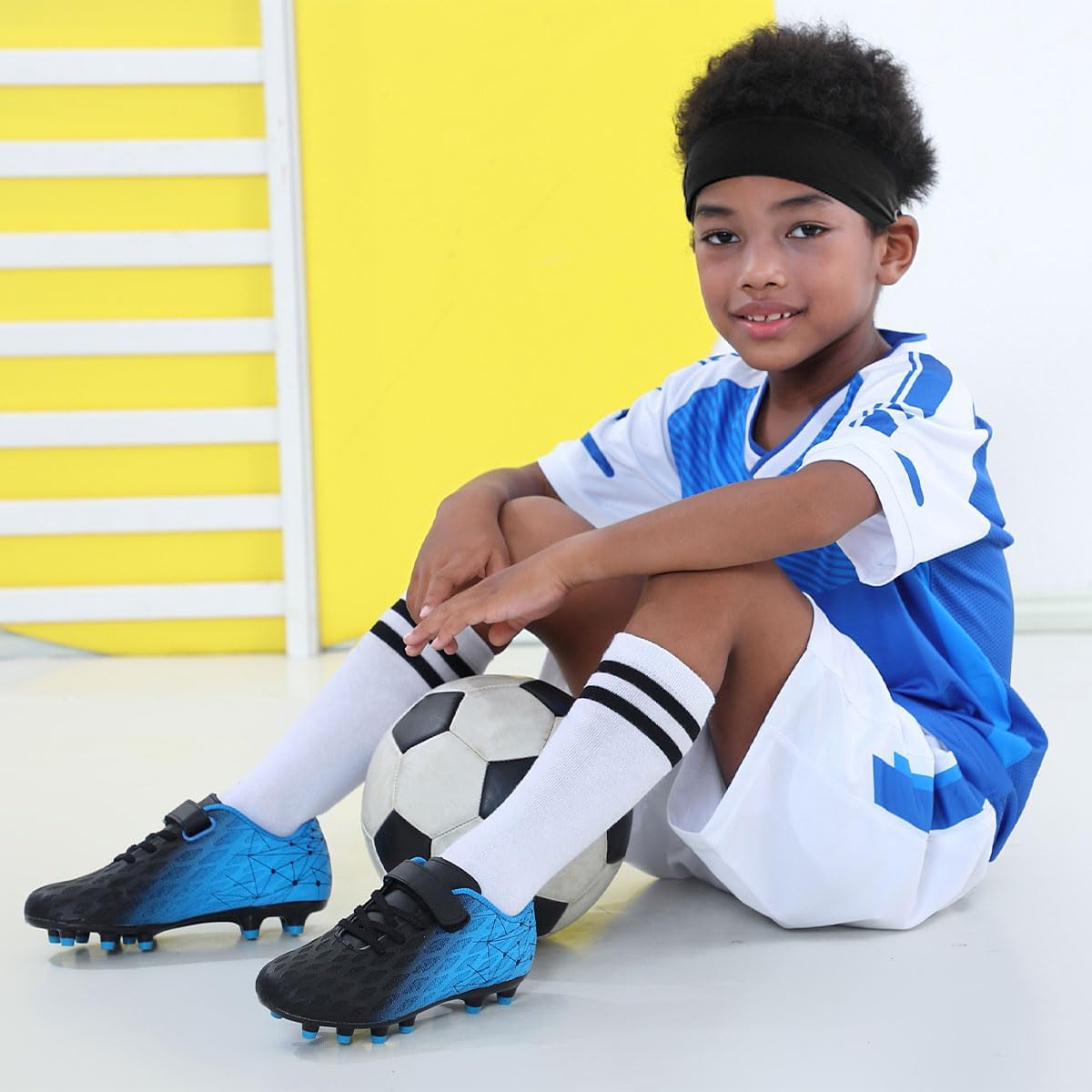
If your kid is about to start their first season of recreational soccer — or T-ball, or flag football — you already know the problem: children’s feet grow fast, seasons are short, and spending $80 on cleats that might be outgrown by October feels unreasonable. Budget cleats, shoes designed to keep the price under roughly $35, exist precisely to solve this. They are not trying to compete with the boots worn by academy players. They are trying to survive six to eight weeks of once-weekly practices without falling apart, fit a five-year-old’s foot well enough not to cause blisters, and cost less than a single tank of gas if the kid decides soccer isn’t for them.
This article compares two of the most visible names in that category — Brooman and DREAM PAIRS — alongside the anonymous no-name brands that crowd the same search results, pulling from aggregated verified purchaser reviews so you know what you’re actually getting before the package arrives.
| EDITOR'S PICKbrooman Kids Indoor Soccer Shoe… | Mid-tierDREAM PAIRS Boys Girls Soccer C… | Budget pickDREAM PAIRS Boys Girls Indoor T… | |
|---|---|---|---|
| Sport type | Indoor soccer | Outdoor | Indoor turf |
| Closure | — | — | Lace up |
| Color | Navy/Lime | Red/Black/Silver | Blue |
| Sizing | 11 Little Kid | 12 Little Kid | 2 Little Kid |
| Surface | Turf | Firm ground | Turf |
| Price | $39.99 | $24.99 | $19.99 |
| See on Amazon → | See on Amazon → | See on Amazon → |
What You’re Actually Buying in the Under-$35 Tier
Let’s set expectations clearly, because this is where a lot of first-time buyers get burned — not by a bad product, but by wrong expectations.
At this price point, the construction is almost always the same regardless of brand: a synthetic upper, a molded rubber outsole with short molded studs (called firm-ground or FG studs, designed for natural or artificial grass), and a thin EVA foam insole. EVA — ethylene-vinyl acetate — is the same basic foam used in flip-flops; it cushions, but not deeply. What you are paying for, at $25–$35, is fit consistency, closure reliability, and enough structural integrity to get through one season. You are not paying for energy return, premium leather, or the kind of stud geometry that affects ground penetration at higher speeds.
That context matters because it changes how you evaluate the reviews below. A parent saying “my son loves them” is meaningful. A parent saying “the cleat tips wore down after four months of twice-weekly training” is not a product failure — it is the product delivering exactly what the price point promises.
By the Numbers
| Brand / Model | Typical Price (2026) | Closure | Primary Surface | Notable Pattern |
|---|---|---|---|---|
| Brooman Kids Soccer Cleat (FG) | ~$25–$32 | Velcro / hook-and-loop | Firm ground / grass | Strong on independence for young kids |
| DREAM PAIRS Kids FG Cleat | ~$28–$35 | Lace-up | Firm ground / grass | Bright colors praised; heel padding issues noted |
| DREAM PAIRS Kids Indoor | ~$25–$33 | Lace-up | Indoor / gym floor | Documented second-season durability |
| Brooman Kids Indoor | ~$22–$30 | Velcro | Indoor / gym floor | Frequently a “trial” purchase for uncertain families |
| Generic / No-Name Brands | ~$15–$25 | Varies | Varies | Inconsistent sizing, no review pattern |
Brooman, DREAM PAIRS, and No-Name Brands: A Head-to-Head Breakdown
Brooman: The Velcro Advantage Is Real
The thing reviewers keep coming back to with Brooman isn’t the upper material or the stud layout — it’s the Velcro closure. Across aggregated verified purchaser reviews from 2025–2026, the hook-and-loop fastening system earns a level of enthusiasm that’s unusual in a product category where most parents are just looking for “fine, it works.” One parent explicitly calls it a “game changer,” explaining that their son’s previous lace-up cleats came untied repeatedly during games, creating both a safety issue and a logistical one when the child couldn’t retie them independently mid-match. A separate reviewer notes that their four-year-old can now put the shoes on by themselves — a detail that sounds minor until you are standing on a sideline at 8 a.m. trying to get a reluctant preschooler ready to play.
For children under roughly age six or seven — most child development resources put reliable lace-tying around age 6–7 — a lace-up cleat is genuinely a worse product, because it requires adult intervention to stay secure. A properly fastened Velcro closure can actually be more secure during play than a loosening lace, not less.
The Brooman indoor version draws a particularly telling review: a parent who bought the shoes explicitly because they were uncertain whether their daughters would stick with soccer. “In case my girls didn’t like soccer” is a direct quote from one verified reviewer, and it reflects a purchasing logic that deserves to be spoken to directly. If you are in trial-season mode — not sure whether your child will play past this first session, not ready to commit to a higher-quality shoe — the Brooman at this price is a reasonable hedge. The product is designed for exactly that use case.
Where Brooman reviews are less effusive: the footbed is thin, and some reviewers note that kids who spend significant time on harder artificial turf or gym floors notice it. This is a category-wide limitation, not a brand-specific failure, but it is worth knowing going in.
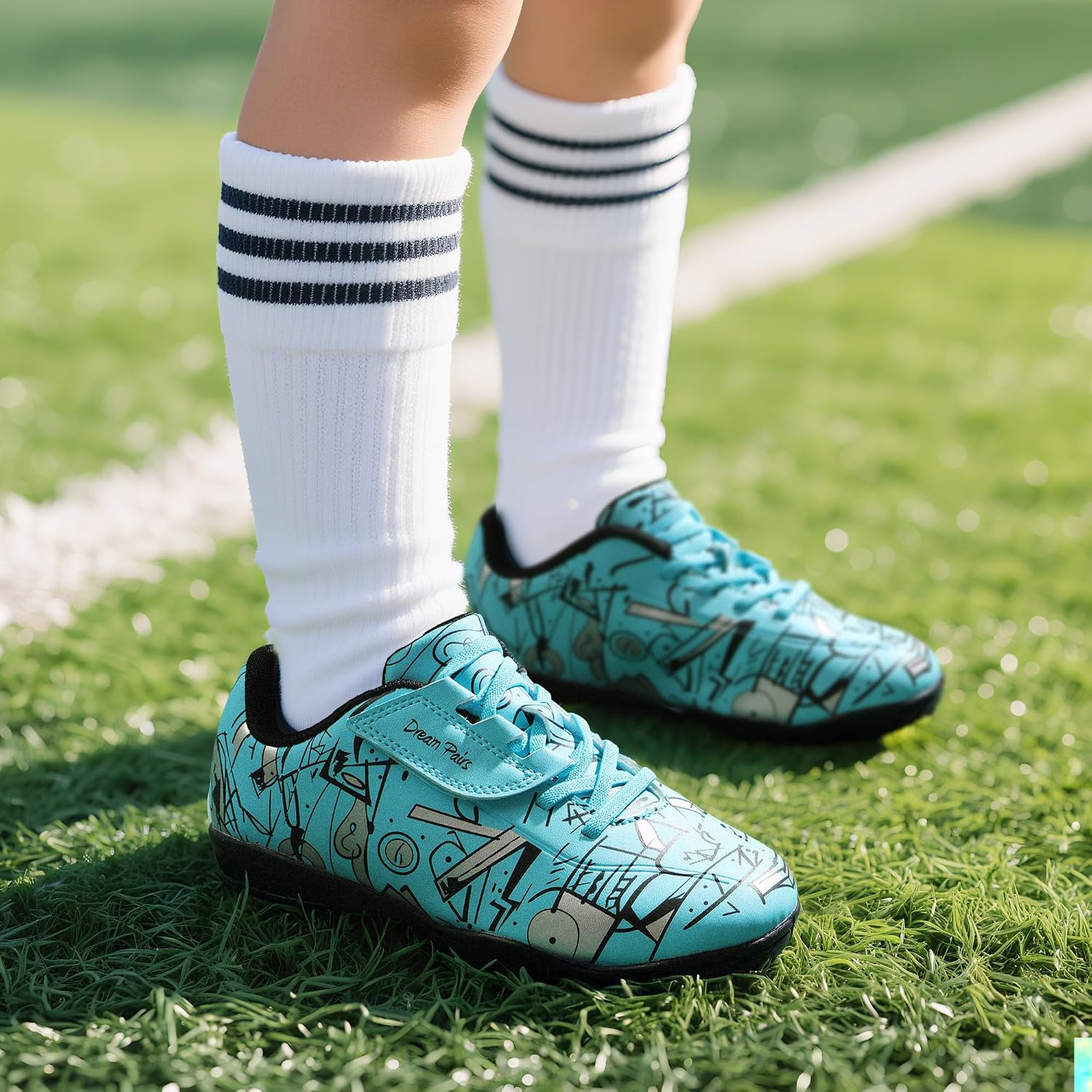
DREAM
$19.99
In stock on Amazon
Check price on AmazonDREAM PAIRS: Bright Colors, Real Heel Caveat, and a Durability Win
DREAM PAIRS occupies slightly more of the review conversation than Brooman, partly because they offer both FG outdoor and IC indoor versions with distinct review pools large enough to compare across surfaces.
On the FG outdoor cleat, the most consistent praise is visual: parents note that the color options — particularly the brighter colorways — are vivid and hold up reasonably well through a season’s worth of mud and washing. For kids who have opinions about how their gear looks (most of them, from about age four onward), this is not a trivial point. A child who feels good about their shoes is a child who puts them on without a fight.
Here is the part that needs to be said plainly, because the review that surfaces it is honest and specific: at least one documented verified reviewer reports that their child experienced heel pain during the season while wearing the DREAM PAIRS FG cleat, and that the pain resolved only after the parent added an aftermarket cushion insert — a thin gel or foam pad purchased separately to supplement the existing insole. This is not a reason to avoid the shoe, but it is information you should have. If your child has a history of foot sensitivity, or if they are going to be playing on hard artificial turf rather than natural grass, budget a few extra dollars for an insole upgrade from the start rather than troubleshooting mid-season.
The indoor DREAM PAIRS version earns the most durable positive signal in this entire category: a verified reviewer explicitly endorses the shoe as a repeat purchase, noting that it survived a full second season at once-weekly practice. In a price tier where surviving one season qualifies as a win, two seasons at $28–$33 represents genuine cost-per-use value. If your child is in a year-round indoor futsal or gym-floor program, this durability track record is worth weighting heavily.
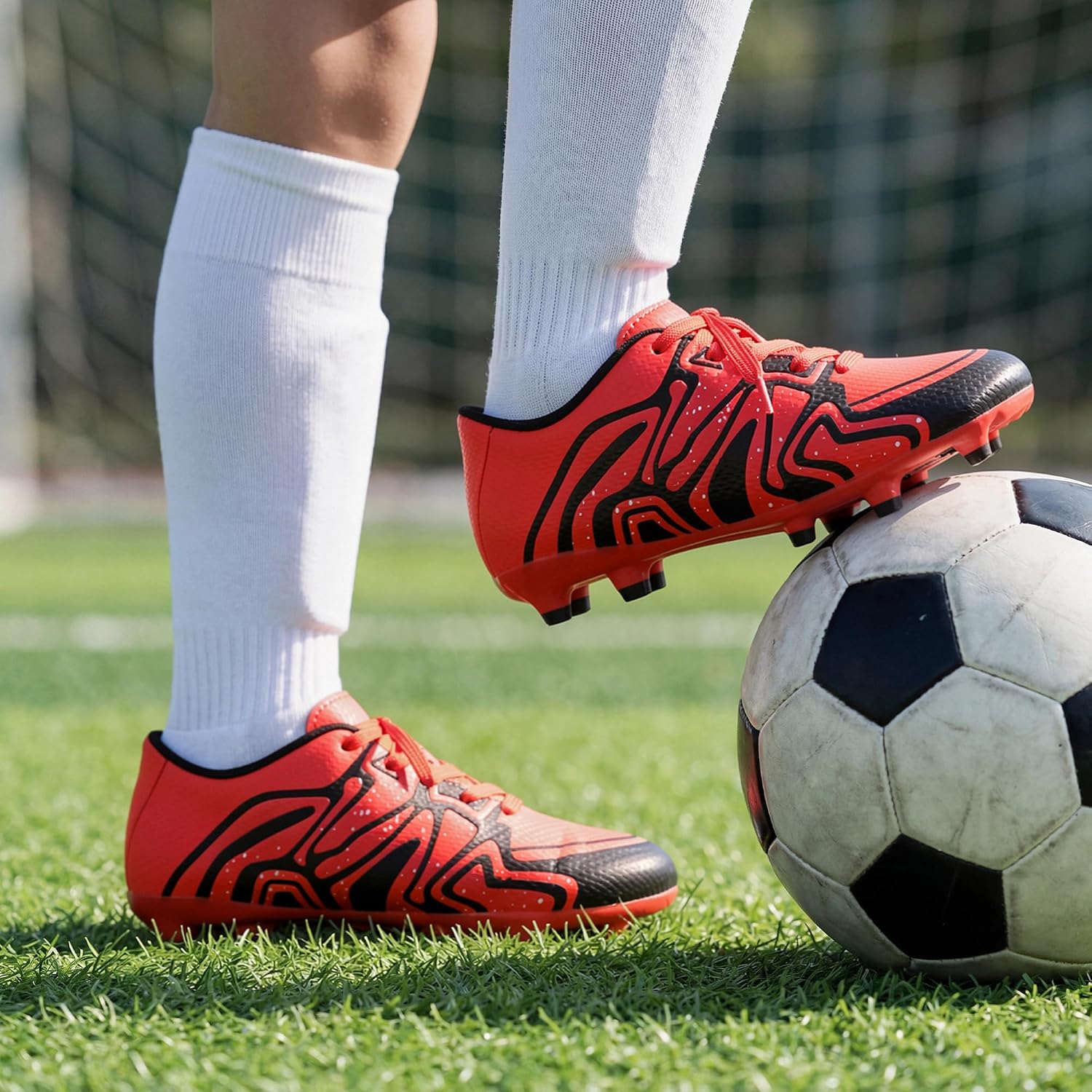
DREAM
$24.99
In stock on Amazon
Check price on AmazonNo-Name Brands: Why Brand Recognition Has Value Even at $25
The generic and no-name brands that populate the same search results as Brooman and DREAM PAIRS — usually priced $15–$25 with minimal review history — present a specific risk that is easy to underestimate: sizing inconsistency. Footwear News, in its coverage of youth athletic footwear market trends for 2025, notes that sizing standardization remains a persistent problem in the budget import segment, where production runs from different factories can vary by a half-size or more within the same listing. With a named brand like DREAM PAIRS or Brooman, you have a review pool large enough to surface the pattern — “runs a half-size small, order up” — before you buy. With a no-name listing of 30 reviews, you do not have that signal, and a shoe that doesn’t fit is worse than no shoe at all, regardless of price.
The other no-name risk is stud attachment. Molded studs on inexpensive cleats occasionally detach from the outsole under hard lateral movement. In an adult this is an annoyance; in a child running on a grass field it can be a fall risk. Named brands in this category, even at equivalent price points, tend to have more consistent quality control because they are maintaining a brand reputation across thousands of reviews. That accountability doesn’t exist for a listing that will simply be relisted under a new name if the reviews go negative.
The practical recommendation: if you are price-sensitive enough that the $10–$15 difference between a no-name and a Brooman genuinely matters, the no-name is not disqualifying. Order one size up, inspect the stud attachment before the first use, and keep the return window open.
DREAM
$19.99
In stock on Amazon
Check price on AmazonFrequently Asked Questions
Are Brooman or DREAM PAIRS cleats true to size for kids?
Across aggregated verified purchaser reviews, both brands tend to run slightly small to true — the more common complaint is that the shoe fits snugly rather than loosely. The safe move with either brand, especially for kids between sizes, is to order a half-size up. This is consistent with what most budget athletic footwear reviewers report for synthetic-upper shoes, which have less stretch than leather or knit uppers.
How long do budget kids cleats typically last through a recreational season?
For once-weekly recreational practice and weekend games over an 8–12 week season, both Brooman and DREAM PAIRS typically hold together structurally. The DREAM PAIRS indoor version has documented second-season durability at that frequency. At twice-weekly or more intensive use, expect the footbed to compress and the upper to show stress at the toe box by end of season — which is acceptable at this price, not a product failure.
Are Velcro kids cleats actually secure enough during games, or do they slip?
For children under roughly age six or seven, a properly fastened Velcro closure is often more secure than a lace-up during active play, because laces loosen and a young child cannot reliably retie them mid-match. Reviewer accounts for Brooman specifically support this: parents report that Velcro stays closed through the activity in a way that their previous lace-up cleats did not. The caveat is that Velcro loses grip over time as the hook-and-loop material collects debris; brush the closure clean periodically.
Can DREAM PAIRS or Brooman cleats double as baseball or T-ball cleats?
Functionally, yes — the molded rubber studs on a soccer cleat are appropriate for baseball and T-ball at the recreational youth level, and most recreational leagues at ages 4–8 do not enforce equipment-specific rules about cleat type. The stud pattern differs from a dedicated baseball cleat, which has a toe stud that pitchers use for pushing off the mound, but for fielding and base running at recreational level, a soccer cleat works adequately. Check your specific league rules, as some programs specify approved footwear types.
What should I do if my child complains the footbed is hard or uncomfortable?
This is a documented issue at this price tier — the EVA insole is thin, and some kids feel it on harder surfaces. The fix is straightforward: a $5–$10 aftermarket gel or foam insole cut to size will resolve most complaints. One DREAM PAIRS FG reviewer explicitly documented this solution for heel pain, and it worked. If your child is playing primarily on natural grass, the surface itself absorbs enough impact that the thin insole is less likely to cause issues. If they are on artificial turf or gym floors regularly, budget the insole upgrade from day one.
The Decision Rule
If your child is under seven, is starting their first season, or you are genuinely unsure whether they will continue with the sport past this trial: Brooman, with Velcro, in their current measured size or a half-size up. The independence the closure provides is worth more than any marginal quality difference between these brands, and the price makes the hedge comfortable.
If your child is seven or older, already committed to a full season, and will be playing on indoor or gym surfaces at least once weekly: DREAM PAIRS indoor version, one half-size up, with an aftermarket insole on hand. The repeat-purchase durability endorsement is the most reliable signal in this entire category.
If the primary concern is outdoor FG use and your child has shown any sensitivity to heel or foot discomfort: DREAM PAIRS FG with an insole upgrade pre-loaded — not added reactively — so you are solving the problem before it becomes mid-season pain. The color selection will make the shoe more appealing to the child, which is its own form of value.
At this price tier, the decision you get wrong most often is not which brand to buy. It is buying the wrong surface type — outdoor FG cleats for an indoor gym, or flat-soled trainers for a grass field. Surface-correct footwear is the cheapest performance upgrade available, and at $25–$35, getting it right costs nothing extra.