August 27, 2026 • Marcus Delray • 9 min reading time • Prices verified June 4, 2026
High-Top Soccer Cleats and Ankle Support: What the Research Actually Says Before You Buy
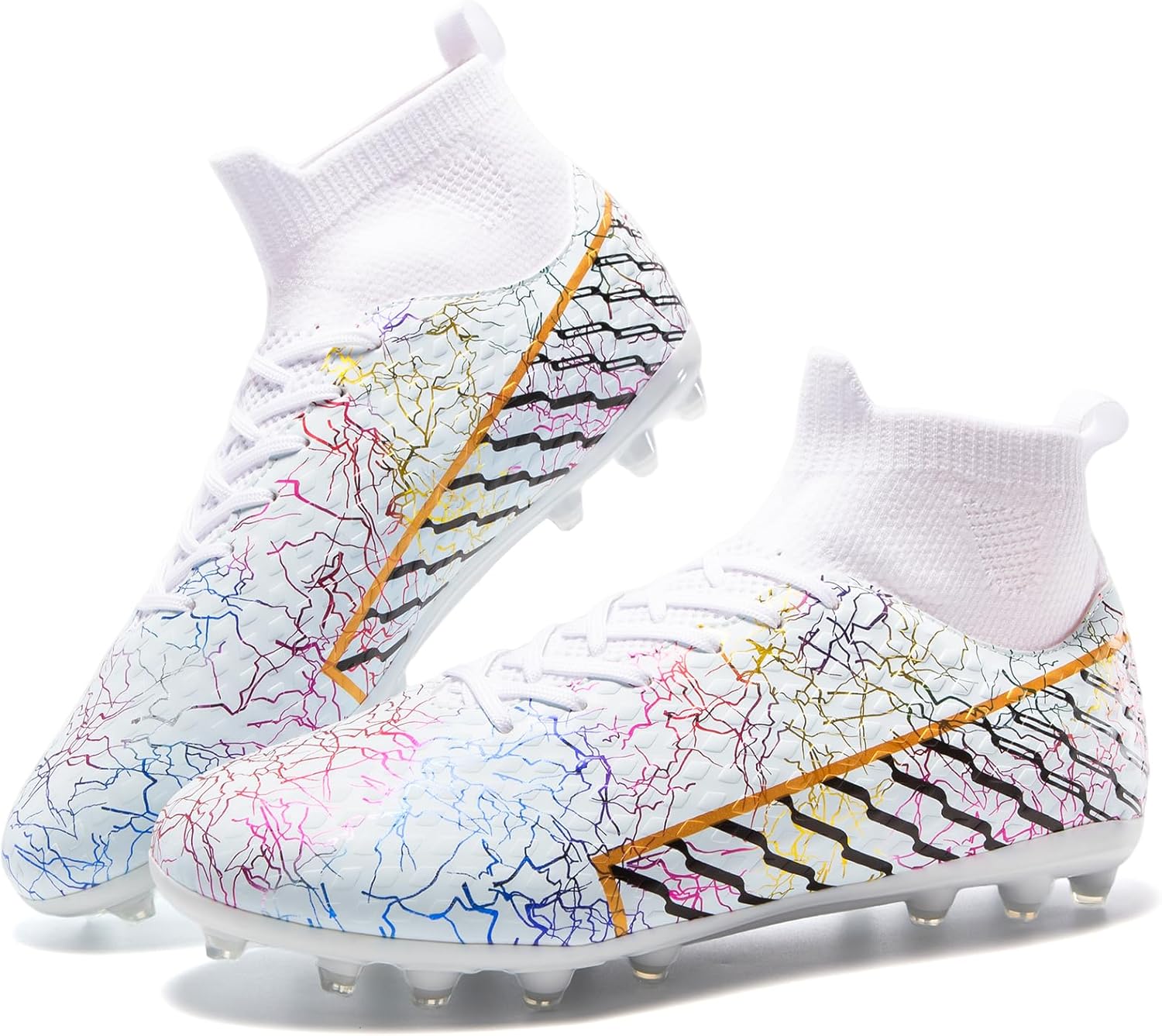
High-Top Soccer Cleats and Ankle Support: What the Research Actually Says Before You Buy
If you’ve ever rolled an ankle mid-match and thought “maybe I need boots that cover more of my leg,” you’re in a very crowded club. High-top soccer cleats — boots where the collar (the fabric or synthetic cuff around the opening) rises above the ankle bone — have been marketed as the protective answer to that exact instinct. The idea is simple: more coverage equals more support equals fewer sprains. But the reality, once you dig into the published research and the honest player reviews, is more complicated. This guide unpacks what the science actually says, where high-tops genuinely help, where they’re mostly marketing, and how to make the right call for your specific situation — whether you’re a weekend player or a serious club athlete spending $200-plus on boots that need to earn their keep.
What “Ankle Support” Actually Means — And Why the Geometry Matters
Before we evaluate any boot, it helps to understand what we’re actually asking a high collar to do. An ankle sprain — specifically a lateral sprain, the most common sports injury across all field sports — happens when the foot rolls inward faster than the stabilizing muscles and ligaments can respond. The question is whether a stiff or snug collar around the ankle joint can slow that roll enough to matter.
Here’s where the research gets interesting, and a little humbling.
A systematic review published in the British Journal of Sports Medicine examining proprioception (your body’s ability to sense joint position in real time) found that external ankle supports — braces, tape, and by extension raised collars — do appear to improve proprioceptive feedback in previously injured ankles. The key phrase is “previously injured.” For a player who has already sprained an ankle and has some degree of residual ligament laxity (looseness), a high collar can genuinely help by giving the nervous system more sensory input about where the joint is in space.
For players with no prior ankle history, the picture is murkier. The Journal of Athletic Training’s meta-analysis on prophylactic ankle bracing found that external support reduces re-sprain rates significantly in athletes with a history of ankle instability, but shows only modest benefits — and some possible proprioceptive interference — in structurally healthy ankles. The body learns to rely on the external cue and may partially disengage its own stabilizing response.
The football-specific complication: cleats are already locked into the turf through the stud plate in a way that basketball shoes on a flat court are not. A 2025 SoccerBible equipment breakdown noted that boot designers at Nike and Adidas have publicly stated that ankle collar height is only one of several variables — stud configuration, outsole torsional rigidity (how much the sole twists under load), and upper material stiffness all interact with how the ankle behaves at ground contact. A high collar on a boot with a very flexible sole may deliver less net support than a low-cut boot with a locked, rigid plate.
The short version: High-tops help most when you have a history of ankle instability. They are not a substitute for strength training or proper bracing in high-risk situations, and the sole architecture matters as much as the collar height.
By the Numbers: What the Cleat Market Looks Like in 2026
| Collar Type | Typical Price Range | Primary Design Goal | Brands with Active SKUs |
|---|---|---|---|
| Low-cut (standard) | $35–$350+ | Unrestricted mobility, proprioception | Nike, Adidas, Puma, New Balance, Mizuno |
| Mid-cut / knit collar | $100–$320 | Sock-like lockdown, marginal coverage | Nike (Mercurial), Adidas (Predator), Puma |
| High-top (true ankle coverage) | $80–$200 | Ankle support, rehab return-to-play | Adidas (Copa variants), specialist brands |
Worth noting: at the elite tier ($200–$350), true anatomical high-tops are rare. The industry has largely converged on dynamic-fit knit collars that hug without rigidly restricting — a deliberate engineering tradeoff that we’ll come back to.
Where High-Tops Actually Show Up in the Market — And Who’s Wearing Them
This is where the conversation gets practical, because the market itself has already voted with its SKU counts.
Genuine high-top soccer cleats — designs with a collar that rises meaningfully above the lateral malleolus (the bony bump on the outside of your ankle) — are relatively rare at the elite performance tier. When ESPN FC has covered player equipment choices at the professional level, the pattern that emerges is that players managing chronic ankle instability more often supplement low-cut elite boots with specialized ankle braces rather than switch to high-top footwear. The reason is straightforward: a dedicated ankle brace can be tuned, graduated, and replaced independently of the boot, while a high-cut boot is a fixed compromise.
The high-top and mid-top market in soccer is strongest in three specific contexts, based on owner reviews and editor analysis at FootballBoots.co.uk:
1. Turf and indoor surfaces (AG/TF/IC): Players logging heavy training volume on artificial turf — which tends to have higher rotational traction than natural grass, increasing sprain risk — frequently reach for mid-cut options. The Adidas Copa family in turf configurations gets consistently positive owner notes for the collar comfort on long sessions.
2. American football crossover buyers: Skill-position players (wide receivers, defensive backs, running backs) already purchasing from the soccer cleat family often actively seek mid- and high-cut options. For this audience, the ankle support conversation is more direct — the cutting angles and cleat-in-turf dynamics of American football genuinely elevate sprain risk compared to soccer. Mid-cut options in the $80–$180 range serve this segment well.
3. Return-to-play and rehab situations: Players stepping back onto the pitch after an ankle injury — especially a Grade II or III sprain — sometimes use a higher-collar boot as a transitional tool, often in combination with medical-grade taping or a low-profile brace underneath. This is arguably the most medically defensible use case for the design.
If you don’t fall into one of those three categories, the honest practitioner’s answer is: you may be buying confidence more than biomechanical protection, and there are cheaper ways to buy confidence.
The Tradeoffs You Need to Name Before You Buy
The research that makes high-tops compelling in certain scenarios also reveals the costs. Here’s the explicit tradeoff matrix:
Mobility vs. stability: Any structure that limits inversion (the inward roll that causes sprains) also limits the full range of motion your ankle uses in normal cutting, planting, and pushing off. Several studies cited in the British Journal of Sports Medicine systematic review noted measurable reductions in lateral agility performance when subjects wore high-cut footwear compared to low-cut alternatives. For a central midfielder or a winger whose entire game is built on sharp directional changes, that cost may outweigh the benefit — especially if ankle history is clean.
Proprioception dependency: As noted above, prolonged use of external ankle support may reduce the nervous system’s own investment in stabilizing the joint. FootballBoots.co.uk’s editorial notes on extended-wear collar boots consistently echo player reports that transitioning back to low-cut boots after a season in high-tops can feel unstable — not because the ankle got weaker, but because proprioceptive calibration shifted. This isn’t a reason to never wear high-tops; it’s a reason to treat them as a tool for specific situations rather than a permanent default.
Weight: High-cut constructions add material, and material adds weight. At the elite tier, where manufacturers spend enormous resources shaving grams off an upper, adding collar height is a meaningful engineering cost. This is one reason true high-tops are underrepresented in the $250-plus performance tier — the market for sub-200g boots and the market for high ankle coverage are mostly separate populations.
Fit complexity: Players with wide feet or high-volume ankles face an additional wrinkle. A collar that fits snugly on a standard-volume ankle may feel constrictive or create pressure points on a higher-volume foot, while a collar sized to accommodate that volume may not deliver the snug proprioceptive feedback it’s designed to provide. If you’re already navigating width fit challenges — something this site covers as a persistent underserved pain point across every brand — adding collar fit to the equation makes sizing more complex, not less. Get a proper measurement before ordering online and check return windows carefully.
The Decision Framework: If X, Then Y
This is where the practitioner-level clarity earns its keep. Based on synthesizing the published research and aggregated owner/editor review data, here are the decision rules:
If you have a documented history of lateral ankle sprains and ongoing instability: A mid-cut or high-cut boot is a reasonable adjunct tool, especially on AG or TF surfaces. Pair it with a lightweight brace or professional taping for match days. The British Journal of Sports Medicine evidence supports proprioceptive benefit for previously injured ankles specifically.
If you play primarily on natural grass (FG/SG) and have no ankle history: A low-cut boot with a well-fitted knit collar — the design philosophy driving Nike Mercurial and Adidas Predator’s elite-tier builds — is almost certainly the better performance choice. Invest the ankle-support budget in a strength and proprioception training program instead; the Journal of Athletic Training evidence suggests this is more durable protection than external support for healthy ankles.
If you’re an American football player shopping in the soccer cleat aisle: Mid-cut options are more clearly justified by your sport’s movement demands. The $80–$160 range has solid options; you don’t need elite-tier pricing for this use case.
If you’re returning from ankle injury: Talk to your physio before making a boot decision. A graduated return protocol may involve high-tops early and transition to low-cut as stability returns. Don’t let marketing make this call — let your rehabilitation timeline make it.
If you’re buying primarily for perceived confidence: Name that honestly and budget accordingly. A $90 mid-cut training boot delivers the psychological benefit as effectively as a $200 one. Don’t let the confidence premium inflate your spending past what the evidence supports.
The Honest Bottom Line
The marketing around high-top cleats tends to dramatically outpace the evidence. The research — including work published in the British Journal of Sports Medicine and the Journal of Athletic Training — supports their use for a specific, identifiable population: players with a prior ankle injury history, especially on high-traction artificial surfaces, who benefit from enhanced proprioceptive feedback at a joint that has already lost some of its native stability.
For everyone else, the case is weaker than the product descriptions suggest. The football boot market’s own evolution has largely acknowledged this: elite-tier boots have moved toward dynamic knit collars that optimize lockdown and feel without genuinely restricting ankle range of motion — a middle path that tries to capture sensory feedback benefits without the mobility cost of a true high-top.
Know your ankle history. Know your surface. Know whether you’re solving a real biomechanical problem or buying a feeling. Then buy accordingly — and use whatever you save on boot-selection mistakes to fund the strength training that the research consistently shows is the most effective ankle protection of all.