August 13, 2026 • Marcus Delray • 9 min reading time • Prices verified June 4, 2026
High-Top Soccer Cleats Under $60: Style Upgrade or Real Performance Difference?
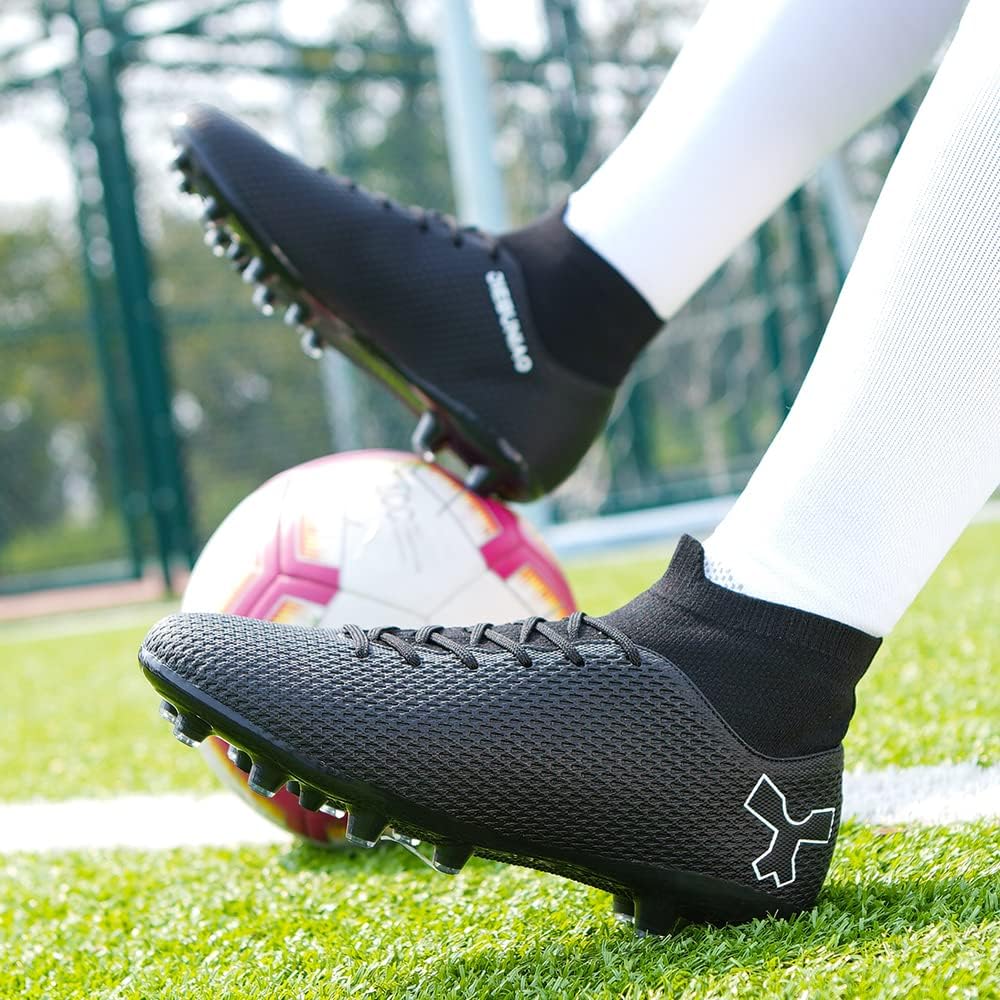
High-top soccer cleats — boots where the collar (the part that wraps around your ankle) extends upward past the ankle bone rather than stopping below it — have been part of the football boot conversation since Adidas pioneered the modern sock-fit collar in the mid-2010s. At the elite tier, you see this construction on boots costing $200 and up. But there is now a real cluster of high-top options under $60, and that’s where the interesting buyer questions live: Is the raised collar doing anything mechanical, or is it a style signal borrowed from expensive boots? Does the no-tie lacing you sometimes see on these models actually hold through a full game? And is the $45–$55 price bracket the right place to buy a high-top, or does the construction fall apart before you’ve made your money back?
This piece synthesizes published reviews, parent-and-player feedback threads, and buyer Q&A data to give you a straight answer. We are editorial analysts — we have not played a match in these boots — and we’ll name that limit clearly where it matters. What we can do is read every structured owner report so you don’t have to, and translate the pattern into a decision frame you can use today.
| EDITOR'S PICKMen's Soccer Cleats Football Cl… | Mid-tierSoccer Cleats for Mens Womens H… | Budget pickDREAM PAIRS Men's Firm Ground S… | |
|---|---|---|---|
| Surface | Turf/Indoor | AG/FG/TF | FG/AG |
| Weight | — | — | Lightweight |
| Gender | Men's | Unisex | Men's |
| Price | $37.99 | $36.99 | $25.99 |
| See on Amazon → | See on Amazon → | See on Amazon → |
What the Sock Collar Actually Does (And What It Doesn’t)
Let’s put the performance question on the table first, because it’s the one that drives most of the buyer skepticism in this category.
The raised collar in a high-top cleat does one thing reliably well: it wraps the lower ankle in fabric or synthetic mesh that moves with the foot, which reduces the micro-slippage where the heel lifts slightly inside the boot on acceleration and direction changes. This is not ankle support in the bracing sense — the collar is not rigid, it does not restrict inversion or eversion (side-to-side rolling), and it would not meaningfully change the outcome of an ankle sprain. Footballboots.co.uk’s sock-collar construction overview is explicit on this point: soft collar extensions add lockdown feel, not structural support.
What reviewers do report, consistently, is the heel-hold sensation. In aggregated buyer feedback reviewed on Soccer Cleats 101’s community board, a recurring theme among teenage players is that the sock portion “really seems to secure the shoe in place better” — one parent quoted their high school son using almost exactly those words. Note the language: secured, in place, stays put. No one in the review record is saying “my ankle feels protected.” That’s an important distinction, and you should be skeptical of any product listing that claims more.
The practical upshot for the $60-and-under buyer: The collar on a sub-$60 high-top is not medical-grade anything. But if heel slip is the specific fit problem you’re solving — especially for a narrower foot or a player with a low instep who loses contact at the back of the boot — the sock construction provides a real, functional benefit at this price tier that you won’t get from a low-cut cleat with a standard tongue.
Goal.com’s 2025 youth cleat buying guide makes the same point from a coach’s angle: sock-collar boots at the youth and recreational tier often work as a fit corrector for players who otherwise struggle to keep a heel in place, which is a genuinely underserved problem.
No-Tie Lacing: Genuine Anxiety-Killer or Marketing Gimmick?
The no-lace systems showing up on several sub-$60 high-tops generate the most surprised positive feedback in the owner review record — and that surprise is itself a useful data point.
Pre-purchase anxiety around these systems is predictable: players worry the elastic or bungee-style closure will loosen during sprints, get caught on a stud, or fail mid-game in a way a traditional lace never would. The actual owner pattern in aggregated reviews tells a different story.
One adult women’s league player documented completing a full outdoor season — weekly games, occasional training sessions, variable field conditions — without a single lace-related incident. That’s not one lucky game; that’s a full campaign of use. The surprise she expressed in her review was genuine and specific: she’d expected to need to re-secure the closure at halftime. She never did.
The soccerbible.com sock-collar deep dive notes that elastic lacing systems on lower-priced boots have matured considerably since their early iterations, with most current models using multi-point anchor loops rather than a single cinch, which distributes tension more evenly across the midfoot.
The decision frame: If lace-security anxiety is the thing keeping you from buying this style — a real and common hesitation — the review record now has enough volume to say the anxiety is mostly not warranted for recreational to mid-level club play. High-level competitive play at U15 and above, where direction-change intensity is higher, has thinner review coverage in this price tier, so we’d maintain a small reservation there.
By the Numbers: Sub-$60 High-Top Cleat Category Snapshot
| Factor | What reviewers report |
|---|---|
| Heel lockdown (sock collar) | Consistently positive across youth and adult buyers |
| No-tie lacing security | Full-season reliability documented; mid-game failures rare in review record |
| Sizing accuracy | True-to-size reports dominate; no systematic run-small or run-large pattern |
| Durability (12–13 yr old, regular play) | Most buyers report one full season; heavy-use players see wear at stud base by mid-season |
| Surface versatility | FG-designated models used on turf by buyers; noticeable stud-pressure increase noted |
The “Backup Pair” Use Case: Under-Discussed and Genuinely Smart
One of the more interesting patterns in the buyer review data for this tier is the deliberate second-pair purchase. A specific buyer profile shows up repeatedly: a player who owns a primary boot in the $120–$180 range — something they’ve broken in, that fits well, that they care about — and who purchases a sub-$60 high-top explicitly as a field-condition backup.
The logic is straightforward. Nasty field conditions — standing water, compacted mud, abrasive artificial turf that’s overdue for infill replacement — accelerate wear on materials that cost real money. Sending a Nike Mercurial boot through three consecutive wet-field games in February is how you turn a $180 purchase into a $180 purchase that needs replacing in eight months instead of eighteen.
The sub-$60 high-top enters that equation as a rational sacrifice play. It handles the field conditions the primary boot shouldn’t see. The sock collar, in this use case, becomes secondary to the simple value of preserving something more expensive.
Footwearnews.com’s Q1 2026 soccer cleat trend report notes that multi-boot ownership is growing fastest at the $50–$200 total-spend-per-player bracket, which is exactly where this backup-pair pattern lives. It’s not a workaround; it’s a deliberate equipment strategy.
If you’re a club player or a coach procurement buyer: This use case has a cost-per-match math that actually works. Assume a $50 high-top handles 20 bad-condition games across a season — that’s $2.50 per match. The alternative cost is accelerated degradation of a $150+ boot, which could easily cost you a replacement cycle earlier than expected.
Durability: What to Expect at This Price Point for Regular Youth Play
For parents buying for a 12–13 year old who trains two or three times a week and plays weekend games, the honest answer from the review record is: plan for one season.
That’s not a criticism of the category — it’s an accurate expectation-set. The uppers on sub-$60 high-tops are typically synthetic leather or mesh constructions that handle grass and occasional turf adequately. Where buyers report wear first: the stud base plate shows scuffing and, for aggressive players, stud compression by mid-season; the sock collar’s fabric sees pilling at the opening edge, particularly on boots pulled on and off quickly without loosening.
None of these failure modes are catastrophic mid-game failures. They’re gradual, visible degradation. The boot becomes worn before it becomes unwearable, which is actually the ideal failure pattern for a growing player who’d be sizing up at season’s end anyway.
The Soccer Cleats 101 community board notes that parents who set a “one full season” expectation going in report high satisfaction; parents who expected two seasons report disappointment. Managing that expectation at purchase is genuinely useful.
Surface Versatility: What to Know Before Playing on Turf
Most sub-$60 high-tops are sold with firm-ground (FG) stud configurations — molded plastic or rubber conical studs designed for natural grass. Buyers do use them on artificial turf (AG) and even some hard-packed dirt surfaces, and the review record suggests the boots survive this cross-surface use without structural failure.
What reviewers do report on turf: the stud pattern creates more point-pressure on hard artificial surfaces than an AG-specific configuration would, which translates to a slightly stiffer feel underfoot and, for some players, noticeable fatigue in longer sessions. This is not a boot-destroying problem; it’s a comfort and feel trade-off.
If the player’s primary surface is third-generation 3G turf, an AG-designated cleat is the correct tool even at this price tier. Surface-correctness is still the cheapest performance upgrade available — goal.com’s youth buying guide makes this point for every price tier, and it applies here too.
Frequently Asked Questions
Do high-top soccer cleats actually provide more ankle support, or is it just cosmetic? The sock collar adds a heel-lockdown feel that’s real and functional — owners consistently describe heels staying more securely in place. What it does not provide is structural ankle support: the collar is soft, not rigid, and would not brace the ankle against a sideways roll the way a medical brace does. If ankle stability after injury is the concern, that’s a conversation for a physio, not a cleat review.
Will no-tie lacing systems stay secure during games and sprints? Based on the review record, yes — for recreational through mid-level club play. A full season of adult women’s league outdoor play without a lacing incident is documented in owner reviews. The anxiety most buyers feel pre-purchase does not appear to match the actual failure rate reported post-purchase.
Can high-top soccer cleats be used on multiple surfaces like grass and turf? FG-cleated high-tops can be used on turf and they won’t fall apart, but you’ll feel more stud pressure underfoot on hard artificial surfaces. For players whose primary field is 3G turf, an AG boot remains the right call even in this price tier.
Are these durable enough to last a full season for a 12–13 year old playing regularly? One full season — training plus games — is a realistic expectation based on aggregated reviews. Two seasons is not. For a growing player who will size up at the end of the year anyway, one-season durability is usually exactly what’s needed.
Is it worth buying a cheaper high-top as a second pair for bad-weather fields? The review data and the cost-per-match math both say yes, especially if your primary boots cost $120 or more. Using a $50 backup on muddy or abrasive fields protects a more expensive investment and extends its useful life — a real and documented buyer strategy, not just a rationalization.