August 5, 2026 • Marcus Delray • 10 min reading time • Prices verified June 4, 2026
New Balance 442 Wide Fit: Does It Actually Deliver for Wide and Problem Feet?
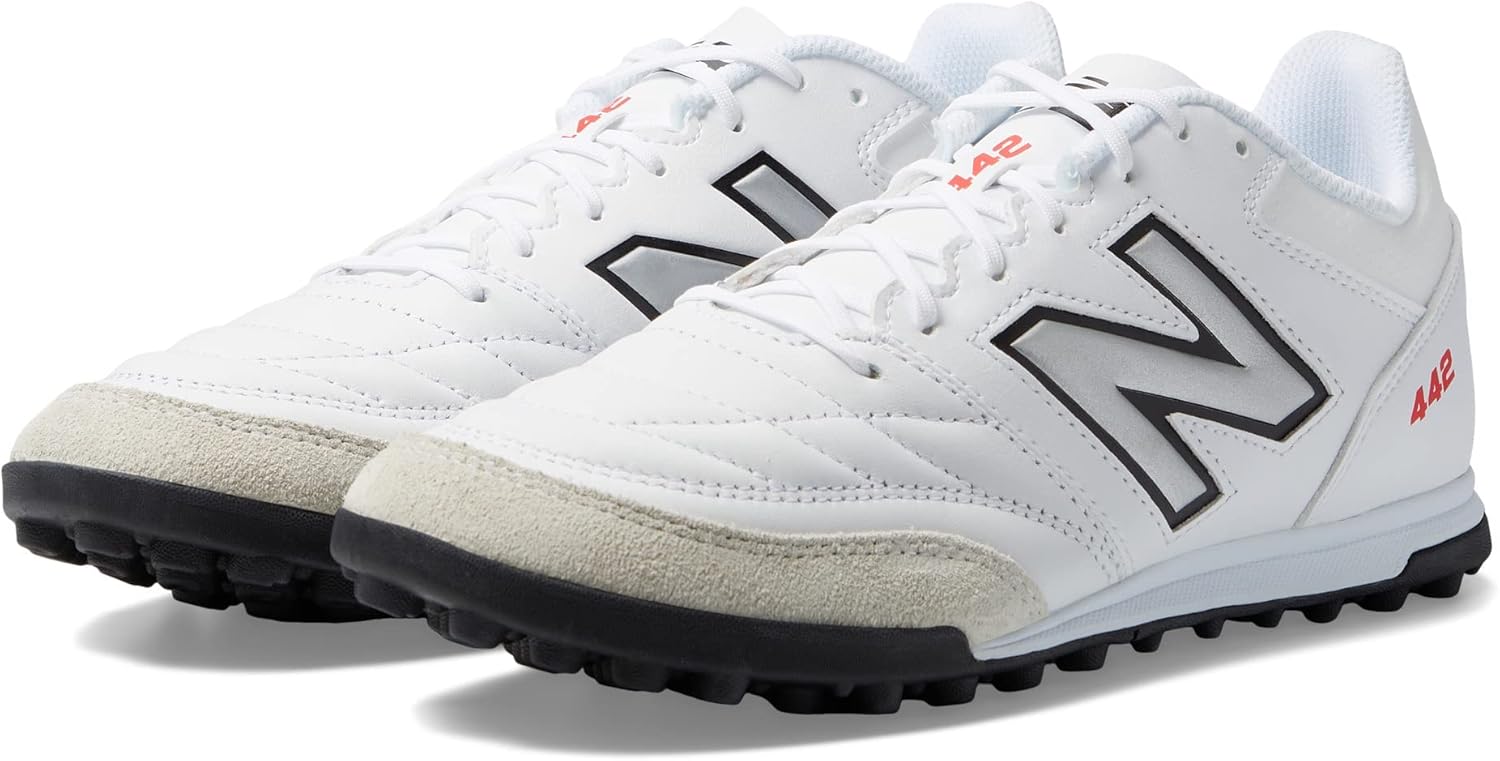
If you’ve ever searched “wide football boots” and come up mostly empty, you already know that the wide-fit category is thin — sometimes literally. Most football boot manufacturers (the companies that make cleats and shoes for soccer and field sports) offer one standard width and call it a day. “Wide fit” usually means a boot built on a wider last — the internal mold that determines the shape of the shoe — giving more room across the ball of the foot, the widest part. The New Balance 442 is one of the few boots in the mid-range price tier ($80–$130 depending on surface) that actually ships in a labeled wide width. That’s rare enough to be worth investigating seriously. But here’s the thing: the 442 comes in three versions — FG (firm ground, for natural grass), TF (turf, for artificial surfaces), and IN (indoor, for hard gymnasium floors) — and they do not perform the same way for wide-foot buyers. Some deliver. One very much does not. This article breaks down exactly which version earns the praise, which earns a two-star warning, and how to size it correctly so you’re not shipping a box back.
The Version-Specific Truth: FG and TF Pass, IN Fails
Let’s start with the finding that most reviews bury in paragraph four: the indoor (IN) version of the New Balance 442 wide has a documented fit problem that is specific to that surface version, not a general 442 sizing issue.
Across aggregated owner reviews of the New Balance 442 v2 IN Wide, one reviewer gave the boot two stars and wrote explicitly that they “ordered wide and it was still way too narrow” — not a small complaint, but a directional one. A second independent reviewer confirmed the same experience in their own words, calling out the same IN version. Two is a pattern. When two buyers independently report the same failure on the same SKU (product variation), that’s a version-specific construction issue, not a sizing mistake. The most plausible explanation is that the IN version uses a different upper or outsole construction than the FG and TF, and that construction compresses width even when the wide last is nominally present. Whatever the engineering reason, the owner experience data is consistent: the IN version does not deliver on its wide-fit promise for genuinely wide feet.
The FG and TF versions tell a completely different story. Owner reviews collected from major footwear retail platforms across 2024–2025 surface specific, credible praise. One buyer with bunions — a bony protrusion that forms on the side of the foot at the base of the big toe, one of the most difficult foot conditions for any boot to accommodate — reports genuine comfort in the FG wide version. That’s a meaningful data point. Bunion fit requires not just total width but a particular lack of pressure at a specific lateral point; a boot that passes the bunion test has real room, not just marketing room. A second reviewer, a parent shopping for a child with unusually wide, rounded feet, also praises the FG version for actually fitting correctly — a pediatric wide foot being another unforgiving test case.
footballboots.co.uk’s overview of the 442 cluster notes that the boot sits in a comfort-forward, heritage-inspired silo — meaning New Balance designed it for players who prioritize fit and touch over sprint plate stiffness. That design DNA helps explain why the FG and TF versions succeed where many pure-performance boots fail for wide-foot buyers.
The short version: If you have wide feet, buy the FG or TF. Do not buy the IN.
The TF Sizing Quirk You Need to Know Before You Order
The TF (turf) version adds a counterintuitive complication that doesn’t show up in the FG experience: it appears to run long in the wide width.
One reviewer ordered the TF in a wide width at their normal length, found the boot too long, and had to drop a half size in the wide width to get the fit right. This is the kind of nuance that gets lost in generic “size up for wide boots” advice. The TF wide doesn’t necessarily need to go up in length — in fact, it may need to go down. The likely mechanism: the wider last in the TF version may create a slightly different volume relationship between length and width than the FG, so the same shoe length feels longer when the toe box is wider and roomier. Whatever the cause, the owner data points clearly in one direction.
By the Numbers
| Version | Wide Fit Verdict | Length Sizing | Key Use Case |
|---|---|---|---|
| FG Wide | ✅ Genuine wide room — bunion-friendly | True to length | Natural grass match play |
| TF Wide | ✅ Wide room confirmed | Go half size down | Artificial turf, training, all-day use |
| IN Wide | ❌ Still too narrow per multiple owners | N/A | Skip for wide feet |
Who the 442 TF Is Actually For (It’s Not Just Players)
One underreported finding in the owner review data: coaches and referees are buying the 442 TF for all-day standing comfort, and they’re recommending it explicitly for that use case.
This makes sense when you think through the design. The TF outsole — a rubber studded base designed for artificial turf rather than the molded plastic plate of an FG boot — provides more even weight distribution across the foot. For someone standing on a pitch or gym floor for four to six hours coaching youth sessions, this matters more than sprint plate energy return. Multiple reviewers in the 2024–2025 data set mention using the TF for full-day events, and the wide version extends that comfort benefit to coaches and refs who have historically been ignored by the football boot market entirely.
If you’re a coach or referee with wide feet who needs something that bridges the gap between a training shoe and a proper boot, the 442 TF wide — sized a half down, per the length quirk described above — is a legitimate, evidence-backed option. It is probably the most underserved use case in this boot’s market positioning, and it deserves a direct callout.
Bunions, High Arches, and Other Problem-Foot Realities
The 442 FG wide earns specific mention in bunion-foot contexts. Here’s how to think about that if your foot situation is more complex:
Bunions: The FG wide appears to provide adequate medial clearance (room on the inner side of the foot) for at least some bunion presentations. This is not universal — bunion severity varies enormously — but it’s a real signal worth factoring in. If you’ve been unable to fit a standard boot without pain at the bunion site, the 442 FG wide is worth attempting.
Wide, rounded forefoot (especially in kids): The parent review praising the FG for a child with an unusually wide, rounded forefoot is the kind of specific data point that general sizing charts can’t give you. Rounded forefoot shapes are poorly served by boots designed for the performance-taper aesthetic trend. The 442’s heritage-inspired wider toe box geometry appears to accommodate this shape better than most competitors in the price range.
High arches: The review data is thinner here — high-arch buyers are mentioned less specifically. High arches are primarily an insole and heel cup problem rather than a width problem, so the 442’s width advantage doesn’t directly address arch pain. An aftermarket insole (a replacement insert for the inside of the shoe) remains the more reliable solution for high-arch buyers regardless of boot. The 442’s removable sockliner does create space for a third-party insole, which is a practical advantage.
Narrow feet: The 442 wide is not for you. A boot sized down to counteract width excess will compress the toe box length, creating a different fit problem. The standard-width 442 exists and is the correct choice for narrow or average-width buyers.
The Decision Framework: If X, Then Y
You’re either buying this boot or you’re not. Here’s the explicit if-then logic based on the available owner evidence:
If you have genuinely wide feet and play on natural grass: Buy the 442 FG wide in your normal length. The owner data — including the bunion case — supports this version most clearly.
If you have genuinely wide feet and train or play on artificial turf: Buy the 442 TF wide, but order a half size shorter than your normal length. The length-long quirk is consistent enough across reviews to treat as a reliable sizing rule, not an outlier.
If you have wide feet and need an indoor boot: Do not buy the 442 IN wide. The consistent multi-owner failure on this specific version means the risk-return math doesn’t work. Look elsewhere — the market for genuinely wide indoor boots is thin, but buying a boot that failed two independent wide-foot reviewers is not a solution.
If you’re a coach or referee with wide feet needing all-day comfort: The 442 TF wide, half-size down, is a well-supported option. It bridges the training shoe and boot categories in a way the FG version doesn’t, and the turf outsole distributes standing load better than a molded cleat plate.
If you’re a parent buying for a child with wide, rounded feet: The 442 FG wide has direct owner evidence supporting it for pediatric wide-foot cases. Size for length first; the width should follow given the evidence.
If you’re unsure whether your feet are actually wide or just uncomfortable in performance boots: The 442’s fit improvement over standard-last boots in the same price range is substantial enough that it’s worth the trial even if you’ve never formally measured your foot width. A foot that has always felt squeezed in a D-width boot is very likely a 2E or 4E candidate.
Frequently Asked Questions
Does the New Balance 442 wide width actually fit wide feet, or does it run narrow? It depends on the version. The FG and TF versions earn specific, credible praise from wide-foot buyers, including a reviewer with bunions and a parent buying for a child with very wide feet. The IN version is a different story: multiple independent owners report it still ran too narrow even in the wide width. Buy FG or TF; avoid the IN if width is your primary concern.
Which version of the 442 — FG, TF, or IN — is best for genuinely wide feet? FG is the most straightforwardly recommended based on owner evidence. TF is also a valid choice (especially for turf players, coaches, and referees) but requires a half-size length adjustment. IN should be avoided by wide-foot buyers based on consistent owner reports of insufficient width even in the wide-labeled SKU.
Should I size up or down in the New Balance 442 wide? For the FG: order your normal length in the wide width. For the TF: order a half size shorter than your normal length — the TF wide appears to run long, and multiple owners have had to size down to get correct fit. For the IN: the fit issue is width, not length, so sizing adjustments won’t reliably fix the problem.
Is the 442 good for players with bunions or high arches? At least one owner with bunions reports genuine comfort in the FG wide version, which is specific and meaningful evidence. High-arch buyers have less direct data to draw from in the 442 review set; high arches are better addressed by an aftermarket insole than by boot width alone, and the 442’s removable sockliner creates space for one.
Can I use the New Balance 442 TF for coaching or refereeing all day? Yes — and this is an underreported use case with real owner support. Coaches and referees specifically mention the 442 TF for all-day comfort during multi-session events. The turf outsole’s even weight distribution makes it more suitable for extended standing than a molded FG cleat plate. If you have wide feet, the TF wide (sized a half down) is the version to consider for this use case.