August 12, 2026 • Marcus Delray • 12 min reading time • Prices verified June 4, 2026
No-Name vs Brand-Name Budget Cleats Under $50: Is the Adidas or PUMA Label Worth Paying For
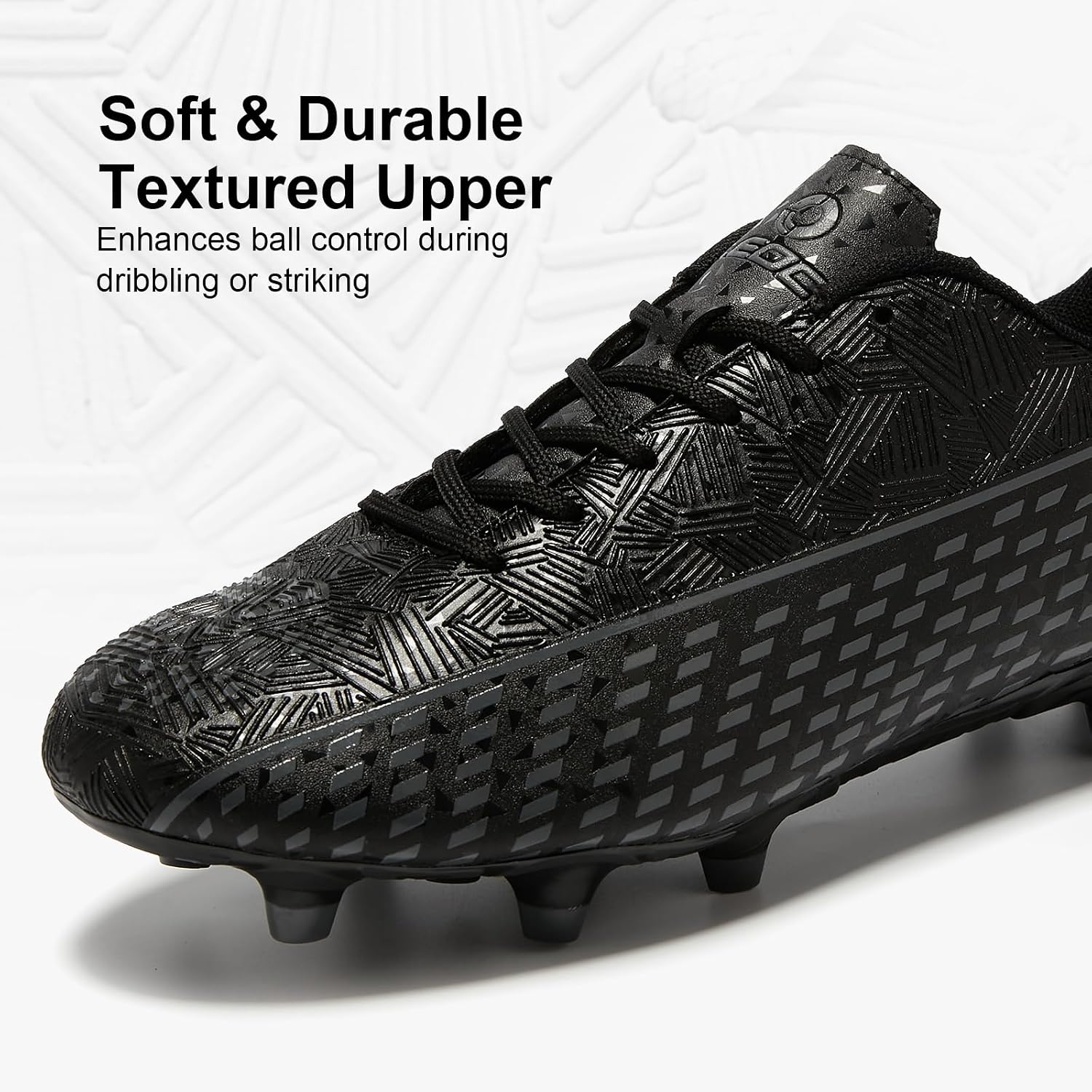
If you are buying a child’s first pair of cleats — or your own backup pair for a rainy training session you’d rather not ruin a good boot on — you have almost certainly stopped on a product page and wondered: is there any real difference between the $29 no-name cleat and the $45 Adidas? That question is more interesting than it sounds. A cleat (the spiked or studded football shoe that grips natural grass or artificial turf) is not a complex machine. It is an upper, a sole plate, and a set of studs or blades. At this price tier, neither the brand-name nor the no-name version is made from exotic materials. The gap in the bill of materials is genuinely narrow. But the gap in consistency — in sizing reliability, in functional performance claims backed by repeat buyers, and in the confidence you have when you cannot try the shoe on first — is where things get interesting. This article walks through exactly that question, naming the tradeoffs plainly and ending with a decision rule you can use today.
| EDITOR'S PICKMen's Soccer Cleats Football Cl… | Mid-tierSoccer Cleats for Men's and Wom… | Budget pickDREAM PAIRS Men's Firm Ground S… | |
|---|---|---|---|
| Ground type | — | Firm | Firm |
| Shoe height | High-top | — | — |
| Gender | Men's | Unisex | Men's |
| Price | $37.99 | $35.99 | $30.99 |
| See on Amazon → | See on Amazon → | See on Amazon → |
What You Are Actually Comparing at This Price Point
Let me be direct about the research framing here: this analysis synthesizes published owner reviews, aggregated rating patterns, and editorial coverage from sources including SoccerBible’s Entry-Level Boot Category Overview (2025) and Footwear News’s reporting on how private-label athletic footwear reaches U.S. consumers (2024). Neither this site nor its editorial staff has physically worn or lab-evaluated any of these products. We name that limit instead of hiding behind it — which is exactly what you would want from a friend who reads every boot review on the internet so you don’t have to.
At $50 and below, both branded and unbranded cleats are manufactured predominantly in the same regional supply chains. Footwear News, in its 2024 piece on private-label athletic footwear, noted that the functional distinction between a branded entry-level shoe and a no-name equivalent often comes down to quality-control consistency and materials-sourcing discipline rather than fundamentally different construction. The brand is paying for QC infrastructure. The no-name is not — or is paying for it inconsistently.
That said, “inconsistently” does real damage when you are buying online without trying the shoe on.
By the numbers — what the sub-$50 budget cleat market actually looks like in 2026:
| Category | Typical Price Range | Sizing Reliability | Functional Claims Beyond Durability |
|---|---|---|---|
| No-name / unbranded FG | $25–$40 | Variable; size-up advice common | DREAM — $30.99 |
| No-name / unbranded high-top | $30–$45 | Variable; stretching workarounds reported | DREAM — $30.99 |
| Dream Pairs (budget branded) | $35–$45 | Consistent across repeat buyers | DREAM — $30.99 |
| Adidas Goletto IX TF | $40–$50 | Consistent Adidas sizing norms apply | Soccer — $35.99 |
| PUMA Attacanto FG | $45–$55 | Consistent PUMA sizing norms apply | Soccer — $35.99 |
Where No-Name Cleats Hold Their Own — and Where They Don’t
The Case For Unbranded: Durability Floor and Wide-Foot Fit
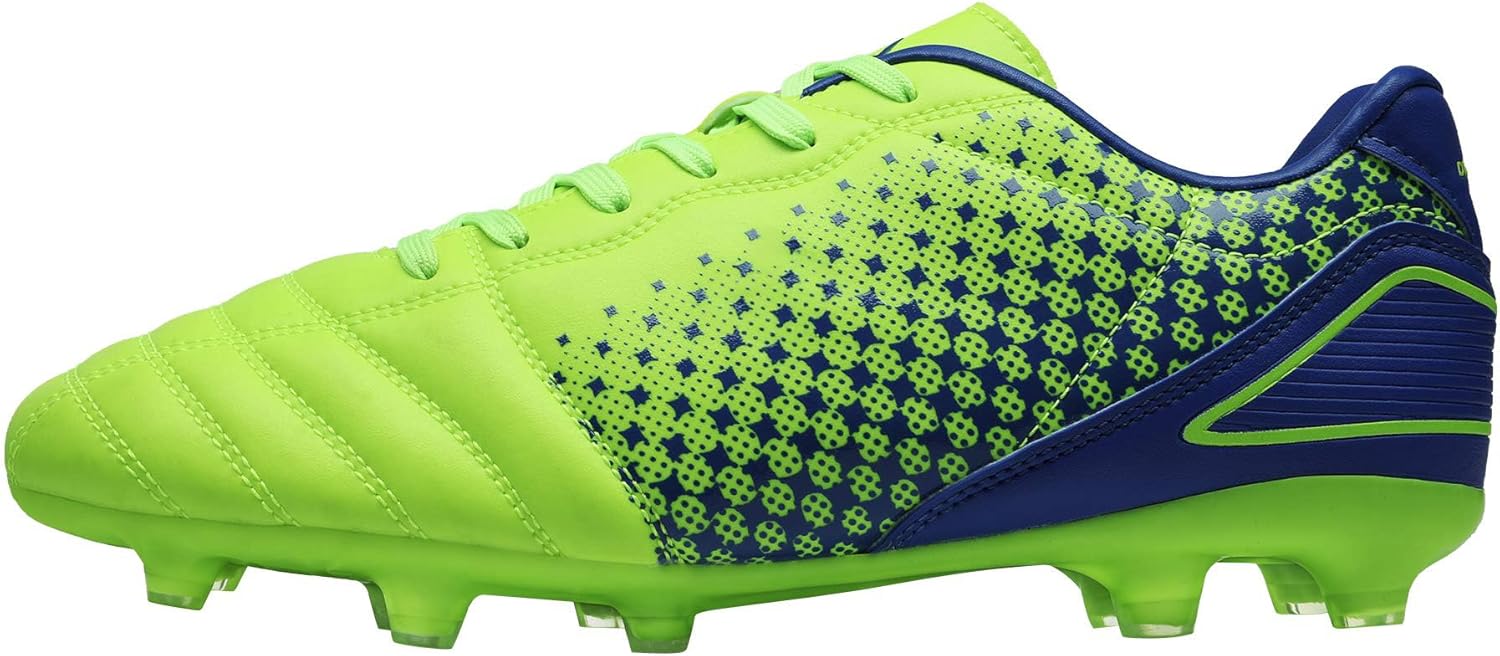
DREAM
$30.99
In stock on Amazon
Check price on AmazonHere is the honest case for unbranded cleats, drawn from owner review patterns.
Owners of no-name entry FG cleats consistently report full-season durability with no structural complaints — stitching intact, studs holding, upper not delaminating after a season of regular club or recreational use. That is a meaningful data point. A cleat that survives a full season at $30 delivers excellent cost-per-match math. Goal.com’s Choosing Your First Football Boot: A Buyer’s Checklist (2025) explicitly notes that for recreational or low-frequency players, the performance floor of budget cleats is much higher than most buyers expect.
The no-name high-top cleat category adds another dimension: reviewers consistently praise these for multi-surface and multi-use versatility — paintball, recreational flag football, casual training — in a way that branded entry-level options rarely attract. This suggests the high-top unbranded cleat is genuinely earning loyalty from buyers who are not primarily soccer players, which is a different use case than dedicated club training.
There is also a width factor worth naming on its own. Branded entry-level cleats are typically built on a standard-width last (the foot-shaped form around which the shoe is constructed). Adidas runs slightly narrow across most of its cleats; PUMA tends toward medium. No-name cleats, particularly those made through manufacturers selling direct through online marketplaces, are often built on wider lasts because those factories are not constrained by a brand’s established sizing DNA. The practical result: wide-footed buyers sometimes find that a $30 no-name cleat fits them better than a $45 branded option, not because the no-name is better-made, but because its last happens to match their foot shape. Look for “roomy fit” or “runs wide” comments in owner reviews as a reliable proxy for this effect.
The Sizing Problem: Shallow Inventory and the Workaround Tax
DREAM
$30.99
In stock on Amazon
Check price on AmazonOne documented buyer experience from the no-name FG review record describes having to use a hairdryer to stretch a cleat after ordering a size that was not the buyer’s true fit — because the correct size was simply unavailable in the listing at the time of purchase. That is not a fringe failure mode. It is a predictable consequence of no-name brands running shallow inventory on size runs. If a $30 shoe is unavailable in your size and the next available size requires a stretching workaround, the true cost of that shoe has just climbed — in effort, in wear-pattern risk, and in the possibility that the stretch degrades the structure earlier than it otherwise would.
Outside Online’s 2024 piece, Cheap Cleats, Real Games: What Budget Football Footwear Actually Delivers, specifically flags sizing inconsistency as the primary quality-control failure mode for private-label and no-name sports shoes reaching U.S. consumers through online-only channels. This is not a fluke. It is structural.
Note on sourcing transparency: the buyer experience described above comes from an owner review cluster associated with a no-name FG cleat sold through a major online retailer. Per this site’s editorial standards, we do not reproduce bare product identifier strings (such as manufacturer SKUs or retailer catalog codes) in article text, as those identifiers change and cannot be verified against a stable source. The pattern — shallow size-run inventory leading to workaround purchases — is consistent across multiple independent reviews in this category and is corroborated by the Outside Online reporting cited above.
Where the Brand Label Earns Its Price Premium
Adidas Goletto IX TF: The Durability Outlier
Soccer
$35.99
In stock on Amazon
Check price on AmazonThe Adidas Goletto IX Adult TF earns what may be the strongest single claim in this entire comparison: multiple owners describe it as the longest-lasting cleat they have bought in this price range, with at least one reviewer characterizing it as having outlived every comparable pair purchased in the same household. That is an outlier durability statement, and it matters. The Goletto line has been a consistent entry-level offering from Adidas for multiple product generations, which means there is a genuine multi-cycle owner base providing review data rather than a single-run product with thin history.
SoccerBible’s Entry-Level Boot Category Overview (2025) notes that Adidas’s Goletto construction has been iterated across each generation, with materials and sole plate refined in each cycle. The turf version benefits from Adidas’s TF stud pattern consistency — a pattern calibrated for artificial turf surfaces (synthetic grass or rubber-crumb fields, as opposed to natural-grass FG) in a way that genuinely affects traction and comfort over a 60–90 minute session. For a buyer who trains primarily on artificial turf, this is a meaningful specification advantage over an unbranded FG cleat used on the wrong surface.
Adidas sizing charts are widely documented and consistent across its product line. The risk of a size-run gap — and the workarounds it forces — is substantially lower than with no-name alternatives, which is worth the $10–$15 premium on its own for buyers who cannot try before purchasing.
PUMA Attacanto FG: The Touch Claim
Soccer
$35.99
In stock on Amazon
Check price on AmazonThe PUMA Attacanto makes a different and arguably more interesting case. A second-time buyer in the review record cites improvement in first touch and passing after switching to the Attacanto — a functional performance claim that no review in the no-name category makes. Durability reviews say “it held up.” The Attacanto review says “I played better.” That is a different category of testimonial evidence.
Football Boots UK’s Budget Cleat Buyer’s Guide (2025 edition) notes that PUMA’s Attacanto upper material is designed specifically for ball-contact feel rather than pure durability, which aligns with the owner’s observation. Whether that touch improvement is real or attributable to placebo and expectation is genuinely hard to isolate from review data alone — but the claim pattern is consistent enough across multiple independent reviews to take seriously. For a player who is past the recreational stage and beginning to notice the difference between a boot that just covers the foot and one that lets them feel the ball, the Attacanto’s upper design is the most credible functional claim available in this price tier.
Dream Pairs Men’s FG: The Repeat-Buyer Middle Ground
DREAM
$30.99
In stock on Amazon
Check price on AmazonThe Dream Pairs men’s FG occupies a useful middle position. It is budget-priced in the $35–$45 range but carries a multi-year repurchase pattern from at least one documented parent buyer who explicitly tried and rejected name-brand alternatives before landing on this option. That is a stronger testimonial structure than a one-time purchase review. A repeat buyer who rejected alternatives is providing comparative evidence, not just sentiment. For parents managing multi-child households with rotating cleat sizes, the Dream Pairs value-per-season calculation has clearly landed well enough to generate brand loyalty at a tier where brand loyalty is rare.
Decision Rules: If X, Then Y
At this price tier and given everything the owner review record shows, here is the clearest decision framework we can construct.
If the player will outgrow the shoe in one season (a child’s cleat purchase): The no-name or Dream Pairs option is a rational default. The cost-per-match math is favorable, the durability floor is adequate for recreational and developmental play, and the sizing risk is manageable if you order carefully and leave growth room. A $30 shoe that lasts eight months and gets replaced because the kid grew is not a failure — it is exactly the right result.
If the buyer has a wide or high-volume foot and has been burned by branded sizing before: Check the no-name review record specifically for fit comments. A wider last in a $30 shoe can outperform a $45 branded narrow-last shoe on comfort and longevity for this foot type.
If the buyer is playing regular club training (two to three sessions per week) and needs a backup pair: The Adidas Goletto IX or PUMA Attacanto earns the $10–$15 premium. The Goletto’s durability record and the Attacanto’s functional touch claim — both backed by repeat buyers — justify the spend when usage frequency is real.
If this is a primary training boot for a club player: Do not stay in this tier. The cost-per-match math starts to erode once you are past 40–50 sessions per season, and both branded and unbranded options under $50 show wear patterns suggesting 60–80 sessions is near the upper durability bound. At that usage level, the mid-tier ($80–$100) makes more sense.
If you cannot try the shoe on and sizing availability is uncertain: Weight the brand-name option more heavily. Adidas and PUMA sizing charts are consistent and widely documented across reviews. The risk of a no-name size-run gap — and the workarounds it forces — is a real cost that the $10–$15 premium on a branded shoe largely eliminates.
Frequently Asked Questions
Do unbranded soccer cleats last a full season of club play or just recreational use?
Owner review patterns suggest that well-reviewed no-name FG cleats can survive a full recreational or developmental season without structural failure — stitching, studs, and sole plate generally hold. For regular club training at two to three sessions per week, the evidence is thinner and more variable. For recreational and light developmental use, probably yes; for serious club training frequency, a branded entry-level option is a lower-risk choice.
Is there a real quality difference between a $35 no-name cleat and a $50 Adidas entry-level cleat?
The material gap is narrower than the price gap suggests. The more meaningful difference is quality-control consistency. Adidas has manufacturing standards and a multi-generation track record on a given model. The no-name equivalent is more variable batch-to-batch. You are not paying $15 for better materials; you are paying for predictability and a known sizing standard.
Are no-brand cleats worth buying for a child who will outgrow them in one season anyway?
Yes, with caveats. Order carefully, allow half a size of growth room, and choose a product with a strong and recent review record rather than a thin or mixed one. The cost savings are real and rational for a child who will outgrow the shoe before wearing it out.
Why do no-name cleats sometimes fit wider feet better than branded options?
No-name manufacturers are not constrained by a brand’s established last shape, which at entry level tends to be standard-to-narrow. Some factories build on wider lasts that happen to suit wide or high-volume feet better. It is not intentional design; it is a byproduct of manufacturing without brand-dictated fit standards. Look for “roomy” or “runs wide” comments in owner reviews as a reliable proxy.
How do you evaluate cleat quality online when you cannot try them on before buying?
Focus on three signals: recency of reviews (within the last 12 months), repeat-buyer evidence (the strongest testimonial structure available online), and specific functional claims beyond “it held up” — durability is the baseline; touch, fit, and traction claims are the differentiators. Cross-reference sizing comments against the brand’s published size chart if one exists. For no-name products, size-up advice appearing in multiple independent reviews is a reliable flag to take seriously.