May 11, 2026 • Marcus Delray • 10 min reading time • Prices verified June 4, 2026
No-Tie and Laceless Soccer Cleats for Kids: Do They Actually Stay On?
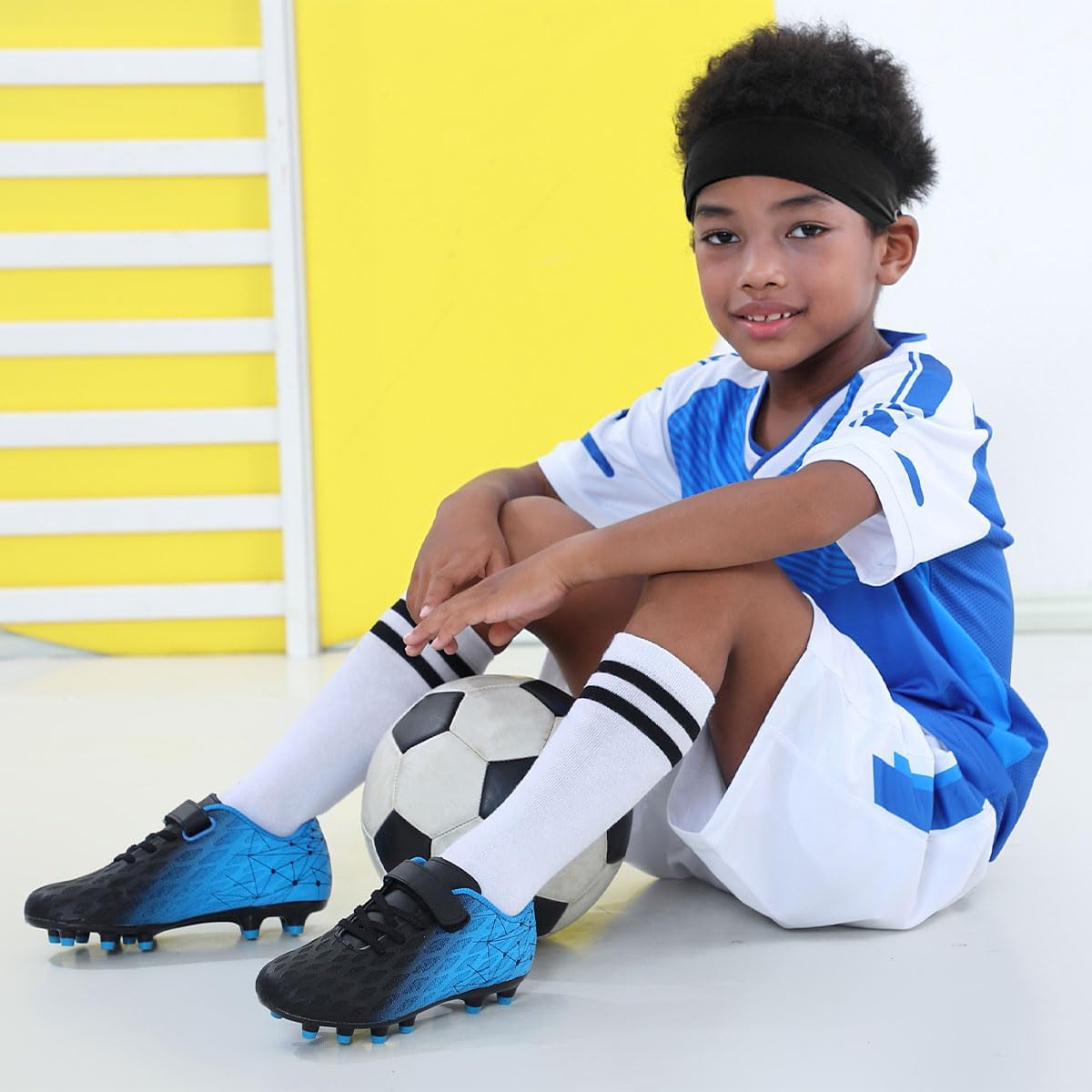
Picture this: it’s the fifth minute of a U8 game, your kid is bearing down on goal, and one shoe is half off because the laces came undone — again. If you’ve been through a full season of double-knotting before every match only to watch it unravel by halftime, you’re not alone. That frustration is exactly what’s pushing more parents toward no-tie and laceless soccer cleats — shoes designed with either velcro straps, elastic/bungee-style no-tie lacing, or a completely lace-free closure — so kids can get on and off the field without a pit-stop parent in the middle of the action.
This guide walks you through what those closure systems actually are, how they perform during real game conditions based on what parent reviewers report, and how to pick the right one based on your child’s age, foot shape, and how seriously they’re playing. We’ll also flag the honest gaps in the available evidence — because some of these products are relatively new, and multi-season durability data is still thin.
What “Laceless” and “No-Tie” Actually Mean (They’re Not the Same Thing)
Before you buy, it’s worth knowing there are three meaningfully different closure systems marketed under the same broad umbrella:
Velcro (hook-and-loop) straps are the most common format for toddler and early-elementary-age kids. One or two wide straps cross the midfoot and press shut. Dead simple, no tying required, and a four-year-old can manage it entirely independently. The trade-off: velcro accumulates grass, dirt, and lint, which reduces grip over time, and the strap hardware can loosen with repeated washing and heavy use.
Truly laceless cleats — like the Adidas Goletto IX Laceless Turf — use a molded upper and a knit or synthetic sock-like construction that stretches to fit over the foot, often with a single pull tab or elastic band rather than any adjustable closure. There are no laces to untie and no velcro to wear out, but the fit is fixed at the factory. If your child’s foot runs wide or narrow, fit becomes a real variable.
No-tie lacing systems use a traditional lace channel but replace standard laces with elastic or bungee-cord laces that you pull snug and tuck — no bow required. These are more common in adult cleats but appear in some youth sizes. They offer more adjustability than velcro while keeping the “no tying” convenience.
What Parent Reviewers Actually Report: The Closure-by-Closure Breakdown
Velcro Cleats for the Youngest Players (Ages 3–6)
The signal from parent reviews is consistent and strong for this age group: velcro is a genuine quality-of-life upgrade. Multiple parent reviewers describe the switch from traditional laces as a “game changer” after seasons spent double-knotting before every game and re-knotting at halftime. For children in the U4 and U6 age brackets, where the game is mostly about running in the right direction anyway, closure security during elite-level cutting is not the variable that matters — independence and speed of getting dressed are.
The Brooman indoor turf velcro shoe is specifically called out in parent reviews for enabling four-year-olds to put the shoe on and take it off completely independently. That’s a non-trivial developmental win: kids who can manage their own equipment are faster to ready, less likely to have a meltdown at the sideline, and — not insignificantly — less likely to be running around with a flapping sole mid-game.
The honest gap: None of the parent reviewer data we synthesized directly addresses velcro durability across multiple seasons of washing, muddy conditions, and weekly use. Velcro is well understood as a technology, but if you’re buying for a kid who plays two seasons a year and grows out of cleats every 12–18 months anyway, durability may not matter much. If you’re buying for a kid with a slower growth rate who might wear the same pair for two full years, treat velcro longevity as an open question and plan to inspect the strap adhesion at the start of each season.
Laceless Cleats for the 7–10 Age Range
The Adidas Goletto IX Laceless Turf earns strong marks from parents of 8-year-olds specifically for two things: independent on/off capability and consistent turf grip through a full indoor season without the closure loosening during play. That second data point is important — the worry with any non-lace system is that it will migrate during cutting movements, leaving the foot swimming inside the upper by the second half. Based on aggregated parent reviews across the 2024–2025 season, the Goletto IX laceless construction holds its position through a season of regular indoor turf use without significant mid-activity loosening.
The caveat is that “holding through the season” and “staying perfectly secure during a maximal-effort change of direction” are different standards. Parent reviewers are evaluating fit security across the whole activity, not under isolated peak-stress conditions. For U8 and U10 players, that’s probably the right standard — the movements aren’t generating the foot forces that stress closure systems in elite play. For a 10- or 11-year-old who’s genuinely accelerating hard and planting on cuts, we’d flag this as a variable worth watching.
Multi-Surface Versatility: A Real Data Point
The DREAM PAIRS indoor turf kids lace-up cleat turns up in reviews with a specific versatility note that’s worth calling out: parent reviewers confirm it performs on both indoor turf surfaces and basketball court floors without slipping or damaging the gym surface. This matters more than it sounds. Many youth sports programs practice or play on a mix of surfaces — a dedicated turf cleat that tears up a gym floor creates a real problem, and a shoe designed only for smooth gym floors won’t grip synthetic turf confidently. The DREAM PAIRS reviews suggest a middle-ground option for families who need one pair to handle both contexts.
The Age Question: When Should Kids Graduate from Velcro to Laces?
There’s no universally agreed developmental milestone here, but the pattern from coach feedback and developmental pediatrics guidance (cited in broad strokes by publications like Parents magazine and echoed in youth sports coaching forums) points to somewhere between ages 5 and 7 as the window when most children develop the fine motor skills to learn to tie laces reliably. “Reliably” is the operative word — plenty of 6-year-olds can tie once with help but can’t maintain a secure bow through 40 minutes of play.
A practical framework:
By the numbers:
- Ages 3–5: Velcro is the clear choice; independence matters more than performance fit
- Ages 6–7: Transition zone; laceless systems like the Goletto IX offer a good middle path
- Ages 8–10: Most kids can manage traditional laces, but no-tie systems remain a valid choice for focus-related reasons (some kids perform better when they’re not mentally tracking their laces)
- Ages 11+: Standard laces or no-tie elastic systems; velcro is typically outgrown in fit security terms
The real answer is individual. A 9-year-old who has reliably tied their own shoes for two years doesn’t need velcro. A 9-year-old with fine motor challenges or attention difficulties may benefit from a no-tie system for reasons that have nothing to do with immaturity.
Are No-Tie Lacing Systems More Secure Than Velcro?
For older kids and adults, the answer from aggregated owner reviews leans yes. No-tie elastic lacing systems — where an elastic cord threads through a traditional lace channel and cinches snug — distribute tension across multiple eyelets the way regular laces do, rather than relying on two points of strap pressure. Footwear News coverage of alternative closure systems in soccer footwear notes that elastic no-tie systems have gained traction in adult performance cleats precisely because they offer conventional lace-feel security without the loosening-during-play problem.
SoccerBible’s overview of closure technology in modern football boots makes the same structural point: a lace channel system, even with elastic cord, creates a more evenly distributed hold across the dorsum (top) of the foot than a velcro strap, which can only apply pressure at the strap width. For kids 8 and up who are generating meaningful force through cuts and sprints, a no-tie lacing system likely outperforms velcro on security. For a 4-year-old who needs to dress themselves, velcro wins on practicality.
Surface Correctness: The Dimension Parents Usually Skip
Here’s the variable that quietly causes more problems than closure type: buying a cleat designed for one surface and using it on another. Turf cleats (marked AG or TF — artificial ground or turf trainer) have multiple short rubber nubs across the outsole designed for synthetic grass and indoor turf surfaces. Firm-ground cleats (FG) have molded plastic studs designed for natural grass — they’re the classic outdoor cleat pattern.
Using FG studs on indoor turf or gym floors creates two problems: the studs can’t grip correctly on the hard surface, and they can damage gym flooring, which some facilities will flag as a policy violation.
If your child plays on:
- Natural grass outdoors: firm-ground cleats, standard stud pattern
- Synthetic turf (common for indoor facilities and outdoor turf fields): turf trainers/AG cleats — the Goletto IX Laceless sits in this category
- Gymnasium floors: indoor flat-sole shoes — the DREAM PAIRS multi-surface option addresses this
Getting the surface match right is, genuinely, the cheapest performance upgrade a parent can make. A $45 turf trainer on the correct surface will outperform a $90 FG cleat used on the wrong one.
Frequently Asked Questions
Can velcro cleats hold tight enough during games and sprints, or do they loosen? For U6 and U8 players, parent reviewers report velcro holding adequately through normal game activity. The closure does not appear to be a failure point at those ages. For older, faster players generating more force, there isn’t strong data confirming velcro security under peak-effort cuts. Treat velcro as well-suited through age 7; evaluate carefully after that.
At what age should kids switch from velcro to laces? Most kids develop sufficient fine motor control to tie laces reliably between ages 5 and 7. The practical answer: switch when your kid can tie and maintain a secure bow without help, not based on age alone. Laceless systems offer a valid middle ground during the transition window.
Do laceless cleats like the Goletto IX stay secure during cutting movements? Parent reviewers of the Goletto IX report no significant loosening through a full indoor season of regular play at the U8 age level. The construction appears to hold its shape without migrating. At older ages and higher movement intensities, this remains less tested.
Are no-tie lacing systems more secure than velcro for active kids? For kids 8 and up, yes — the multi-eyelet tension distribution of an elastic no-tie system more closely replicates the hold of traditional laces than a single velcro strap can. For younger kids who need to dress independently, velcro’s simplicity is the more practical priority.
Can laceless or velcro cleats be used on both turf and indoor gym floors? Turf-specific laceless cleats (like the Goletto IX) are designed for synthetic turf surfaces and may not perform correctly or be permitted on bare gymnasium floors. The DREAM PAIRS indoor turf option is reviewed positively for both surfaces. Always check the outsole design and your facility’s floor policy before buying.
The Decision Rule
If your child is under 7, velcro is the right default — independence and speed of use outweigh every other variable at this age. If your child is 7–9 and plays on turf, a laceless construction like the Goletto IX is worth the look: it solves the lace problem without the velcro durability question and has a track record of holding secure through indoor seasons at this age group. If your child is 9 or older and plays on multiple surface types, a no-tie elastic lacing system in the right surface category gives you the most security and flexibility. And for any age: get the surface match right first — it matters more than the closure type.