July 21, 2026 • Marcus Delray • 9 min reading time • Prices verified June 4, 2026
PUMA Attacanto vs King 21 for Indoor Soccer: The Club Player's Head-to-Head
PUMA Attacanto vs King 21 for Indoor Soccer: The Club Player’s Head-to-Head
If you’re shopping for indoor soccer shoes — the flat-soled, gum-rubber footwear worn on hard gym floors, sport-court surfaces, and indoor turf — you’ve probably landed on two PUMA options that keep appearing in search results: the Attacanto Indoor and the King 21 Indoor. Both sit in an accessible price bracket. Both carry PUMA’s name. But they are built around very different ideas about what an indoor soccer shoe should do, and they fit differently enough that buying the wrong one is a genuine risk — especially if you’re between sizes or carrying a wider foot. This article breaks down the real-world owner feedback on both shoes, maps the fit risk clearly, and gives you a direct decision rule at the end.
| EDITOR'S PICKadidas Unisex Adult Samba Indoo… | Mid-tierPUMA Mens King 21 Indoor Sneake… | Budget pickPUMA Mens King 21 Indoor Soccer… | |
|---|---|---|---|
| Article brand | adidas | PUMA | PUMA |
| Athlete gender | Unisex | Men | Men |
| Model | Samba | King 21 | King 21 |
| Colorway | Black/White/Vivid Red | White | White/New Navy/Silver Mist |
| US size | 11W/10M | 10.5 | 10.5 |
| Price | $89.99 | $47.98 | $29.99 |
| See on Amazon → | See on Amazon → | See on Amazon → |
What Each Shoe Is Actually Trying to Be
Before the head-to-head, it helps to understand each shoe’s design intent, because they’re not really competing for the same player.
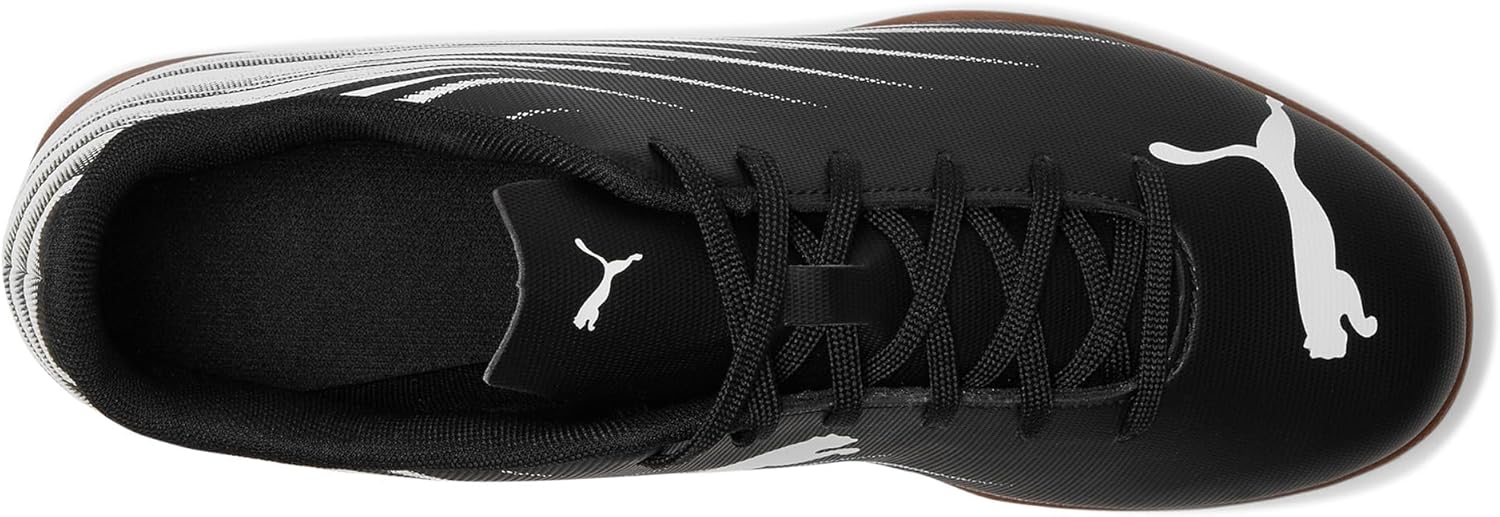
The PUMA Attacanto Indoor is a performance-forward indoor shoe. The Attacanto silo is built around a synthetic upper that prioritizes a locked-down, close-contact fit. Think of it as the shoe for the player who wants to feel the ball, cut hard, and not have the shoe move independently of the foot. It is descended from the same design philosophy as the Attacanto turf trainer: lightweight, snug, and uncompromising.
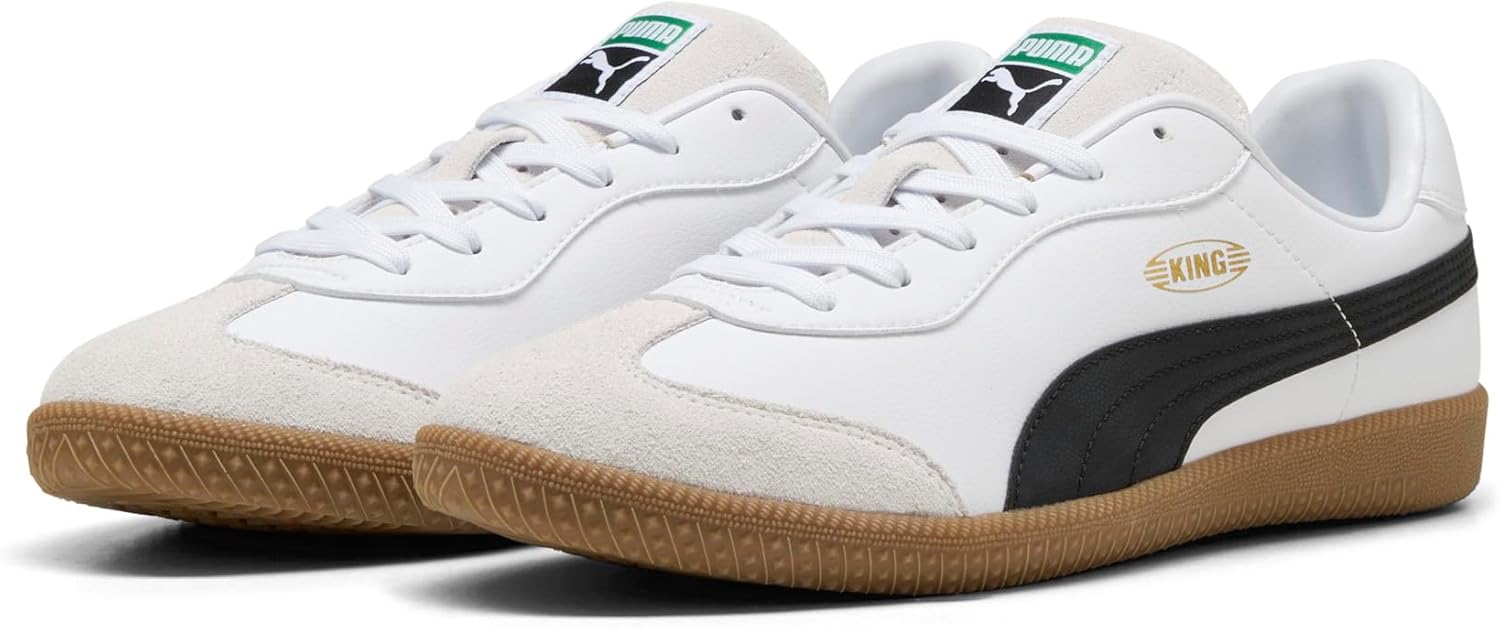
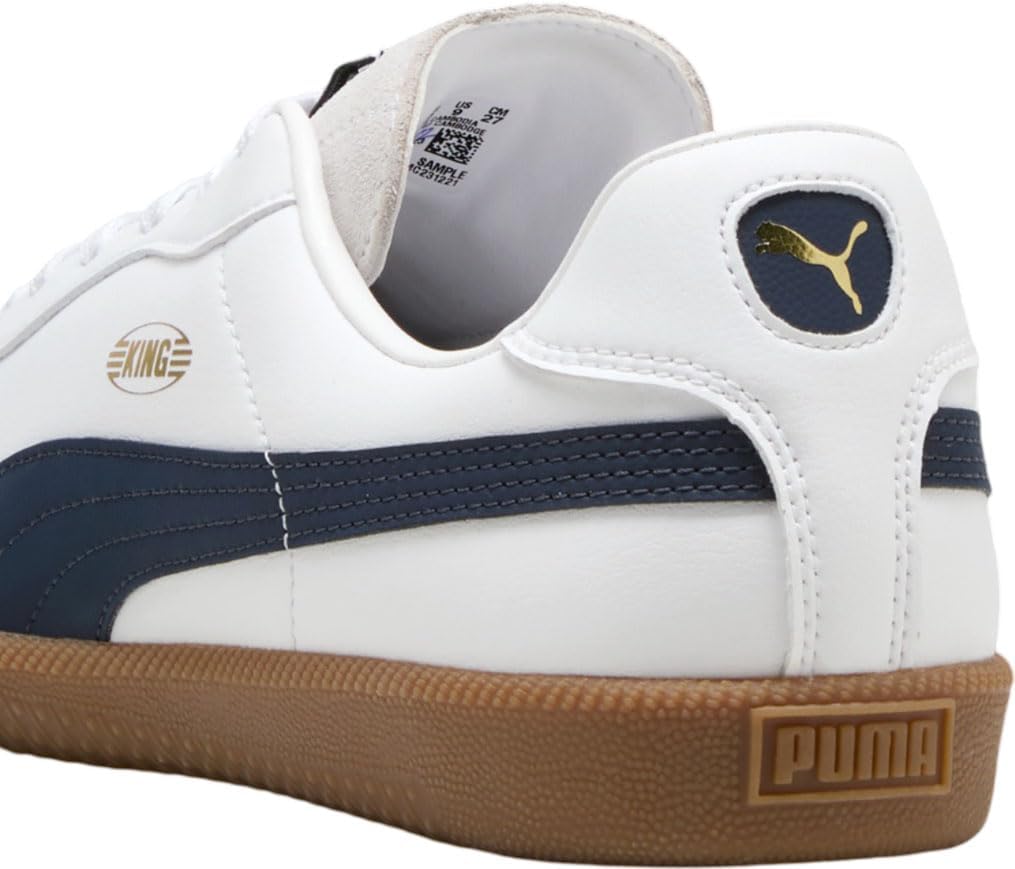
The PUMA King 21 Indoor operates in different territory. As documented in SoccerBible’s PUMA King Silo Overview and Heritage Review, the King lineage is PUMA’s heritage leather line — the spiritual successor to the boots worn by Pelé, Eusébio, and a generation of classic footballers. The King 21 is a softer, rounder, more relaxed shoe. One verified buyer framed it explicitly as a budget Adidas Samba alternative — and that framing tells you almost everything. This is a shoe that works on the pitch and looks presentable walking out of the gym. It lives at the intersection of performance and lifestyle.
Neither of those positions is wrong. But they do demand different buying decisions.
Fit Reality: Where the Reviews Get Polarized
This is the section that matters most, and it is where we have to be direct with you. The following three subsections address fit, performance, and value — the three axes that most reliably separate these two shoes in owner feedback.
H3: Attacanto Indoor — Locked-Down Fit, High Width Risk
PUMA
$47.98
In stock on Amazon
Check price on AmazonAcross aggregated Amazon verified purchaser reviews for the Attacanto Indoor, the sizing feedback is sharply divided — and that division is itself a signal.
One reviewer describes the fit as a “one with my foot” feeling, noting the snug wrap as a feature. Another reviewer in the same product listing reports that the shoe felt two full sizes short and so narrow that they were “walking on the outside of the shoe.” Two full sizes is not a rounding error. That is a structural mismatch between the shoe’s last — the internal foot-shaped mold around which the shoe is built — and a wider or higher-volume foot.
What this tells a practitioner buyer:
- If you have a narrow or medium foot with a low instep, the Attacanto’s locked-down feel is likely to read as precision and control.
- If you have a wide forefoot, a high instep, or any tendency toward bunion pressure, the Attacanto is a meaningful fit risk. The polarized reviews suggest the shoe does not accommodate volume variation well.
As Footwear News notes in its Indoor Soccer Shoe Buying Guide: Fit, Surface, and Sole, narrow lasts are common across performance-oriented futsal shoes, and buyers with wider feet should treat half-size-up recommendations as a floor, not a ceiling.
Sizing guidance: If you’re a true medium foot, try your standard size first. If you’re wide, start a half size up and understand you may still not get a comfortable fit. If you’re a very wide foot (EE or wider in dress shoe terms), this shoe is high risk regardless of sizing adjustment.
PUMA
$47.98
In stock on Amazon
Check price on AmazonH3: King 21 Indoor — Roomier Last, Lifestyle Crossover
PUMA
$29.99
In stock on Amazon
Check price on AmazonThe King 21 tells a different story. One verified buyer explicitly notes that the toe box is wider than both the Attacanto and the Club 5v5 — and that level of specificity across shoe comparisons is rare in consumer reviews. People don’t usually frame feedback in cross-model terms unless they’ve worn both and the difference was meaningful.
The King 21’s roomier toe box traces back to its leather upper and the King heritage last, which was engineered for a more traditional fit that allows toes to spread naturally. That natural spread matters on an indoor court where you’re pushing off laterally, stopping hard, and spending 40–60 minutes in continuous motion.
One verified buyer explicitly positioned the King 21 as a budget Adidas Samba alternative — a casual sneaker that doubles as an indoor soccer shoe. That’s a real use case, and it affects the value calculation. If you’re buying a shoe that you’ll wear to the gym, walk through a campus, or wear to watch a match, the King 21’s softer leather and rounder silhouette holds up in that context in a way the Attacanto simply doesn’t.
The tradeoff: the King 21’s leather does show creasing and wear after roughly a month of regular use, per owner reports. Leather shoes crease — that is physics, not a manufacturing defect — but it is worth setting that expectation before purchase.
For wide-footed players, the King 21 is the clear recommendation between these two shoes.
PUMA
$29.99
In stock on Amazon
Check price on AmazonH3: Performance on the Court — Touch, Lateral Movement, and Surface Fit
PUMA
$47.98
In stock on Amazon
Check price on AmazonBall feel and touch: The Attacanto’s synthetic upper, kept deliberately thin, delivers more direct ball contact on first touch. For players who prioritize technical feel — controlling a pass, receiving at speed, striking cleanly — the closer fit translates to less material between foot and ball. Goal.com’s Best Indoor Soccer Shoes: What to Look For consistently identifies upper thinness as the primary variable in touch quality for futsal and indoor play.
The King 21’s leather upper gives a softer, more forgiving feel on initial contact, with a slight cushioning effect that some players prefer for longer sessions where foot fatigue accumulates. Neither is objectively superior; they suit different preferences and session lengths.
Lateral movement and stability: Here the Attacanto has a structural edge. Its snug last, for players it fits correctly, creates less internal foot movement during direction changes. On a hard gym floor where split-second cuts determine outcomes, that is a meaningful performance variable. The King 21’s roomier fit trades some of that lateral lock for comfort and width accommodation — a trade that recreational players in longer sessions often find worthwhile.
Sole and surface compatibility: Both shoes use flat, non-marking gum rubber outsoles appropriate for indoor sport-court and smooth hardwood surfaces. Neither should be worn on outdoor turf or grass. As Footwear News states in its Indoor Soccer Shoe Buying Guide: Fit, Surface, and Sole, gum rubber outsoles wear prematurely on abrasive outdoor surfaces, and surface-correctness is the single cheapest performance and durability upgrade available to any buyer.
PUMA
$47.98
In stock on Amazon
Check price on AmazonSide-by-Side at a Glance
| Feature | PUMA Attacanto Indoor | PUMA King 21 Indoor |
|---|---|---|
| Upper material | Synthetic | Leather |
| Fit character | Narrow, locked-down | Wider toe box, roomier last |
| Sizing risk | High — polarized reviews | Lower — generally runs true |
| Lifestyle crossover | Low | High — Samba-adjacent |
| Durability flags | Minimal short-term flags | Creasing noted at ~1 month |
| Best for | Narrow/medium foot, performance focus | Wide foot, dual court/casual use |
Frequently Asked Questions
How much should I size up in the PUMA Attacanto Indoor — half size or full size?
Based on the pattern across verified buyer reviews, a half size up is the starting recommendation for medium-width feet. If you have a wide or high-volume foot, start at a full size up — and understand that a full size up may still not resolve the fit issue if the shoe’s last is fundamentally incompatible with your foot shape. The polarized reviews — ranging from “perfect fit” to “two full sizes short” — suggest this is a last mismatch problem, not just a length problem.
Is the PUMA King 21 actually leather, or is the description misleading?
Owner reviews confirm a soft, leather-feeling upper. SoccerBible’s PUMA King Silo Overview and Heritage Review notes that leather quality varies across sub-tiers within the King line, and that the King silo’s heritage constructions have historically used genuine leather. The consensus from current owners is that it feels and behaves like leather in meaningful ways — particularly in how it softens with wear — but buyers expecting top-grain calfskin at this price point should calibrate expectations accordingly.
Can the King 21 be used as a casual sneaker as well as an indoor soccer shoe?
Yes, and this is one of its genuine differentiators. Its silhouette and leather construction read as lifestyle-adjacent in a way that most dedicated soccer shoes do not. The Samba comparison made by verified buyers is apt — it has a flat, clean, heritage aesthetic. Expect creasing after regular wear, which is normal for leather footwear.
How does the PUMA King 21 compare to the Adidas Samba Indoor for recreational futsal?
Both occupy the lifestyle-meets-performance indoor shoe category. The Samba Indoor carries more brand recognition and holds a stronger resale and lifestyle premium. Verified buyers position the King 21 as a budget alternative — similar aesthetic and fit character, lower price point, with more uncertainty around long-term durability at this writing. If budget is the primary constraint and you want a Samba-adjacent experience, the King 21 delivers that thesis reasonably well.
Which PUMA indoor shoe is best for players with wider feet?
The King 21, without significant qualification. One reviewer explicitly names its toe box as wider than both the Attacanto and Club 5v5, which is the most useful comparative signal available in the owner-review record. Wide-footed players should approach the Attacanto with real caution — the polarized sizing reviews are a genuine fit-risk flag, not noise.
The Decision Rule
If you have arrived here with a pending decision, here is the honest close.
Buy the Attacanto Indoor if: you have a narrow or true-medium foot and you are buying primarily for performance — cuts, touch, and locked-down feel on an indoor court. It is the higher-performance shoe between these two. Size true, accept that fit is not forgiving, and understand the risk before you open the box.
Buy the King 21 Indoor if: you have a wide foot, a high instep, or any history of discomfort in snug athletic footwear. The wider toe box is not a coincidence — it is the shoe’s structural identity, and it is why wide-footed players keep ending up there. It is also the right answer if you want one shoe that goes from the court to everyday wear. The Attacanto does not try to be that shoe.
The fit risk on the Attacanto is real. Name it before you buy it.
PUMA
$29.99
In stock on Amazon
Check price on Amazon