July 21, 2026 • Marcus Delray • 9 min reading time • Prices verified June 4, 2026
PUMA King 21 Indoor Sizing Problem: How Much Do You Really Need to Size Up?
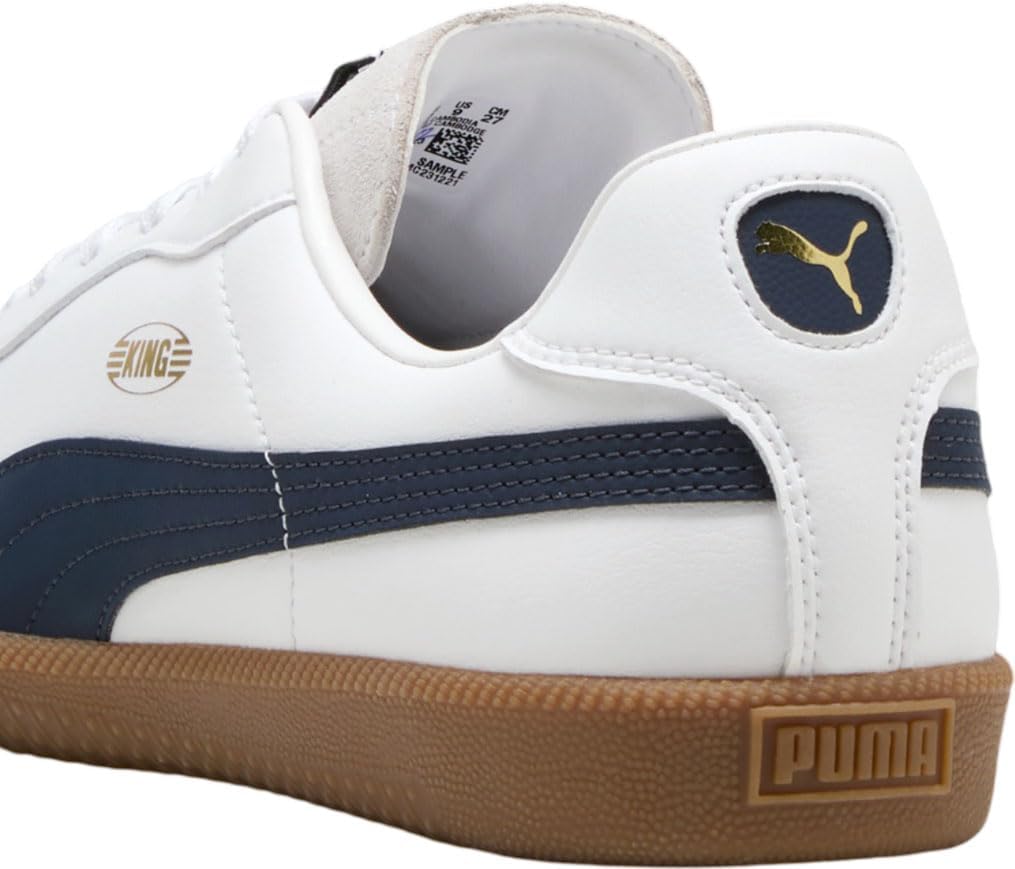
If you’ve ever bought a shoe online and had it arrive feeling like a doll’s slipper, you already understand the frustration this article is trying to save you from. The PUMA King 21 Indoor — an indoor soccer shoe (a flat-soled, grippy shoe designed for gym floors, futsal courts, and indoor turf) — has a sizing problem that is not a minor quirk. It runs dramatically short and narrow compared to your normal shoe size, sometimes by a full two US sizes. That matters a lot when you’re buying online, can’t try them on, and are looking at return-shipping headaches if you guess wrong. This guide pulls together what real owners and reviewers consistently report, maps out the decision rule clearly, compares the King 21 to similar PUMA indoor options, and tells you honestly whether this shoe is worth the extra sizing homework.
Just How Bad Is the PUMA King 21 Indoor Sizing Problem?
Let’s name the scale of the issue up front, because “runs a little small” does not cover it.
Across aggregated owner reviews and published commentary — including fit notes surfaced by FootballBoots.co.uk in their PUMA King range coverage and buyer feedback compiled by Goal.com in their indoor shoe roundups — the pattern is remarkably consistent and remarkably extreme:
- A reviewer who normally wears a US 9 or 9.5 reports that they should have ordered a 10.5 or even an 11 — that’s 1.5 to 2 full sizes up.
- A reviewer who wears a US 6 in every other shoe reports needing a size 8 in the King 21 Indoor. That is a two-size jump.
By the numbers:
| Your normal US size | Reported King 21 Indoor size needed |
|---|---|
| 6 | 8 (two full sizes up) |
| 9 – 9.5 | 10.5 – 11 (1.5 to 2 sizes up) |
| General pattern | 1.5 to 2 full US sizes above normal |
This is not a half-size-up situation. One size up is what you do for a snug leather boot that will break in. Two sizes up is extraordinary — it’s the kind of gap that makes PUMA’s published size chart essentially useless for this specific shoe.
FootwearNews coverage of PUMA’s lifestyle and performance crossover lines notes that PUMA has historically run narrow across several silos, but the King 21 Indoor appears to compress both length and volume simultaneously, which is what produces the two-size discrepancy rather than the typical half-size.
What Happens If You Only Size Up One Size?
This is the most common mistake, and it’s worth addressing directly because one size up feels like a reasonable hedge.
Based on what owners consistently report, sizing up only one full size still leaves most buyers with a shoe that is uncomfortably tight in the toe box, with the longest toe pressing against the end of the shoe during lateral cuts. Indoor soccer involves a lot of sharp directional changes — your foot is pushing forward inside the shoe on every stop-and-go. A shoe that is even slightly short becomes painful within the first thirty minutes of a session.
The reviewers who got it wrong by one size describe the same outcome: a shoe that feels wearable when standing still in a store or hallway, but becomes a problem the moment you actually play in it. The instinct to hedge conservatively — “I’ll go up one, it can’t really be two full sizes” — burns a lot of buyers.
The practical decision rule here: if your normal shoe is a US 9 or below, start at two full sizes up. If you’re a US 10 or above, at least one and a half sizes is the safer baseline, with two sizes the conservative hedge for narrower feet or for buyers who know they run toward the shorter end of their size range.
Is This a PUMA-Wide Pattern? The Club 5v5 and Attacanto Tell the Same Story
The King 21 Indoor is the most extreme case, but it’s not an isolated one. The same fit problem — in milder form — appears across other PUMA indoor shoes, which suggests this is a brand-level last (the internal foot-shaped mold around which a shoe is built) rather than a single production run anomaly.
PUMA Club 5v5: Reviewers document the Club 5v5 running about half to one full size small, which is meaningfully less severe than the King 21 but still significant enough to matter. The Club 5v5 carries an additional width concern that the King 21 also shares: wider-footed buyers report that the forefoot is narrow enough to cause discomfort independent of the length issue. So even if you get the length right on the Club 5v5, a wide or high-volume foot may still struggle.
PUMA Attacanto Indoor: SoccerBible’s PUMA King silo overview notes fit characteristics that parallel the Attacanto reviewer pattern — the Attacanto also surfaces in owner feedback as running small and narrow, with multiple buyers needing at least a half to full size above their normal.
The pattern across all three shoes points to a shared PUMA indoor last that is built for a narrow, lower-volume foot and calibrated shorter than US sizing norms would predict. If you are a wide-footed buyer — say, an EE or 2E width in other brands — take the King 21 off your list entirely, or accept that even two sizes up may not solve the volume problem.
So Why Do Reviewers Still Like It?
Here’s what makes the King 21 Indoor genuinely confusing as a purchase: the buyers who got the size right are consistently satisfied with the shoe. This isn’t a case where the product is fundamentally flawed — it’s a case where the size problem is so severe that it swamps everything else in reviews, and then disappears entirely for the buyers who navigated it correctly.
Owners who landed on the right size report:
- Grip: The flat rubber outsole performs well on gym floors and futsal surfaces, with reviewers describing confident traction on sharp cuts.
- Comfort: Once length and volume are correct, the shoe breaks in relatively quickly and sits comfortably during extended indoor sessions.
- Value relative to the Adidas Samba: This comparison comes up repeatedly. The Adidas Samba has become the default reference point for indoor soccer shoes with lifestyle credibility, and the King 21 Indoor is consistently cited as offering comparable court feel and similar aesthetic appeal at a lower price point. Goal.com’s indoor soccer buyer coverage reflects this positioning — the King 21 is treated as the credible challenger to the Samba for buyers who want performance-leaning indoor shoes without the Samba’s premium price.
The cost-per-match math on the King 21 is genuinely favorable once you’re in the right size. The shoe is durable enough across a full indoor season that the per-session cost lands well below what you’d spend on the Samba for equivalent use.
The Return-Risk Math for Online Buyers
The sizing problem creates a specific risk for online purchases that’s worth naming directly. If you order the King 21 at your normal size or even one size up, the probability of needing to return and reorder is high — based on the review pattern, it’s not a tail risk, it’s the modal outcome for buyers who don’t know about this issue in advance.
That matters for a few practical reasons:
- Return shipping costs money and time. Even with free returns, the round-trip cycle costs you days of use if you’re buying for an upcoming season.
- Stock in uncommon sizes runs out. If you wear a US 6 and need a size 8, that’s not a fringe size — it will be there. But if your normal size is an 11 and you need a 13, availability becomes a real constraint.
- Mid-season availability. If you’re buying for a league that’s already started, a two-week return cycle is a problem.
The straightforward mitigation: size up aggressively (at minimum 1.5 sizes, preferably two) and accept that a slightly long shoe is far less disruptive than a too-short one. Indoor shoes that are slightly long can be managed with thicker socks or an insole; a shoe that is short has no fix.
Frequently Asked Questions
How many sizes should I go up in PUMA King 21 Indoor shoes?
Based on what owners consistently report, the answer for most buyers is one and a half to two full US sizes above your normal shoe size. A buyer who normally wears a US 9 should order a 10.5 or 11. A buyer who normally wears a US 6 has reported needing a size 8. If you’re uncertain between two options, go with the larger of the two — a shoe that’s slightly long is manageable; a shoe that’s short will end your session early.
Does the PUMA Club 5v5 run small in the same way as the King 21?
Yes, but less severely. The Club 5v5 runs approximately half to one full size small, compared to the King 21’s one and a half to two size gap. The Club 5v5 also runs narrow, which creates a second fit problem for wider-footed buyers independent of the length issue. Size up at least half a size and one full size if you know you have a wider foot.
What happens if I only size up one size in the King 21 — will it still be too tight?
For most buyers, yes. One size up is the most common underestimate in King 21 reviews, and buyers who land there describe a shoe that feels acceptable standing still but becomes painful during active play. The toe box is too short for lateral cuts and direction changes. The safe minimum is 1.5 sizes; two sizes up is the conservative-correct choice for most foot shapes.
Do PUMA indoor shoes also run narrow, or is it just a length issue?
It’s both. The King 21 Indoor, Club 5v5, and Attacanto all surface in owner reviews as running narrow in the forefoot, not just short in length. Wide-footed buyers — those who normally need wide or extra-wide sizing — should treat the King 21 as likely incompatible regardless of length. Even with the correct length, the forefoot volume may remain insufficient. The Adidas Samba is frequently cited as a more accommodating alternative for buyers with wider feet.
Is the PUMA King 21 a good alternative to the Adidas Samba for indoor soccer?
For buyers who get the size right: yes, consistently so. Owners report comparable court feel, similar grip on gym floors and futsal courts, and stronger value relative to the Samba at the King 21’s price point. The Samba carries a premium that is partly performance and partly cultural cachet; the King 21 competes on the performance dimension at a meaningful discount. The catch is entirely the sizing process — the Samba runs far truer to size and is dramatically easier to buy online without return risk. If you’re comfortable with the sizing homework on the King 21, the value case is real. If you want an easy online purchase, the Samba is the lower-friction choice.