June 12, 2026 • Marcus Delray • 11 min reading time • Prices verified June 4, 2026
Soccer Cleat Sizing Problems: Why Every Brand Fits Differently and How to Get It Right
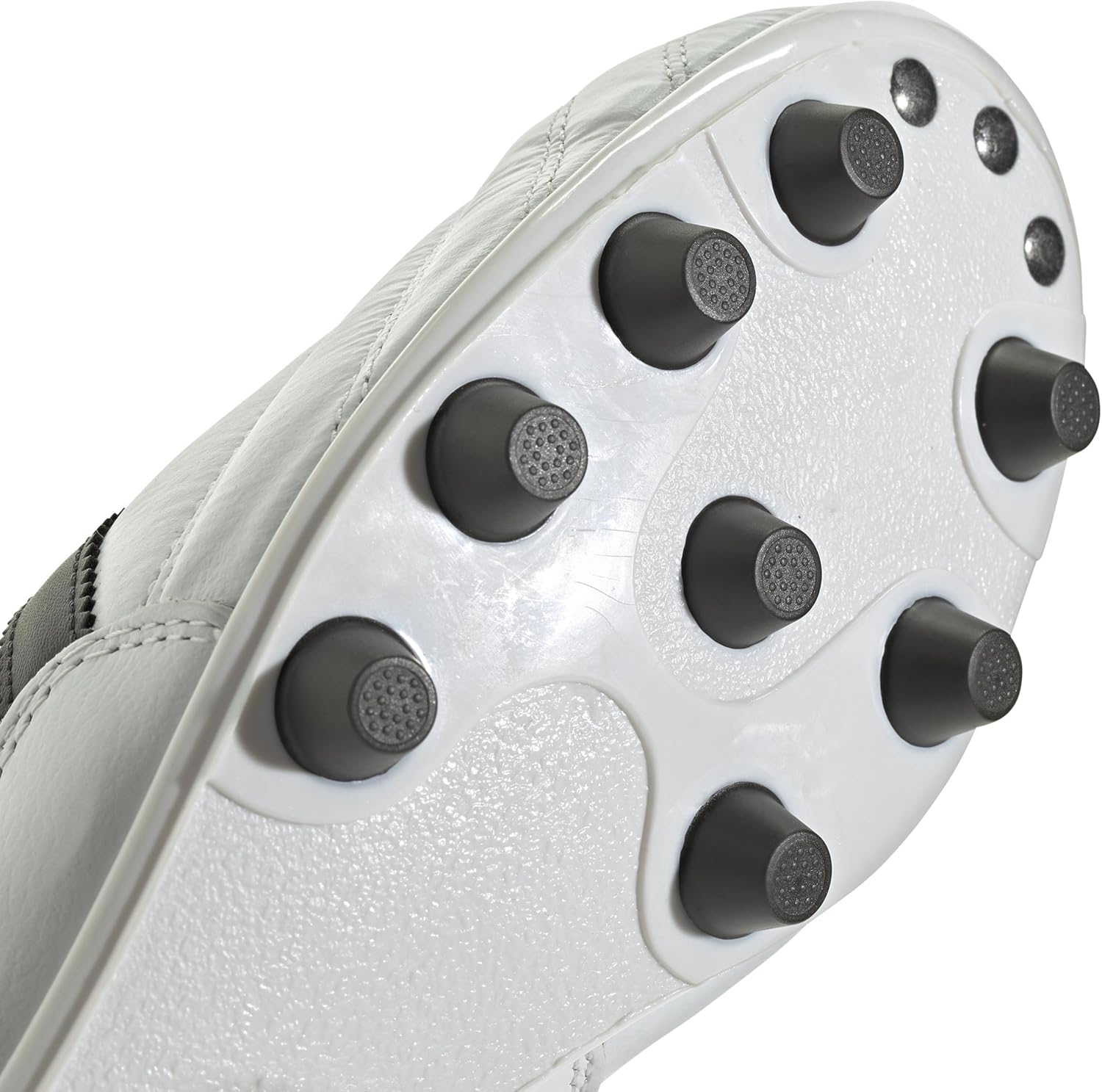
You already know that a cleat isn’t a sneaker — but you might not know just how dramatically that difference plays out once you start comparing brands. A “size 10” in Adidas, Puma, and New Balance can fit three completely different ways on the same foot. Soccer cleats (the boots you wear on grass, turf, or indoor courts to play football) are built on internal templates called lasts — the 3D mold around which the shoe is constructed. Each brand engineers its last to match its own historical tradition of fit, and those traditions diverge wildly. Get the sizing wrong and you’re looking at black toenails, heel slip, blisters, or a boot that simply never breaks in. Get it right and the boot disappears on your foot. This guide synthesizes what reviewers, owners, and boot analysts consistently report across the most popular models — so whether you’re buying your first pair or adding a dedicated surface-specific option to your rotation, you’ll know exactly what to expect before the package arrives.
Why Soccer Cleats Don’t Follow Sneaker Sizing Logic
The core issue is that cleat construction priorities are almost opposite to sneaker construction priorities. Sneakers are built for all-day comfort, volume, and cushioned fit. Cleats are built for ground feel, lateral stability, and power transfer — which means narrower lasts, stiffer uppers, and much tighter fits across the forefoot and midfoot. That tightness is by design; it stops the foot from moving inside the boot when you strike the ball or cut sharply.
The second problem is that brands have different heritage fits. Adidas has roots in German athletic footwear — historically narrow, anatomical, and long. Puma grew alongside Adidas from the same founding family and shares some of that heritage, but then diverged hard depending on the silo. Nike, entering football boot manufacturing later from an American sneaker tradition, runs longer and sometimes wider than European heritage brands. New Balance, known for wide-fit options in running, applies a different philosophy to its football lasts than most buyers expect.
Reviewers at SoccerBible and FootballBoots.co.uk consistently flag last shape as the most underreported variable in boot buying — more impactful than upper material or stud configuration for the average player.
Brand-by-Brand Sizing Reality
Adidas: Depends Entirely on Which Silo
Adidas is probably the most misunderstood brand for sizing because the variation within Adidas is nearly as large as the variation between brands. Two Adidas boots can fit completely differently depending on which production heritage they come from.
Copa Mundial — the kangaroo-leather classic and one of the most-reviewed boots in history — is the clearest example. Across thousands of owner reviews aggregated by FootballBoots.co.uk and Goal.com, the consistent verdict is: size down a full size from your street shoe size. The kangaroo leather stretches significantly after break-in, and the last runs long. A buyer who normally wears a US 10 in sneakers should typically start with a Copa Mundial in US 9. Veteran buyers go further — some long-time Copa wearers note that if your foot is narrow or medium width, you may even want to explore a half-size below that starting point.
Adidas Samba Indoor tells a different story. The Samba’s indoor last is more contained and less leather-stretch-dependent. Owner reports cluster around half a size down from street size, not a full size. The fit is snugger out of the box and doesn’t open up the way the Copa’s kangaroo upper does.
The important framing here: “Adidas sizing” is not one number. Which Adidas you’re buying matters as much as the brand name.
Puma: The Brand With the Widest Internal Sizing Spread
Puma’s cleat lineup has a fit consistency problem that shows up repeatedly in aggregated reviews — and it runs in both directions, which makes it uniquely frustrating to navigate.
Puma King 21 is the most dramatic case in the review record. Owners consistently report needing to go up 1–2 full sizes from their normal sizing. One widely-cited reviewer on FootwearNews-adjacent boot forums noted going from their normal US men’s 6 to a size 8 to get a workable fit — that’s an extraordinary two-full-size jump. The King’s last runs extremely narrow and short, and the leather upper does not stretch meaningfully in the way Copa leather does. For buyers with wide feet, this boot is genuinely difficult to fit — the recommendation from experienced owners is to either size up two full sizes or accept that the King’s last may simply not be compatible with your foot shape at any size.
Puma Attacanto Indoor runs in the same direction but with less severity. Owners report the shoe runs short and narrow, with one reviewer who normally wears a US 9.5 finding they needed a 10.5 for comfortable fit. That’s a full size up, not a half — significant enough to matter if you order without reading the notes.
The practical decision rule for Puma: treat every model as “runs small” until you have model-specific evidence otherwise, and build in at least a half-size buffer upward as your starting point.
New Balance: Wide-Fit Reputation Doesn’t Guarantee Wide Cleat Fit
New Balance has built a strong reputation for wide-fitting running shoes and casual footwear, and buyers reasonably expect that reputation to carry into their football boots. It does not always translate.
New Balance 442 Indoor owners report consistently needing to size up despite already being in wide-width options. The indoor last for the 442 is more contained than the brand’s running lasts, and buyers who expected the familiar NB width were caught off guard. This is a meaningful finding for wide-foot buyers specifically — New Balance’s football-last construction is not the same as its running-last construction, and the muscle memory of “NB runs wide, I can go true to size” doesn’t apply reliably here.
For New Balance football boots more broadly: check the specific model’s last notes. The brand’s FG and SG boots have different construction priorities than the indoor range, and owner reports diverge accordingly.
Nike: Longer, but Upper-Material Dependent
Nike football boots generally run true to size or slightly long compared to Adidas heritage fits, which makes them a reasonable starting point for buyers coming from Nike sneaker sizing. However, the upper material changes the break-in equation significantly. Flyknit and Flyweave uppers (used on Phantom and Mercurial silos) conform to the foot differently than synthetic or leather uppers, and some owners report a snug forefoot that loosens noticeably after 3–5 sessions.
Goal.com’s boot buyer guides note that Nike’s Mercurial range in particular can feel volume-restrictive around the midfoot even at true size, which is worth flagging for buyers with high-volume or wide feet.
Kids’ Sizing: A Separate Problem Entirely
The sizing challenges compound when you move into youth boots, and the most consistent finding across parent-buyer reviews is that kids’ cleat sizing does not follow kids’ sneaker sizing — not even within the same brand.
Adidas kids’ cleats are flagged repeatedly in parent reviews as running a full size smaller than Adidas kids’ sneakers in the same size label. A child who comfortably wears a Youth 4 in Adidas Gazelles should typically be measured for a Youth 5 in Adidas cleats. The last is different, the cleat construction is tighter, and the leather or synthetic upper doesn’t give the same initial room. Parents who order Adidas cleats at sneaker size routinely report returns.
DREAM PAIRS kids’ cleats follow the general youth cleat pattern — reviewers recommend going up a size from the child’s measured foot size, not from sneaker size. Build in the extra room; kids’ feet grow, and the cleat fit is tighter than a sneaker fit to begin with.
Brooman kids’ cleats are the rare exception in aggregated reviews — owners consistently describe them as true to size, making them a lower-risk first purchase for parents who don’t have a good sizing baseline for their child yet.
By the Numbers: Sizing Adjustment Summary
| Boot | Typical Sizing Verdict | Direction |
|---|---|---|
| Adidas Copa Mundial | Size down 1 full size from street size | Down |
| Adidas Samba Indoor | Size down ½ size from street size | Down |
| Puma King 21 | Size up 1–2 full sizes | Up |
| Puma Attacanto Indoor | Size up 1 full size | Up |
| New Balance 442 Indoor | Size up ½–1 size even in wide | Up |
| Kids’ Adidas cleats | 1 full size up vs. Adidas sneakers | Up |
Aggregated from owner reviews and coverage by SoccerBible, FootballBoots.co.uk, Goal.com, and FootwearNews boot coverage.
Is It Normal for Soccer Cleats to Feel Tight When New?
Yes — and this is one of the most common anxiety points for first-time cleat buyers and even experienced players trying a new silo. A correctly fitted cleat should feel snug across the forefoot and midfoot with roughly a thumb’s width of space at the toe. It will likely feel noticeably tighter than a sneaker at the same size. That’s not a defect.
The break-in window varies by upper material. Kangaroo leather (Copa Mundial, K-leather boots generally) opens up most dramatically — owners report a meaningful fit change after 3–8 sessions on firm ground. Synthetic uppers (most Nike and modern Puma silos) conform less and break in more quickly but also change less. Textile uppers (Flyknit, Primeknit) tend to feel comfortable fastest but can also stretch unpredictably in the toe box over time.
What’s not normal: sharp pressure points on the bunion joint, heel lift during walking (not just cutting), or numbness across the top of the foot. These indicate a last mismatch, not a break-in problem — and no amount of sessions will resolve a genuine last incompatibility.
Frequently Asked Questions
Do Puma soccer cleats run small compared to Adidas? Generally, yes — but the gap varies enormously by model. Puma’s King 21 is one of the most dramatically small-running boots in the market, with owners sizing up 1–2 full sizes. Adidas Copa Mundial runs long and requires sizing down. In practice, you may be wearing the same numeric size in a Puma King and an Adidas Copa while each requires a different starting point from your sneaker size.
Should I size down in the Adidas Copa Mundial? Yes, consistently. The Copa Mundial’s kangaroo leather upper stretches with wear, and the last runs long relative to street shoe sizing. The standard recommendation from experienced Copa owners — corroborated by coverage at FootballBoots.co.uk — is to start one full size below your normal street shoe size. If your foot is narrow, you may have room to explore the same or slightly smaller.
Why do my kids’ Adidas cleats fit differently than their regular Adidas shoes? Because they’re built on a completely different last with different construction priorities. Adidas kids’ cleats are designed for tight ground-contact fit, not all-day wear comfort. The cleat last is shorter and more constrained than the sneaker last, even at the same printed size. Parent reviews consistently report needing a full size up in Adidas cleats compared to the same child’s Adidas sneaker size.
How do I size Puma King 21 cleats if I have wide feet? This is genuinely difficult. The King 21’s last is one of the narrowest in the market, and simply sizing up doesn’t fully resolve width — it adds length, not volume. Experienced wide-foot buyers who have tried the King 21 report that even at two sizes up, the fit can remain uncomfortably narrow across the forefoot. If you have wide feet, the King 21 may not be the right last for your foot regardless of size. Consider it a narrow-last specialist boot and evaluate alternatives with wider last profiles before committing.
Is it normal for soccer cleats to feel tight when new? Yes — tightness is expected and correct in a properly sized cleat. The boot should feel snug, not painful. Leather uppers (especially kangaroo leather) will loosen noticeably with wear. Synthetic uppers break in faster but change less. The test: if you feel sharp pressure at a specific point or heel lift during movement, that’s a last mismatch, not normal tightness. If it’s just general snugness, give it a few sessions before making a return decision.
The bottom line across every brand and every price tier: ignore your sneaker size entirely and start fresh with each boot model. Read the sizing notes for that specific model — not the brand, not the silo, the model — before ordering. The 10 minutes you spend doing that is the cheapest performance upgrade available, and it’s the only one that also prevents a return shipping label.