August 23, 2026 • Marcus Delray • 10 min reading time • Prices verified June 4, 2026
Multi-Sport Cleats: Which Soccer Boots Actually Work for Baseball, Rugby, and Flag Football Too
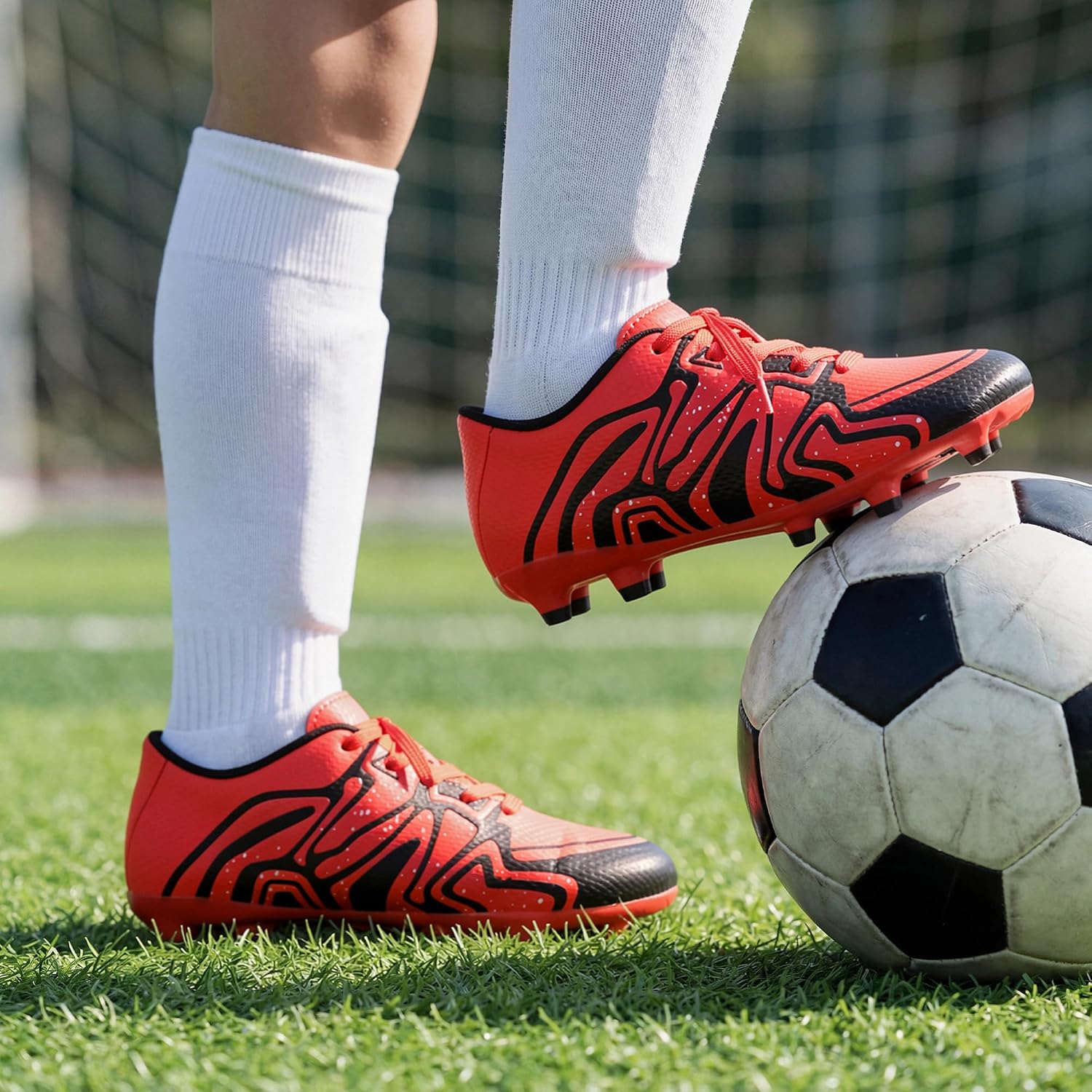
Cleats — the plastic or rubber studs on the bottom of athletic shoes — are designed to grip the ground when you run, cut, and accelerate. Soccer boots (the term used everywhere outside North America for what Americans call soccer cleats) were engineered specifically for grass and artificial turf football. But something interesting keeps happening in owner reviews: buyers mention using them for completely different sports, and they’re not apologizing for it. A parent reports her daughter wears the same pair for soccer and t-ball. A rugby player picks a specific model after comparing it against a rugby-specific brand. An indoor soccer shoe ends up on a Concept2 rowing machine. These aren’t edge cases — they’re a real purchasing pattern that reveals something useful about which soccer boots are genuinely versatile and where the limits are.
This guide is for the buyer with a decision pending: one kid, two or three sports, one budget. Or one adult who plays recreational flag football on Sundays and soccer on Thursdays and doesn’t want to maintain two pairs. We’ll name the tradeoffs explicitly, show you where sport-specific rules start to matter, and give you clear decision rules at the end.
What Makes a Soccer Boot Different From Sport-Specific Cleats
To understand cross-sport use, you need to understand what soccer boots are actually optimized for — and what they intentionally sacrifice.
Stud count and stud shape are the primary variables. A firm-ground (FG) soccer boot typically runs 10–14 molded rubber or plastic studs arranged for multidirectional traction — short sprints, lateral cuts, and frequent 360-degree pivoting. Per SoccerBible’s boot construction explainer, those studs are generally conical or bladed, shorter than American football cleats, and positioned toward the toe and heel for ball-striking mechanics. There is almost always no toe stud — the single most important structural difference between a soccer boot and a baseball or American football cleat.
That missing toe stud is the crux of the cross-sport conversation. In baseball and American football, a front toe cleat adds grip during explosive forward push-off from a stationary stance — a pitcher’s drive off the rubber, a lineman’s first step off the snap. Soccer mechanics almost never involve that static-to-explosive push from a planted toe, so the stud isn’t there. For some cross-sport uses, this doesn’t matter much. For others, it’s disqualifying.
Upper construction differs, too. Soccer boots prioritize a thin, glove-like fit across the forefoot for ball feel, often at the expense of lateral stiffness and ankle protection. Rugby boots and American football cleats typically build in more lateral reinforcement because the contact and collision demands are higher. As Footwear News noted in their comparison of soccer and American football lasts, soccer uppers are engineered inward — toward ball contact — while American football uppers are engineered outward, toward resisting lateral force from other bodies.
The Sports Where Soccer Cleats Actually Work
Youth Baseball and T-Ball: High Compatibility, League Rules Permitting
The Dream Pairs youth cleats have earned reviews explicitly titled “Can be used for baseball also” — with no qualification or complaint. The Adidas Goletto IX FG has parent reviews describing simultaneous use for soccer and t-ball. This tracks with the physical reality: at youth levels, the demands on footwear are modest, the turf conditions are similar (natural grass, sometimes artificial), and the difference between a 12-stud soccer outsole and a 13-stud baseball cleat is not functionally meaningful for an eight-year-old.
The real issue is league rules, not performance. Many youth baseball leagues, particularly at the t-ball and coach-pitch levels, explicitly prohibit metal cleats and permit molded rubber or plastic alternatives — which is exactly what a firm-ground soccer boot provides. Per ESPN’s 2025 youth sports equipment roundup, most recreational leagues below age 12 follow similar permissive policies, though the rules vary by league and region. The honest answer: check your specific league’s rulebook before buying. If they allow molded rubber cleats, a soccer boot clears that bar. If they require baseball-specific cleats, the missing toe stud may make a soccer boot technically non-compliant even if it’s otherwise legal.
Decision rule: For t-ball through coach-pitch, a firm-ground soccer boot is a practical dual-use option — confirm your league’s explicit cleat policy first.
Flag Football: Mostly Yes, With One Caveat
The accidental buyer scenario is instructive here. One reviewer purchased soccer cleats intending to use them for American football and left a 4-star review — not a 1-star disaster, a 4-star functional use. The caveats they noted were predictable: the lighter construction felt less secure during lateral collisions, and the toe cleat absence was noticeable on certain cuts. But for flag football specifically — where blocking and contact are eliminated by rule — the collision concern drops to near zero.
Flag football is primarily a speed-and-agility game. The cuts are sharp and frequent. Soccer boots are actually quite well-matched to that demand profile: multidirectional stud placement, lightweight upper, low profile. Outside Online’s piece on cross-training footwear makes a broader point that applies here — footwear designed for one change-of-direction sport often transfers well to others with similar movement patterns, even if the surface conditions and collision rules differ.
Decision rule: For recreational and youth flag football, a firm-ground soccer boot is a functional choice. For competitive or tackle levels, get a football-specific cleat.
Rugby: Conditional, and Position-Dependent
The PUMA Attacanto FG has a rugby-specific reviewer who compared it against a rugby-dedicated option and chose the PUMA. That’s meaningful signal — but it comes with important context. The reviewer was almost certainly a back (a speed-position player: winger, fullback, fly-half) rather than a forward. Backs prioritize acceleration and agility; forwards prioritize stability under physical load and the ability to drive and contest at the breakdown.
Soccer boots work for rugby backs in recreational to club-level play. They typically fail for rugby forwards at any level where scrummaging and mauling intensity is real, because the lack of lateral upper stiffness and the absence of toe stud bite becomes costly exactly when a prop or flanker needs it most.
Football Boots UK’s surface guide is worth invoking here: FG studs perform best on natural grass with medium firmness — the same conditions most rugby is played on. The stud geometry is different from an 8-stud rugby boot, but not so different that a soccer FG outsole becomes dangerous or legally impermissible in most recreational rugby contexts.
Decision rule: Soccer FG boots work for rugby backs at recreational and social levels. Forwards with real scrummaging demands should use a rugby-specific boot.
Indoor Soccer Shoes: The Wildcard Use Case
The indoor shoe cross-use pattern is genuinely surprising. The Adidas Copa Club Indoor has reviews from buyers using it for indoor softball pitching practice. The Predator 24 Club Indoor has appeared in reviews from someone using it on a Concept2 rowing ergometer — where grip and heel stability during the drive phase matter more than you’d expect. The Puma Attacanto Indoor has reviews from a drummer using it at gigs, citing the grip on stage surfaces and the non-marking outsole.
Indoor soccer shoes (IC, for indoor court) have flat rubber outsoles — no studs — designed for hard indoor court surfaces. They’re not cleats in the traditional sense. What they offer is superior grip-to-weight ratio, lateral stability in a low-profile package, and non-marking soles that meet almost every indoor facility requirement. That combination turns out to be useful in a wider range of physical activities than anyone planned for.
The practical limit: IC shoes are not designed for outdoor use on grass or artificial turf, and the flat outsole provides no real traction on those surfaces. Don’t confuse them with FG boots.
By the Numbers: Cross-Sport Compatibility at a Glance
| Sport | FG Soccer Boot | IC Indoor Shoe | Works Without Qualification? |
|---|---|---|---|
| Youth baseball / t-ball | ✓ (check league rules) | ✗ | Usually yes, verify first |
| Flag football (recreational) | ✓ | ✗ | Yes |
| Rugby (backs, rec level) | ✓ | ✗ | Yes |
| Rugby (forwards, any level) | Partial | ✗ | No |
| Indoor softball / gym | ✗ | ✓ | Yes, IC only |
| Rowing machine | ✗ | ✓ | Yes, IC only |
At What Point Do Sport-Specific Cleats Become Non-Negotiable?
The honest answer from synthesizing published reviews and sport-governance sources: competition level and player role are the two triggers, not age alone.
A 14-year-old high school baseball player trying out for a competitive travel team needs baseball cleats — the toe stud matters at that point, and coaches and umpires will notice. A 14-year-old playing recreational flag football on Sundays is completely fine in a soccer boot for another several years. A 30-year-old playing social rugby sevens once a week? Soccer FG boots are fine. A 30-year-old locking in the front row of a competitive club scrum? That’s the moment sport-specific cleats become a safety and performance issue, not just a preference.
Per Outside Online’s cross-training footwear analysis, the pattern across multiple sports is consistent: multi-sport footwear works until the physical demands become asymmetric enough that the missing design features create real injury risk or meaningful performance loss, not just theoretical disadvantage.
Frequently Asked Questions
Are soccer cleats legal to wear in youth baseball or t-ball leagues? In most recreational leagues below age 12, molded rubber or plastic cleats are permitted and metal cleats are prohibited — soccer boots meet that standard. The toe stud is the technical difference. Some leagues specify baseball-style cleat configurations explicitly; others simply require “non-metal molded cleats,” which soccer FG boots satisfy. Check your league’s rulebook before the season starts. Don’t assume.
What is the actual difference between soccer and American football cleats? The primary differences are the toe cleat (present in football, absent in soccer), stud count and arrangement (football cleats typically have fewer, larger studs optimized for linear push-off), and upper construction (football cleats build in more lateral stiffness for collision resistance). Soccer boots are lighter, lower-profile, and optimized for multidirectional movement and ball contact, not blocking assignments.
Can firm-ground soccer cleats be worn on artificial turf without damaging the surface? Standard FG (firm-ground) cleats on 3G/4G artificial turf is a surface mismatch that many leagues explicitly prohibit. FG studs can damage the rubber infill layer and the turf fibers over time. For artificial turf, AG (artificial grass) or TF (turf trainer) soles are the correct choice. Football Boots UK’s surface guide documents this in detail. If the turf facility allows FG, confirm that in writing — some do, some don’t, and turf damage liability is a real issue at the facility level.
Do soccer cleats provide enough lateral support for rugby-style cuts and contact? For cutting and agility: yes, soccer boots are well-suited. For contact and collision resistance: it depends on position. Backs who rarely enter contested rucks or mauls will find soccer boots adequate at recreational levels. Forwards in close-contact roles will notice the lack of lateral stiffness and the missing toe bite in bound positions.
At what age or level do sport-specific cleats become necessary versus a multi-sport cleat being sufficient? Age is a proxy, not the real variable. Competition level and physical role are what determine necessity. Recreational and youth developmental sport through roughly age 12–14 can usually be served by a quality soccer boot across most field sports. Competitive travel teams, high school varsity, and adult club levels in sport-specific contexts are where the design tradeoffs in soccer boots start to cost real performance or create league compliance issues.
The clearest takeaway from the real-world cross-use pattern in owner reviews: soccer boots are more versatile than their sport-specific branding suggests, and the versatility is most reliable in recreational, youth, and agility-dominant contexts. The limits show up at competition intensity, in contact positions, and in any situation where a toe stud makes a mechanical difference. Buy the right surface type for where you’re actually playing, confirm your league’s explicit cleat rules before the season, and the case for one pair handling two or three sports is more honest than the sports equipment industry would prefer to admit.