July 26, 2026 • Marcus Delray • 9 min reading time • Prices verified June 4, 2026
Under $40 Adult Soccer Cleats: What You Actually Get, What You Sacrifice, and When to Spend More
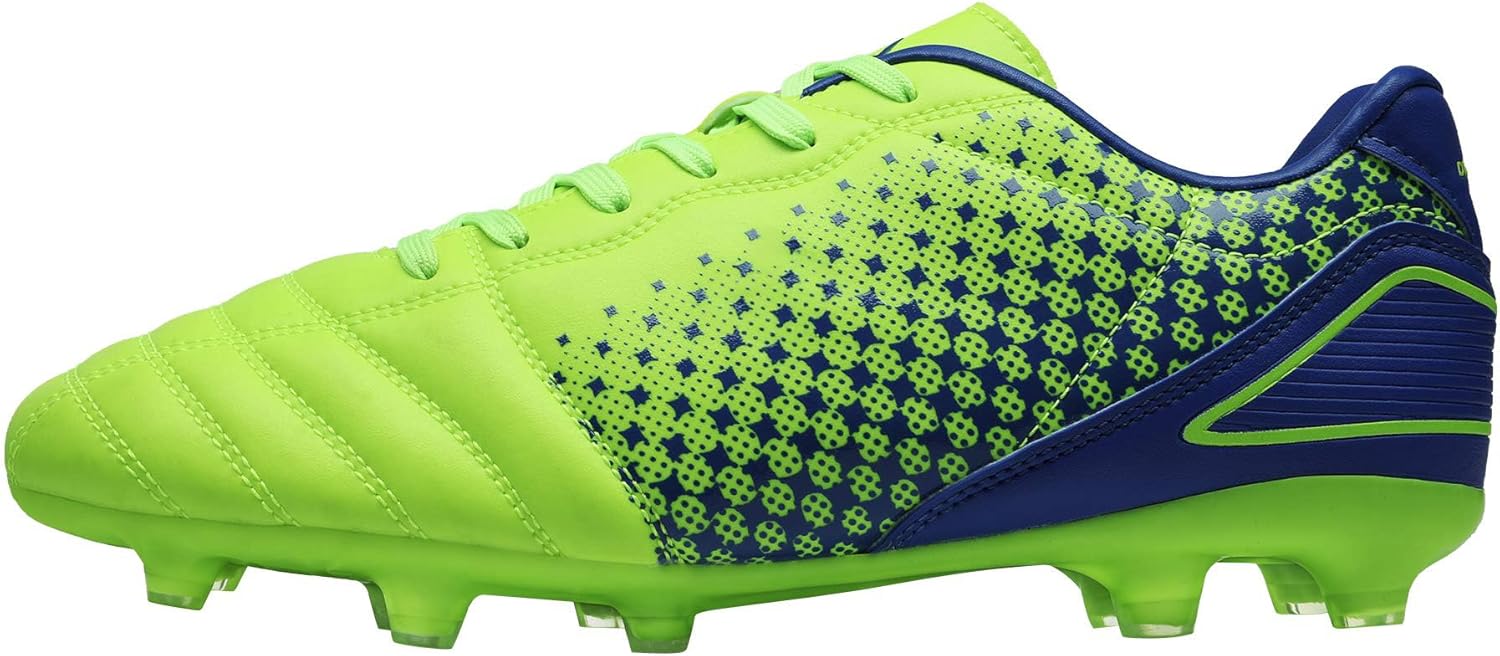
Soccer cleats — the spiked shoes players wear to grip natural grass or artificial turf — span a wilder price range than almost any other piece of sports equipment. You can spend $35 or $450, and both products are technically called “soccer cleats.” If you’re shopping at the under-$40 end, you’re not being irrational. Recreational leagues, youth coaches, casual adult players, and parents outfitting fast-growing kids all have legitimate reasons to shop here. This guide will tell you exactly what that $35–$40 actually buys in 2026 — the real materials, the real construction decisions, the corners that get cut — and give you a clear decision framework for when staying in this tier is smart and when it costs you more than upgrading would have.
| EDITOR'S PICKPuma Mens Attacanto Firm | Mid-tierSoccer Cleats for Men's and Wom… | Budget pickDREAM PAIRS Men's Firm Ground S… | |
|---|---|---|---|
| Fit type | — | Unisex | Men |
| Ground type | Firm, Artificial | Firm | Firm |
| Sizes available | 7.5 | 9.5 Women/8 Men | 9 |
| Color | Black | Black-grey | Neon/Green/Royal |
| Price | $37.99 | $35.99 | $30.99 |
| See on Amazon → | See on Amazon → | See on Amazon → |
What Manufacturers Actually Do to Hit a $35–$40 Price Point
Here’s the honest version of how cleat pricing works: every brand, from Nike down to generic house labels, builds their footwear in tiered “silos” — families of boots where the same silhouette gets progressively cheaper materials and construction as you descend the ladder. Footwear News’ coverage of how major cleat manufacturers structure their product lines explains this explicitly: the $35 version of a recognizable silo shares the name and general shape of its $250 elite sibling, but almost nothing else.
At this price point, you’re buying:
Synthetic upper, single-layer. Not the thin, sock-like knit or the premium microfiber leather of an elite boot. Budget synthetics are thicker, stiffer, and less breathable. They don’t conform to your foot over time — they stay the same shape they were on the shelf. Owners of budget-tier boots consistently report a “plastic bag” feel in the first few sessions, with limited improvement thereafter.
Injected EVA or low-density TPU outsole. The outsole is the bottom plate — the part the studs attach to. Elite boots use nylon or carbon-fiber reinforced plates that flex precisely with your stride. Budget boots use injected foam composites or basic thermoplastic urethane. footballboots.co.uk’s entry-level construction guide notes that these materials deliver acceptable stud pattern geometry but flex inconsistently under load, which affects energy return and can cause mild foot fatigue over a full 90-minute match.
Conical or basic bladed stud pattern, not position-optimized. Elite outsoles are engineered for specific movement profiles — more rotational studs for attackers, linear-pressure plates for defenders. Budget outsoles are one-size-fits-all stud arrangements. That’s fine for casual play. It matters more than people think for dedicated training sessions.
Minimal to no internal support architecture. No torsional shank (the rigid insert that prevents the boot from twisting underfoot), minimal heel counter stiffness, basic insole foam. This is where long-session durability diverges most noticeably from mid-tier options.
By the Numbers
| Price Tier | Typical Upper | Outsole Material | Expected Season Lifespan* |
|---|---|---|---|
| Under $40 | Basic synthetic | Injected EVA/TPU | 1 season / ~40–60 hours |
| $80–$120 | Engineered synthetic | Nylon composite | 1.5–2 seasons / ~80–120 hours |
| $200–$350+ | Knit, premium synthetic, or k-leather | Carbon/nylon plate | 2+ seasons with proper care |
*Lifespan estimates are aggregated from owner reviews across Goal.com’s budget cleat roundups and Soccer Bible’s 2025 entry-level coverage. Actual durability varies with surface type, care, and usage intensity.
What You Actually Sacrifice — and What You Don’t
This is the part most buying guides gloss over: not every sacrifice at the $35 tier is equally important. Some matter a lot. Some barely matter at all for your specific situation.
You sacrifice: Fit precision and last variety. This is the biggest hidden cost. Budget boots are molded to generic, medium-width lasts (the foot-shaped form the boot is built around). If your foot is wide, narrow, or has a high instep, you will feel this immediately. The upper doesn’t give you anything back. Soccer Bible’s budget boot coverage consistently flags fit compromise as the number-one complaint from owners in this tier — not durability, not ball feel. Fit. If you manage wide feet or high-volume feet, this tier punishes you disproportionately.
You sacrifice: Ball feel and touch sensitivity. Thicker, stiffer synthetics put more material between your foot and the ball. For recreational players doing light passing and shooting, this is barely noticeable. For players who rely on first-touch control in tight spaces, reviewers at footballboots.co.uk describe budget uppers as “feeling like you’re striking through a glove.” That’s a real performance gap at the club level.
You sacrifice: Session-over-session energy. Owners in long-run reviews consistently note that budget boots start feeling noticeably uncomfortable around the 60–70 minute mark of full-intensity play, owing to minimal cushioning architecture and insole compression. For a 30-minute recreational kickaround, irrelevant. For a full training session three times a week, it accumulates.
You do NOT sacrifice: Basic function on appropriate surfaces. A $35 firm-ground cleat on a dry natural grass surface does exactly what a cleat is supposed to do — grip the ground and let you run. The stud pattern works. The boot stays on your foot. You can shoot, pass, and defend. The functional floor here is higher than the price suggests, which is why this tier is genuinely appropriate for a real class of players.
You do NOT sacrifice: Availability and replaceability. One underrated advantage of budget boots: when your kid destroys a pair in three months or you blow out a cleat the day before a game, the replace-cost math is forgiving. Losing a $35 boot stings less than losing a $280 one to a freak incident.
The Honest Decision Framework: If X, Then Y
This is the section that matters most. Budget boots are not universally bad, and premium boots are not universally necessary. The right answer depends on your specific situation.
If you play fewer than once a week and don’t care about positional performance, stay under $40. Recreational Sunday league, occasional pickup, fitness-focused adult players who aren’t competing seriously — this tier is rational. You’re not extracting performance gains from premium materials at this usage level. The cost-per-match math decisively favors budget here: at $35 over 40 sessions, you’re spending under $1 per match.
If you play three or more times per week in organized competition, spend more. The durability curve works against you fast. At three sessions per week, a budget boot’s 40–60 hour lifespan translates to roughly five months. A $120 mid-tier boot that lasts 100+ hours and feels better doing it will cost you less per session over a full year — and won’t fatigue your feet the same way. Goal.com’s coverage of cheap soccer cleats for recreational players makes this point explicitly: the value proposition of budget boots inverts once weekly session frequency climbs past two.
If your feet are wide, narrow, or high-volume, do not buy budget boots to save money. The fit penalty is too high. A boot that’s actively uncomfortable or causes blisters after 30 minutes isn’t saving you money — it’s adding pain. Wide-foot buyers especially should prioritize brands and lasts known to run accommodating (New Balance’s wide options, Adidas Copa entry tiers) even if it means spending $60–$80 instead of $35.
If you’re buying for a child who will outgrow the boot in six months, budget tier is almost always correct. No child should be in $200 cleats that they’ll grow out of before the season ends. Size up once at a mid-tier level when growth has stabilized — typically mid-teens for most players.
If you’re managing a squad or team procurement budget, consider the $60–$80 tier before collapsing all the way to sub-$40. The durability difference between $35 and $70 is proportionally larger than the difference between $70 and $150. Squad boots that survive a full season without replacement calls are cheaper in aggregate than boots that need mid-season replacement. Footwear News’ coverage of how brands tier their silo construction confirms that the $60–$80 range typically crosses a meaningful threshold in outsole and upper materials — it’s not just a marginal upgrade.
Specific Situations Where Under $40 Makes Complete Sense
To be concrete about it, here are the cases where reviewers and product analysts across Soccer Bible, Goal.com, and footballboots.co.uk consistently agree budget boots are the right call:
- Youth players in growth phases — prioritize fit over features, and replace often regardless of price
- Adult beginners in their first season — before you know your positional needs, playing style, or preferred fit profile, a cheap boot is a learning tool, not a performance investment
- Backup or training-specific boots — many club players keep a beat-up pair for muddy or wet training days and preserve their match boots; budget tier is perfect for this role
- Turf-only recreational players — turf trainers (flatter, rubberized nub soles designed for artificial turf) in this price range deliver adequate grip and durability for the surface; the performance gap versus premium turf trainers is smaller than on natural grass
- Emergency replacement — you need cleats by Saturday and your regular pair just split; a $35 stopgap is a reasonable bridge
The One Upgrade Worth Making Before Going Full Budget
If your budget genuinely caps out around $40, the single highest-impact upgrade available to you isn’t a better boot — it’s a better insole. Aftermarket insoles from brands like Superfeet or Sof Sole retail in the $15–$30 range and can meaningfully address two of the main complaints about budget boots: arch support deficit and session-long cushioning compression. Owners who pair a budget boot with a quality insole report noticeably better comfort through longer sessions. It doesn’t fix the upper, the outsole, or the fit geometry — but if fatigue is your primary complaint, it’s the cheapest targeted fix available.
The clear-eyed summary: under $40 adult soccer cleats are a legitimate product category that serves a real audience well. They are not a scam, not dangerous, and not universally inferior to spending more. They are a specific set of tradeoffs — compromised fit precision, stiffer uppers, shorter lifespan, generic stud geometry — that matter a lot for some players and barely at all for others. Know which player you are, run the cost-per-match math honestly, and buy accordingly.