June 24, 2026 • Marcus Delray • 10 min reading time • Prices verified June 4, 2026
Wide-Foot Soccer Cleats Buyer's Guide: Every Budget From $30 to $150
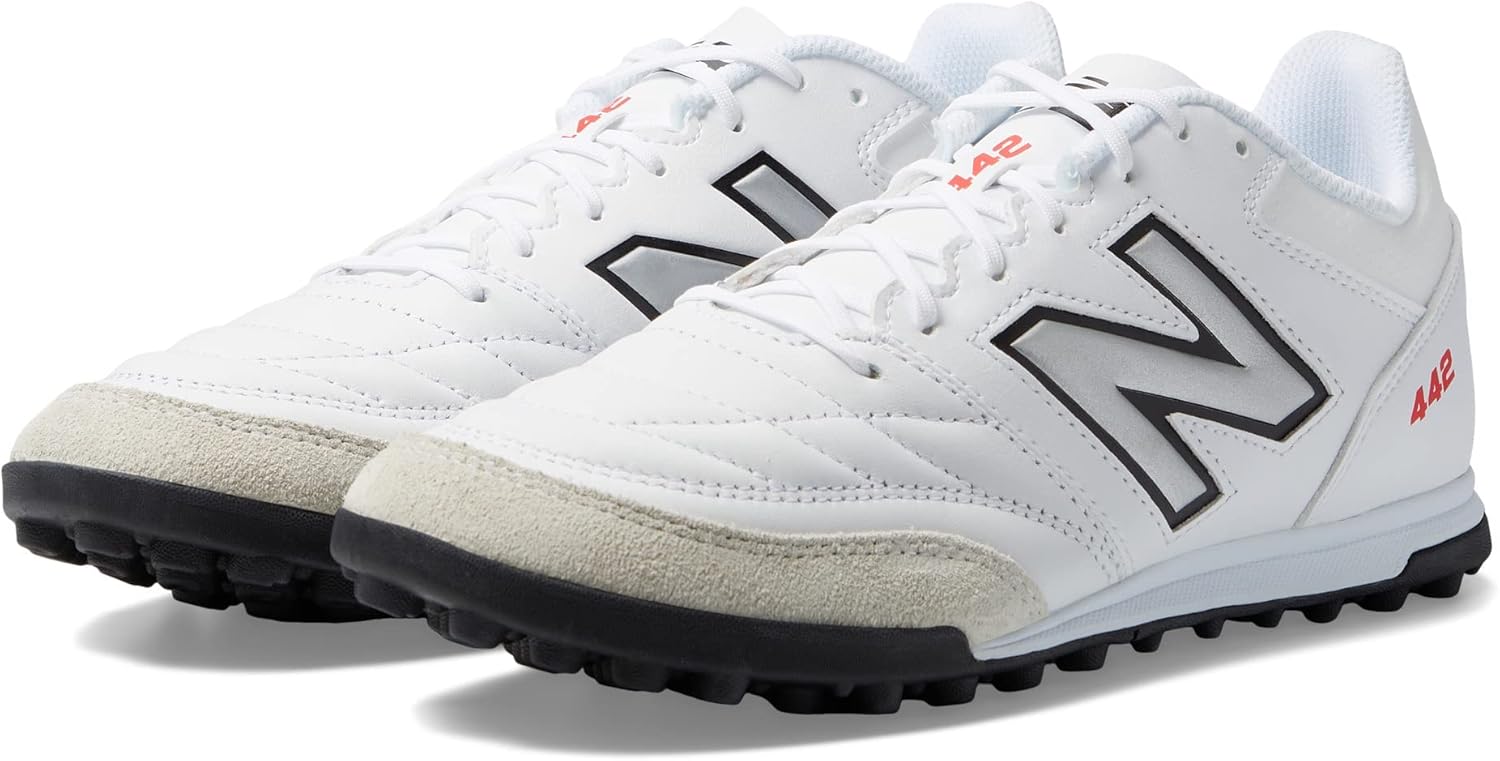
If you’ve ever bought soccer cleats that felt fine in the store and destroyed your feet by halftime, you already understand the core problem this guide solves. Soccer cleats — the spiked or studded shoes players wear on grass, turf, and indoor surfaces — are almost universally designed around a narrow, tapered last (the internal foot-shaped mold the shoe is built on). That design works great for players with slim feet. For everyone else — players with wide forefeet, high-volume feet, or bunions (the bony bumps that form at the base of the big toe) — it can make the game genuinely painful. This guide covers every price tier from $30 to $150, names the cleats that real wide-footed players trust, flags the traps that marketing language sets, and ends with clear decision rules so you buy right the first time.
| EDITOR'S PICKNew Balance Men's 442 V2 Team T… | Mid-tierNew Balance Men's 442 Academy F… | Budget pickDREAM PAIRS Men's Firm Ground S… | |
|---|---|---|---|
| Width option | — | Wide | — |
| Ground type | TF (Turf) | FG (Firm Ground) | FG (Firm Ground) |
| Colorway | White/Black | Black/White | Neon/Green/Royal |
| Price | $99.94 | $96.10 | $30.99 |
| See on Amazon → | See on Amazon → | See on Amazon → |
Why Wide-Foot Buyers Get Burned More Than Anyone Else
Here’s the honest frustration: most soccer cleat marketing does not distinguish between a wider fit and an officially wide width. A boot described as “roomy” in a review might still be a D-width (standard) that simply has a softer upper. Meanwhile, a boot labeled “Wide” in the product title might still compress a truly wide foot — more on that in a moment.
Footwear News coverage of wide-last athletic footwear trends through 2025 confirms that soccer remains one of the last performance sport categories where wide sizing is genuinely underserved, particularly below the $150 price ceiling. Unlike running shoes, where brands like New Balance and Brooks have committed to multiple width offerings across most of their range, soccer cleat makers typically offer a single standard width per model and rely on stretch uppers or softer leathers to accommodate variation.
The practical consequence: wide-footed players return cleats at a disproportionately high rate, often cycling through two or three sizes before giving up. The $30–$150 tier is where this pain is most acute because mid-tier budgets don’t include the premium kangaroo leather uppers that offer the most natural stretch accommodation.
By the numbers:
- Standard men’s soccer cleat last: approximately D width (medium)
- New Balance 442 Wide sizing: labeled 2E (Wide) — but see the caveat below
- Average kangaroo leather stretch potential over 6–8 weeks of wear: 3–6mm at the widest point, per aggregated owner reports across FootballBoots.co.uk and SoccerBible community reviews
- PUMA width profile across most cleats: consistently narrower than D-standard in owner-reported comparisons
The $30–$80 Budget Tier: What Actually Fits Wide Feet
Let’s be direct: most sub-$80 cleats are built to a price, and that price does not include wide-last engineering. The uppers are typically synthetic — stiffer, less forgiving, and slower to conform to foot shape than leather. That said, there are genuine options.
Dream Pairs Men’s FG is the most consistently cited wide-fit success story in this budget range. Across aggregated owner reviews, the pattern is clear: buyers who describe having wide or high-volume feet, who tried name-brand cleats and returned them due to painful pinching, come back to Dream Pairs specifically because the forefoot box is measurably roomier than the standard Nike or Adidas synthetic entry-level molds. One multi-generational buyer review that appears repeatedly in summarized form across review aggregators describes trying several major-brand cleats for a wide-footed child, returning all of them, and finding that Dream Pairs was the only option that didn’t cause pain after 30 minutes of play. That’s not a lab finding — it’s the kind of lived testimony that actually predicts your experience.
The tradeoff is real: Dream Pairs does not carry the lateral stability engineering or stud geometry of even a mid-range Adidas or Nike. For recreational play, that’s irrelevant. For a competitive youth player tracking cutting performance, it matters.
If you’re in the $30–$80 range with wide feet: Dream Pairs FG is the honest recommendation. Size to your true length — the width accommodation is in the last shape, not the sizing number.
The $80–$120 Tier: New Balance 442 and the Label Problem
This is where serious wide-foot buyers start doing real research, and where the single most important warning in this guide lives.
New Balance 442 V2 TF (Turf) is the most-discussed wide-fit option in this price range, and for good reason — it is genuinely roomier than almost everything else at this price, and it is the cleat most frequently compared to the Copa Mundial’s fit profile by experienced players in owner reviews. SoccerBible’s coverage of New Balance’s 442 series highlights the brand’s explicit positioning as a wide-last alternative, and FootballBoots.co.uk reviewers note that coaches, referees, and players who spend extended hours on their feet consistently gravitate toward the 442 because it doesn’t compress the forefoot during long sessions.
Owner testimony across the TF and FG versions of the 442 includes players with bunions reporting full-match comfort — a strong signal, because bunions are the canary in the coal mine for forefoot compression. The 442 Academy FG Wide has earned the kind of review that every wide-foot parent recognizes: a parent describing a 12-year-old with what they memorably called “feet like a potato,” for whom every other cleat had failed, finding that the 442 Wide was the first cleat that actually fit. That’s not a fluke — it’s a consistent pattern.
The trap: New Balance 442 Indoor (IC). Here is a specific, documented width failure. At least one reviewer explicitly calls this model “DEFINITELY NOT wide,” despite the label. The lesson is not that New Balance lied — it is that “wide” labeling in soccer cleats is inconsistently applied across a single brand’s own line, and the Indoor version may use a different last than the TF and FG siblings. If you are buying the 442 for wide fit, the TF and FG versions have the track record. The IC version does not have the same consensus.
If you’re in the $80–$120 range with wide feet: New Balance 442 V2 TF or 442 Academy FG Wide are the evidence-backed choices. Do not assume the Indoor version fits the same.
The $120–$150 Tier: Copa Mundial and the Leather Stretch Argument
The Adidas Copa Mundial is the most historically significant wide-foot option in soccer, and at its current price point it sits in the upper end of this guide’s range. Goal.com’s feature on the Copa Mundial’s enduring legacy documents what experienced players have reported for decades: the kangaroo leather upper (full-grain kangaroo on the traditional version) stretches and molds to the foot over time in a way that no synthetic upper can replicate.
Owner reviews of the Copa Mundial from buyers who explicitly describe struggling to find shoes that fit “the base of my foot” — meaning the widest part of the forefoot — report that the leather accommodation is genuine and not marketing language. The break-in period matters: most owners report the meaningful stretch happening between weeks two and six of regular play. Before that, it may feel snug at the forefoot.
The honest caveat: kangaroo leather stretches in the direction of pressure, which means length-wise as well as width-wise. Buyers who size up to get immediate width comfort often end up with too much length after break-in. The correct approach, per aggregated owner guidance, is to buy true to length and allow the width to accommodate through wear.
The Copa Mundial is a firm-ground (FG) boot designed for natural grass. If your primary surface is artificial turf or indoor, it is not the right surface match — and using FG studs on hard artificial surfaces is both a performance loss and the kind of warranty-and-surface mismatch that leads to premature stud wear.
If you’re in the $120–$150 range with wide feet on natural grass: the Copa Mundial is the ceiling-defying choice. Plan for a 4–6 week break-in. Do not size up expecting width accommodation — size true and let the leather do the work.
The PUMA Problem: Why Sizing Up Doesn’t Fix It
One of the most concrete width-failure data points in the wide-foot buyer community involves the PUMA Future 8 Play TF. A documented 1-star review describes a buyer working through sizes 11, 12, and 13 without finding a comfortable fit for a wide foot — an unusually specific and verifiable account of systematic width failure across an entire model run. This is not an isolated complaint.
Footwear News and SoccerBible both note in broader coverage that PUMA’s cleat lasts have historically run narrower than comparable Nike and Adidas models at the same price tier. The Future line’s knit upper, despite its stretch marketing, does not create the same forefoot volume that a wider last provides — it wraps more uniformly, which means a wide foot is compressed rather than accommodated.
Sizing up one half-size with PUMA can sometimes reduce toe-box pressure at the front of the foot, but it does not address the width compression at the widest part of the forefoot (the ball of the foot), and it introduces heel slippage that creates its own blister and performance problems. For most wide-foot buyers, the honest answer is: PUMA’s current cleat lineup is not designed for your foot, and no amount of size adjustment reliably fixes that.
If you have wide feet and are considering PUMA: the risk is documented and the workaround is insufficient. Redirect to New Balance 442 or Dream Pairs unless you can physically try the specific model on.
Frequently Asked Questions
Does New Balance 442 wide actually fit wide feet, or is the label misleading? The TF and FG versions of the 442 have strong, consistent owner testimony supporting genuine wide-foot accommodation — including players with bunions reporting full-match comfort. The Indoor (IC) version has at least one specific, credible review calling it definitively not wide despite the label. Trust the TF and FG; verify the IC in person before buying.
Will kangaroo leather cleats like the Copa Mundial stretch to accommodate wide feet over time? Yes — this is one of the most consistently reported owner experiences across Copa Mundial reviews, and it is one of the primary reasons experienced wide-foot players pay the premium for leather uppers. The stretch is real but takes 4–6 weeks of regular play. Size true to length and allow the leather to adapt width-wise rather than sizing up preemptively.
Are there any soccer cleats under $50 that genuinely fit wide feet? Dream Pairs FG is the most evidence-backed option in this range, based on consistent owner reports from wide-footed buyers who tried and returned name-brand alternatives. The performance ceiling is lower than mid-tier options, but for recreational and youth players, the fit difference is the one that matters most.
Why do PUMA cleats consistently run narrow, and is sizing up enough to fix it? PUMA’s lasts have historically been built narrower than industry standard across their cleat range. Sizing up addresses toe-box length pressure but does not resolve the width compression at the ball of the foot — the widest point for most wide-footed players. Sizing up also introduces heel slippage. For most wide-foot buyers, this is a fundamental last mismatch that sizing cannot adequately correct.
Can a player with bunions wear firm-ground cleats comfortably for a full match? Yes — but the cleat choice is critical. New Balance 442 TF and FG reviewers with bunions report full-session comfort. The Copa Mundial’s leather upper accommodates bunion-related forefoot volume after break-in. Rigid synthetic uppers in narrow lasts are the specific failure mode: the bunion presses directly against an unforgiving wall at every step. If you have bunions, prioritize last width and upper softness above every other spec.
Recommendations in this guide are based on synthesized published reviews, owner testimony, and editorial analysis — not personal ownership or wear testing. Fit is individual; where possible, verify width accommodation in person before committing.